SaaS (Software as a Service) solutions enhance operational agility and flexibility in public transit by replacing rigid on-premises infrastructure with cloud-native, configurable platforms that enable agencies to adapt to changing demands, integrate new mobility modes, and reduce IT burdens. Unlike legacy systems that require costly, time-consuming upgrades, SaaS offers transport agencies automatic updates, rapid deployment (within weeks, not months), and a “pay-as-you-go” subscription model that scales with ridership.
In this article, we’ll go over ways that Software as a Service (SaaS) platforms help agencies by supplying the tools needed to succeed in today’s highly competitive landscape, while also providing the power to enhance operational resilience.
Leveraging SaaS Solutions To Enhance Operational Agility and Flexibility In Public Transit
SaaS (Software-as-a-Service) solutions enable public transport agencies to launch various mobility services such as on-demand microtransit, paratransit, or pilot programs in weeks rather than months. By utilizing pre-built, cloud-based platforms instead of traditional, custom-developed software, agencies can skip lengthy procurement, infrastructure setup, and debugging phases. These platforms are designed to scale instantly, allowing operators to adjust resources during seasonal fluctuations or unexpected demand spikes without purchasing new hardware. Cloud-based systems provide real-time data on passenger demand, traffic conditions, and vehicle locations. This enables transit agencies to make dynamic adjustments to route planning, scheduling, and driver assignments, enhancing responsiveness while increasing customer satisfaction. By adopting a subscription model, agencies can also reduce initial capital expenditures (CapEx) and turn fixed IT costs into predictable operational expenses (OpEx). This guarantees they have the financial flexibility to test new technologies without long-term cost risks.
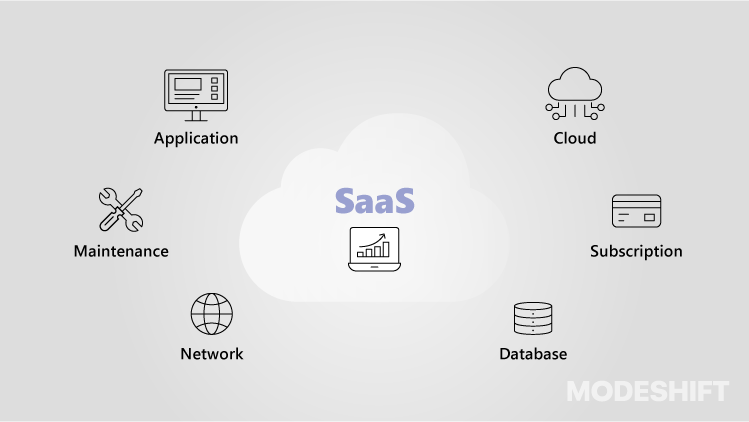
The SaaS vendor is typically responsible for updates, maintenance, and security patches. This frees up in-house IT staff from maintaining legacy systems, allowing them to focus on core transit operations. Agencies also benefit from continuous innovation, receiving new features and improvements automatically as part of the service. SaaS platforms are generally built with open APIs, which facilitate integration with third-party apps, MaaS (Mobility as a Service) platforms, and existing IT infrastructure. This enables agencies to easily incorporate new ticketing systems, bike-sharing, or parking services, facilitating a more flexible multimodal network. SaaS-based solutions are particularly important for enhancing the rider experience through features such as mobile ticketing, contactless payments, and real-time information. By accepting bank cards and mobile wallets (Apple Pay, Google Pay) directly at the validator, SaaS solutions eliminate the need for passengers to buy specialized transit cards. This “tap-and-ride” experience is faster, helping reduce boarding times and congestion at stations. SaaS apps also provide live updates on arrivals, service disruptions, and vehicle capacity, allowing passengers to make informed, stress-free decisions.
SaaS As A Critical Strategy For Consolidating Multiple Mobility Providers
Software as a Service (SaaS) has emerged as a critical, strategic framework for consolidating fragmented mobility providers into a unified Mobility as a Service (MaaS) ecosystem. By utilizing cloud-native platforms, urban mobility stakeholders can aggregate public transit, bike-sharing, ride-hailing, and parking services into a single, user-friendly interface. This approach addresses the complexity of managing multiple, disparate systems while driving cost efficiencies and improving the overall user experience. SaaS platforms rely on Application Programming Interfaces (APIs) to connect with the backend systems of diverse mobility operators. The platform then translates data from different providers into a standardized format, allowing a bus schedule, a scooter’s location, and a ride-hail availability to be displayed in a single, coherent app. SaaS cloud-native architectures handle vast amounts of data to seamlessly provide real-time updates on vehicle location, traffic, and service availability. Instead of switching between multiple apps for payment, booking, and navigation, users can plan, book, and pay for a journey that combines multiple modes of transport (e.g., city bus + scooter) in a single transaction.
In a MaaS ecosystem, SaaS benefits public transport authorities by removing the need for costly, high-maintenance internal IT infrastructure, offering a lower-cost, scalable solution that adapts to changing ridership demands. Agencies can add or remove partners (e.g., introducing a new e-scooter operator) via a modular SaaS backend without disrupting existing services. The central platform further collects data from all providers, offering valuable insights into transit demand to optimize resources and implement dynamic pricing. This is particularly important for handling complex revenue-sharing models among various partners (e.g., dividing a fare between a municipality and a private bike-sharing company). SaaS-based solutions are also fundamentally transforming public transit by enabling modern features that directly address passenger demands for convenience, speed, and transparency. Riders can purchase tickets anytime, anywhere, using only their smartphones, removing the need to wait in lines or use vending machines. SaaS platforms often support Account-Based Fare Collection, where the fare is calculated in the cloud, allowing riders to simply “tap-and-go” with bank cards, mobile wallets, or wearables. SaaS-based ABT systems automatically calculate the lowest possible fare for a day, week, or month, ensuring riders never pay more than a pass would cost.
Utilizing SaaS Solutions For Improved Incident Response And Crisis Management In Transit

Software as a Service (SaaS) platforms improve incident response and crisis management in public transit by providing real-time data, automated workflows, and cloud-based communication. These tools accelerate decision-making, enhance safety monitoring, and streamline passenger communication. Unlike legacy systems, SaaS solutions offer rapid deployment and continuous updates, allowing transit agencies to manage complex, evolving emergencies, such as natural disasters or service disruptions, more efficiently. SaaS platforms provide centralized dashboards that ingest data from various sources (vehicles, CCTV, cameras, GPS) to offer a “single pane of glass” view. This enables operators to identify various events, such as accidents or service bottlenecks, instantly. During a crisis, SaaS tools facilitate the dissemination of information to passengers, staff, and emergency services via multi-channel messaging (SMS, push notifications, email).
Transit agencies can further leverage AI-driven SaaS tools to detect accidents, overcrowding, or unusual behavior in real time, significantly reducing response times. For instance, automated systems can flag an incident involving passengers and alert control rooms, enabling quick intervention. Predefined incident response plans (runbooks/playbooks) are digitized and accessible, ensuring that operators follow best practices and that incidents are logged consistently for post-event analysis. As cloud-based systems, SaaS platforms can handle large surges in data and users during an emergency without the hardware limitations of on-premises systems. SaaS platforms automatically generate reports, audit trails, and documentation, which are essential for reviewing response times and identifying areas for improvement. TfL’s new incident management system is a great example of a highly scalable software platform, designed to manage incidents. The system acts as a central hub for analyzing massive volumes of traffic data to identify road accidents, congestion, and roadworks, facilitating rapid response and coordination with emergency services.
How SaaS Platforms Contribute To Reduced IT Infrastructure Risk and Maintenance
SaaS platforms reduce IT infrastructure risk and maintenance by shifting the burden of backend management, security, and updates from internal IT teams to the service provider. By adopting a cloud-hosted model, agencies eliminate the need for on-premises hardware, reducing manual maintenance and mitigating risks associated with software bugs, security vulnerabilities, and system downtime. As SaaS providers are responsible for all software maintenance, security patches, and upgrades, public transport personnel can be sure they are always using the latest, most secure version of the system automatically, without manual IT intervention. Because applications are hosted in the cloud, IT teams are relieved of the burdens of managing servers, operating systems, and physical storage. Leading SaaS providers invest heavily in advanced security, often exceeding the capabilities of in-house teams by offering state-of-the-art encryption, dedicated 24/7 security staff, and adherence to rigorous global compliance standards. These providers secure data at rest and in transit, utilizing protocols such as AES-256 for storage and TLS/SSL for transmission to protect against breaches and ensure regulatory compliance with GDPR, HIPAA, and ISO 27001.
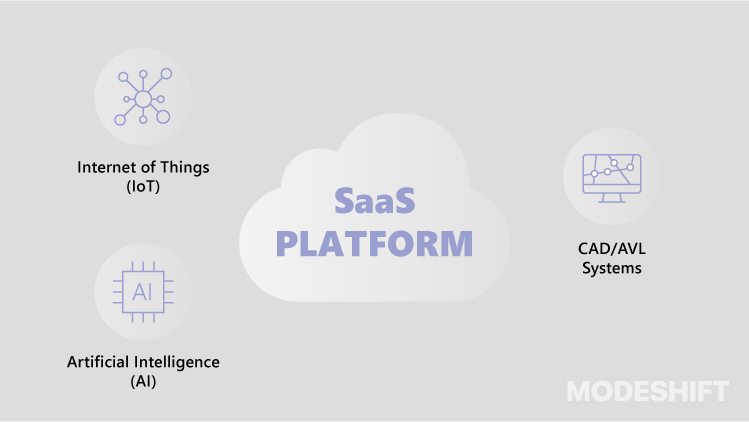
SaaS platforms use Internet of Things (IoT) sensors and Artificial Intelligence (AI) to further analyze equipment performance, shifting from “break-fix” models to proactive maintenance. This helps identify potential issues before they cause service interruptions, such as predicting when a fare gate component might fail. When SaaS solutions are paired with fleet management software such as Computer-Aided Dispatch/Automatic Vehicle Location (CAD/AVL) systems, agencies can improve routing and fuel efficiency while monitoring driver performance and vehicle health, allowing operators to reduce idle time and optimize maintenance schedules. Integrating CAD/AVL with asset management software also enables agencies to track equipment in real-time, automatically generating work orders and identifying maintenance needs before failures occur. This proactive approach reduces unexpected breakdowns by over 70% and lowers maintenance costs by 15–50%. Advanced CAD/AVL systems now feature battery monitoring that calculates in real-time a vehicle’s ability to complete its route, assisting in managing charging levels and optimizing service for electric fleets.
In Conclusion
SaaS is transforming the transit industry from a “hardware-centric” model to a “service-oriented” model, where the back office acts as the brain of the operation. This allows agencies to focus on providing better service rather than fighting with outdated IT infrastructure. Modern riders expect public transport to mirror commercial digital services, prioritizing convenience and a frictionless experience. Key trends in meeting these expectations include offering features such as mobile ticketing, real-time data, and account-based, contactless payments (using smartphones or credit cards). By reducing the costs of issuing paper tickets and handling cash, agencies can significantly reduce operational burdens while providing riders with user-centred technology that allows them to tailor their trips and create a more personalized experience, often similar to private ride-sharing services. Accurate, live information delivered through Software-as-a-Service (SaaS) platforms is another vital component in improving the passenger experience by reducing uncertainty, increasing trust, and enhancing service reliability. Live arrival predictions available on digital signs and mobile apps reduce perceived wait times by up to 30%, making services feel more reliable and user-friendly.
SaaS further enables smaller agencies with limited budgets to access high-quality technology that was previously too expensive to implement, transforming transit from a capital expenditure (CapEx) model to a pay-as-you-go operational expense (OpEx) model. Legacy systems often lock data within siloed hardware, making it difficult to analyze performance. SaaS platforms centralize this data in the cloud, allowing operators to make informed decisions. The availability of data on passenger loads and travel patterns allows agencies to adapt routes and schedules to actual demand, reducing wasteful service. AI-driven SaaS tools can work alongside these systems to effectively predict future demand and potential system bottlenecks before they occur. Since SaaS solutions are inherently scalable, agencies can expand their service areas or increase user capacity without major infrastructure changes. They can start with basic service enhancements, such as mobile ticketing, and gradually integrate new, advanced modules (such as MaaS integration or AI scheduling) as needed. SaaS platforms are designed to seamlessly connect different modes, such as buses, trains, and bike-sharing, into a single, unified mobility network, creating additional revenue streams and future opportunities for transit agencies.