
Public transit agencies are under tremendous pressure to modernize services and improve operational efficiency while offering enhanced customer experiences to riders. Many are turning to advanced software solutions that use modern technologies, allowing them to manage complex logistics, scheduling, and ticketing, with real-time data and information capabilities. As a result, public transportation networks are becoming more sophisticated, integrated, convenient, and accessible for passengers. They are also becoming more stakeholder-intensive and complicated to manage, with ticketing revenue allocation (revenue sharing) being one of the major complexities. Among the most popular software models currently in transit is the Software as a Service (SaaS) model, which delivers cloud-based, mobility solutions to agencies that can be accessed via the Internet. SaaS solutions provide transit agencies with the software they need to make better decisions, enhance service quality, attract ridership, and optimize operational efficiency, without the fuss of in-house digital maintenance. Revenue leakage is a common event for many businesses and can happen due to multiple factors. It typically refers to a loss of revenue that occurs when a company fails to capture all of the revenue that it otherwise would have processed due to various operational errors, inefficiencies, or contract non-compliances. In transit, revenue leakage often results from faulty payment processes, poor management of customer data, manual errors, mistakes in billing, and a variety of other issues. Transit agencies, particularly those deploying SaaS, are extremely vulnerable to revenue leakage because they rely on recurring revenue. In this article, we’ll look at how technology can assist public transport authorities in reducing revenue leakage, along with helping them address other systemic inefficiencies that lead to loss of income over time.
Technology Can Help Solve Many Of The Systemic Issues Leading To Revenue Leakage
In public transportation, agencies must recognize revenue leakage quickly, addressing the issue before it becomes a bigger problem. Earned revenue that is lost due to avoidable factors has the potential to significantly impact an agency by hindering its future growth. Revenue loss amounts to lost funds that could have been invested back into the agency for service improvement, upgrading of infrastructure, marketing, or team expansion. The key to combating revenue leakage is understanding the root cause and implementing a robust prevention strategy. Several factors contribute to revenue leakage, each posing a unique challenge for transit agencies and their financial stability. Some primary causes for revenue leakage include human error regarding data entry, billing, and mistakes made while invoicing. This accumulation could result in significant revenue losses over time, particularly if these events remain undetected for long periods. Errors of this nature are often due to manual processes prone to inaccuracies. For instance, an amount for an invoice that has been entered incorrectly or an overlooked billing period could result in dramatic revenue discrepancies over time. Relying on standard spreadsheets for financial data poses additional problems, as maintaining their integrity could prove to be very challenging and errors can easily propagate in numerous financial processes, leading to even more loss of revenue. Incorrect invoicing and billing could eventually result in underbilling or overbilling customers, which leads to disputes and loss of trust, ultimately impacting revenue. Ensuring all invoices are accurate and contain the correct amounts due remains critical for maintaining healthy cash flow and fostering good customer relationships. Some businesses might experience revenue leakage due to internal and external fraudulent activities and public transport agencies are no exception. The increased usage of technology in transit and enhanced connectivity pose certain risks for transport authorities tasked with safeguarding customer accounts and ensuring the integrity of passengers’ information which often includes bank details.
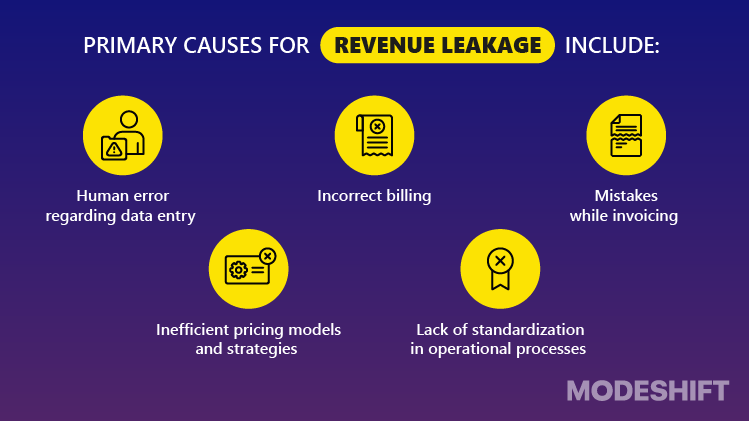
Inefficient pricing models and strategies could also fail to capture the full value of services and products, amounting to additional missed opportunities for revenue retention. Misaligned pricing can negatively impact a business’s customer relationship by charging them incorrectly. To ensure financial health in transportation, agencies must diligently reinforce the appropriate collection solutions. A lack of suitable dunning and collection tools that facilitate contractual payment obligations and bill late fees can cause further disturbances to financial operations. Reviewing pricing models regularly is critical to ensuring they continue to align with an agency’s business objectives and the changing market conditions. Inaccurate or incomplete data reporting could also lead agencies to make misinformed decisions resulting in substantial financial losses over time. Problems such as these can undermine the reliability of financial reports and essential decision-making processes, jeopardizing the company’s entire revenue stream. Understanding how to look at data and pricing from a strategic point of view can generate valuable insights that allow agencies to optimize revenue. Lack of standardization in operational processes can also contribute to a variety of inconsistencies within an organization which can lead to more inefficiencies and missed revenue opportunities. Transport authorities would be wise to invest in quality revenue management software to combat these issues and prevent future revenue leakage. Technology can address many of the systemic issues that lead to revenue leaks, and modern software solutions are readily available on the market, assisting agencies in automating numerous operational processes. One of the surest ways to prevent revenue leakage is by automating systems and processes, particularly those that deal with invoicing or any recurring payments. By deploying an automated recurring invoice software solution and integrating it with existing transit operations, agencies can eliminate any chance of human errors as well as inefficiencies that may slow down the recurring invoicing process or cause errors in manual spreadsheets.
How Comprehensive Solutions Aid Transport Authorities In Reducing Loss Of Revenue
In the context of SaaS, recurring revenue models tend to be complex, consisting of multiple plans, irregular billing cycles, and contract compliance specifications, making it easy for finance teams to make mistakes when invoicing. However, human error is far from the only source of revenue leakage as even modern billing software could find it difficult to keep up with SaaS processes. The majority of revenue leakage comes from incorrect billing, which occurs as a result of unbilled services and products, underbilling, delays in billing, and various errors regarding the collection of funds. Research by MGI indicates that around half (42%) of companies experience some type of revenue leakage, with some organizations expecting losses of 1% – 5% of realized EBITA, on an annual basis. Preventing revenue leakage is crucial for the success and well-being of transit agencies since it can significantly impact their ability to operate and provide services. Even small losses in revenue can add up exponentially over time and ultimately reduce profitability. The majority of transit agencies rely on streamlined, regular billing processes as well as customer data which is why it’s so critical that transport authorities invest in solutions that help them upgrade operations and set effective measures that address and prevent revenue leakage. To keep up with passenger expectations as well as advancements in modern technology, transit agencies need a comprehensive set of tools that lets them manage fleet, sales, and reports with impeccable accuracy and efficiency, preferably in one place. Conventionally, most day-to-day tasks in transit are delegated to multiple 3rd party providers, making running a transit agency both expensive and difficult to manage. Modern SaaS (Software as a Service) models are gaining traction due to their ability to equip transit agencies with a full stack of management tools whilst keeping costs down and removing a significant workload off the agency personnel’s shoulders.
Automatic Fare Collection (AFC) systems are a big part of this, helping agencies transition from a legacy model to a modern, easy-to-use fare collection system. These solutions typically come with robust back-office management, customizable mobile applications, and a wide variety of validation methods. Passengers can conveniently pay for their fares using their preferred method of validation, whether that’s their mobile phone, contactless credit or debit card, or a smart device of their choosing containing their digital wallet. In Account-Based Ticketing (ABT), a rider’s digital account serves as an identification document and proof of entitlement to travel, making traveling more secure and effortless for passengers as their accounts store all necessary data regarding subscriptions, fares, and validity of their travel documents. Modern AFC systems play a crucial role in how transit agencies monitor, report, and manage information going forward. Back-office management is efficient and seamless, consisting of components such as fare revenue accounting, passenger data management, and system performance analysis. Sophisticated mobility platforms offer advanced tools such as CAD/AVL which take things one step further by simplifying fleet management processes while also allowing transport authorities to monitor and improve efficiency in real-time. An AFC system is also capable of generating detailed reports regarding sales, ridership, fares, and usage patterns. These reports can easily be exported and analyzed so that the agency can stay up to date with essential processes and developments. The system’s robust reporting and tracking abilities aid in preventing fare evasion and revenue leakage. Transactions are logged in real-time, offering highly accurate data on all fares collected by the agency. This provides transport authorities with a 360-degree view of their systems, operations as well as performance metrics. Real-time insights and analytics aid transit agencies in day-to-day operations and are designed to provide unrestricted access to the administrators as well as generate custom reports based on any kind of requirements and needs. This can be of incredible importance for an industry that’s highly dynamic and constantly evolving. Agencies can get a better grip on fleets and transit assets, extending their lifespan along with improving how they monitor, adjust, and upgrade transit services based on demand.
The Importance Of Delivering Enhanced Passenger Experiences
Transport authorities are recognizing the importance of delivering enhanced passenger experiences as a way of safeguarding revenue. They are accelerating their efforts to better understand and respond to their communities’ needs by leveraging advances and rapid deployments in automation, connected technologies, mobility on demand, and sustainable and resilient technologies. Modern passengers’ evolving needs and preferences indicate that public transit agencies (PTA) and public transit operators (PTO) must shift from generic, one-size-fits-all transport solutions to providing customer-centric alternatives. One of the primary concerns of passengers is having access to accurate and timely information regarding their journeys. Modern Real-time Passenger Information (RTPI) Systems offer features such as estimated arrival times, trip duration, live vehicle tracking, and dynamic route planning. By implementing real-time information systems, such as digital signage and mobile applications, transport authorities can ensure that passengers stay informed about arrival times, delays, or any potential service disruptions. Interactive communication channels enable passengers to provide instant feedback and report issues, fostering a sense of engagement and responsiveness. Streamlining processes such as ticketing and fare collection is another essential component for improving passenger experience. Smart ticketing solutions, such as contactless payments and mobile ticketing apps, remove the need for physical tickets and reduce waiting times. According to Visa’s recent Future of Urban Mobility study, it was concluded that over 94% of transit riders expect contactless payments as part of public transit service offerings. Modern ticketing solutions allow riders to purchase fares using their preferred payment method such as contactless bank cards or any smart device they choose. This streamlines the process of traveling, removing the hassle of obtaining tickets and resulting in faster and more pleasant journeys for passengers. Open-loop contactless technology is supported by Account-based Ticketing (ABT) architecture, which takes fare collection even further to what is referred to as the ‘back-office’ where the rider’s data is processed and stored into a secure account. ABT architecture is considered next-generation ticketing in transit, with the potential to dramatically advance the way we get onboard transit systems, implementing a virtually unlimited range of technologies, from biometrics to Bluetooth, geofences to ultrasonic data.
Technology allows agencies to deliver highly personalized travel experiences that cater to individual needs and preferences of passengers. For instance, modern journey planning apps assist riders in finding the most efficient routes based on their preferences and historical data. Interactive displays and immersive onboard entertainment systems play a crucial role in further enhancing the overall travel experience, providing passengers with informative and engaging content during their trips. An Infotainment/Public Display Monitor system offers additional benefits to agencies due to their ability to generate additional revenue streams through on-board digital advertising. An Infotainment/Public Display system consists of a display monitor, installed in one or more locations on the transit vehicle, and a media player, usually located alongside the bus video surveillance equipment. Media players are portable and compact and display video or images based on specific pre-defined campaigns, priorities, or location-based data. Using digital displays, along with introducing user-friendly mobile apps and websites could go a long way in equipping passengers with the digital tools they need to plan and execute journeys with as minimal friction as possible. This means they get consistent and reliable access to up-to-the-minute information on schedules, disruptions, and alternate routes. Automated Passenger Counting (APC) systems can assist transport authorities by providing an accurate, efficient, and cost-effective solution to one of the most critical aspects of transit management – knowing the exact number of passengers on board. Cutting-edge APC systems incorporate innovative 3D sensor technology that accurately maps as passengers get on and off transit vehicles. By looking at various patterns of transit use and linking boarding and alighting data with stop or station locations, transit agencies can swiftly adapt fleets and vehicle types to meet current demands, in the most optimal way. The APC system delivers impeccable precision and can differentiate between passengers and other transportation-related objects. Advanced AI technology based on the time-of-flight (TOF) principle, makes it possible to accurately distinguish different objects entering the vehicle such as wheelchairs, bicycles, strollers, backpacks, or even animals. Over time, agencies can analyze historical and real-time data to effectively optimize vehicle frequency and routes, allowing for better planning of services, more efficient resource allocation, and enhanced route management.
Multimodal integration and seamless transfers between different modes are two crucial elements in elevating the passenger experience. Agencies can extend the scope of their offerings by investing in multimodal transportation that enhances convenience and connectivity for riders along with improving reliability. This will require initiating the right partnerships with players from the private sector including tech vendors and setting a robust strategy in place. To guarantee success and drive the adoption of new service models, agencies must keep all infrastructure and technology user-friendly, ensuring it’s intuitive and accessible for all members of society. Furthermore, integrating multimodal transportation with an Intelligent Transportation System (ITS) allows transport authorities to address some of the riders’ biggest complaints, such as crowded transit vehicles, slow and unreliable services, delays, and long dwell times. ITS facilitates a seamless flow of passengers across the entire network, resulting in increased capacity, better overall performance, and bigger ROI on investments. When designing public transport vehicles and infrastructure, transport authorities should keep passenger comfort and accessibility in mind. Aspects such as ergonomic seating, sufficient legroom, and adequate ventilation contribute significantly to more pleasant travel experiences for passengers. Additionally, introducing features that improve access to public transit systems such as ramps, elevators, and priority seating for people with disabilities or mobility challenges guarantee inclusivity and equal access for all passengers. The safety of riders is also paramount when it comes to establishing secure and reliable transport networks. Technology can aid agencies in reinforcing robust security measures, such as surveillance cameras, emergency communication systems, and panic buttons. AI systems are capable of analyzing large amounts of data from multiple sources, such as sensors, cameras, and social media, identifying patterns, detecting anomalies, and predicting potential safety risks. This can aid operators in taking proactive measures that prevent accidents and incidents before they occur. For instance, AI-powered video analytics can consistently monitor public transportation facilities and vehicles to determine if there are potential safety hazards, such as unattended bags or suspicious behavior from passengers. AI systems can also analyze traffic patterns and weather conditions to optimize transit routes and schedules, decreasing the chances of accidents as a result of congestion or adverse weather. Furthermore, intelligent algorithms and predictive analytics can determine equipment failures before they occur and recommend actions toward maintenance, further reducing the risk of malfunctions that can lead to accidents.
Safeguarding Revenue Through Enhanced Cybersecurity Measures
Today’s digital economy is heavily reliant on the trust and security of its users. Cybersecurity, which incorporates strict measures to protect digital systems, networks, and data from infiltrations, attacks, and unauthorized access, is the foundation from which companies build trust with their customers. On the other hand, privacy involves safeguarding personal information and granting individuals access and control over how their data is collected, used, and shared. Cybersecurity attacks could dramatically impact public transportation systems by taking down passenger information systems, infiltrating company’s websites, and granting unauthorized access to internal software. While this might not pose an immediate threat to passengers or employees, it could severely disrupt services in the network, causing extensive journey delays, network failures, and the inevitable loss of passenger trust along with revenue. Due to the increased reliance on information technologies in transit, cyber attacks could occur as easily as connecting to a public WiFi network, resulting in the theft of personal information and data. While freely available internet connection has become somewhat of a standard requirement for passengers, operators and authorities need to ensure their networks are safe from hackers, at all times. Maintaining the integrity and security of data is not only an expectation from riders but also a legal obligation of the data controller. For instance, under the European Union’s GDPR regulations, a breach of data confidentiality is an offense punishable by fines of up to 2-4% of sales turnover. Transport for London (TfL) is a prominent example of the need for robust cybersecurity measures, having experienced a significant cyber attack in 2024 which severely affected its internal systems. While the attack did not cause disruptions to public transport services, it exposed sensitive data, including the personal information of around 5,000 customers and their bank details.
Public transport authorities handle large amounts of incredibly sensitive data, which includes the personal information of passengers and employees, making them prone to cyber threats. They are also in control of vital infrastructure, and any disruptions caused by potential attacks could lead to serious consequences regarding the safety and reliability of transit services. The increasing usage of various technologies in public transport, such as automated systems and smart payment systems, contributes to the enhanced vulnerabilities of the sector, making it a frequent target for hackers who want to exploit any weakness. Prioritizing the security of these systems is fundamental to ensuring a public transport company can continue to grow and succeed in a highly competitive sector. As agencies upgrade their systems and operations to make them more efficient, they must invest in solutions that secure and protect all aspects of their organization. This includes every automated system or piece of digital infrastructure, from ticketing to track signaling which has been shown to be susceptible to cyber-attacks. With this in mind, effective cyber security measures are fundamental to securing mass transit operations. Cyberattacks can disrupt the operational flow of entire networks, affecting the safety of passengers and staff, ruining a company’s reputation, and generating huge financial losses. Public transport operators must therefore deploy coherent cybersecurity measures from the beginning and incorporate them into all their processes, especially procurement. Integrating cybersecurity requirements for operations is no easy task, especially as most operators and transport authorities might not have internal specialists capable of supporting the tendering process. UITP’s Cybersecurity Committee’s “Practical guidelines on cybersecurity requirements: Requirements in tendering” is a great resource for agencies to help them distinguish what needs to be done during tenders and how to apply the resources available to ensure appropriate cybersecurity protection.
Several emerging technologies can help safeguard transport authorities’ revenue through enhanced cybersecurity and privacy measures. Encryption technologies, for instance, can protect data by converting it into a secure format that can only be accessed by authorized users. Regarding apps, end-to-end encryption secures transactions and guarantees that sensitive information remains confidential and protected from unauthorized access. Multi-factor authentication (MFA) incorporates an additional layer of security by requiring users to present two or more verification factors to be able to gain access to their accounts. This measure reduces the risk of unauthorized access significantly, even if passwords happen to be compromised. Blockchain technology is another great tool that can enhance security and privacy by providing decentralized and tamper-proof storing of user records. For instance, identity management systems integrated with blockchain technology can provide secure and verifiable digital identities for users, diminishing the risk of identity theft and fraud. Advanced technologies such as AI and Machine Learning can detect and respond to cyber threats in real-time while analyzing patterns and anomalies in data, helping identify security breaches and automatically reinforcing protective measures. As the digital economy continues to expand, it will become imperative for agencies to have adequate measures and standards in place regarding cybersecurity and privacy. This will be an essential part of helping maintain user trust and protecting revenue from eventual losses. Passengers whose data has been compromised even once will likely refrain from using the services of that given company in the future, even if they are reassured. By implementing targeted strategies and leveraging advanced technologies, transport authorities can facilitate a secure digital environment where everyone can use their services with confidence and ease.
Other Strategies For Revenue Protection In Public Transport Systems
Public transportation is a vital component of life, ensuring freedom of mobility and independence to various groups across communities. For members of society with disabilities such as visually impaired individuals, accessing public transportation can pose significant challenges. Public transit authorities have an important role to play in building inclusive communities by making sure their systems remain accessible to everyone. This opens up more opportunities for employment, education, healthcare, and social activities, contributing to a higher quality of life. It’s reported that in the U.S., around 12 million people have partial or complete vision loss and they need to rely on their hearing ability as a way to navigate or apprehend their environment. Audio beacons are an efficient audio signage solution that allows blind and visually impaired people to locate entrances of transit stations, make their way to elevators, or locate ticket counters, restrooms, and baggage lockers. They are also essential when it comes to guiding visually impaired passengers toward the right transit platform. Passengers with visual impairments can activate audio beacons through a remote control and a free smartphone app. This essentially means that the remote activation of audio beacons is entirely in their hands and these devices could be used at all times whenever they use public transportation. Public transport authorities, on their end, don’t have to provide the activation devices, they only need to ensure that they set up audio beacons at the points of interest within their network. Furthermore, audio beacons work with on-demand activation which means that they only state their message when a visually impaired user activates them.
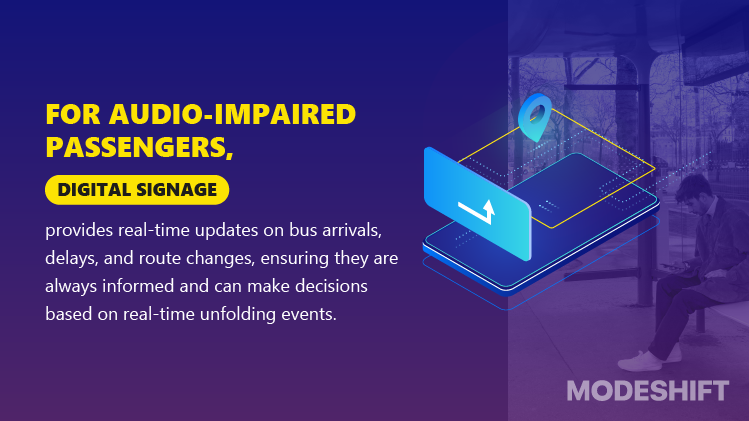
For audio-impaired passengers, digital signage provides real-time updates on bus arrivals, delays, and route changes, ensuring they are always informed and can make decisions based on real-time unfolding events. On the other hand, visually impaired passengers could also benefit from clear and loud audio announcements regarding information on journeys, any disruptions, delays, and changes to schedules. Hearing loop integration solutions can also ensure audible clarity and comfort for hearing-impaired passengers. A robust CAD system with Disruption Management capabilities is critical to ensuring that passengers receive real-time schedules and route updates via both digital signage and automated audio announcements. When integrated, these tools can facilitate access for all passengers, regardless of their abilities. Transit agencies could also improve network access by investing in advanced ITS technology solutions. For instance, advanced APC technology and ridership reporting software offer valuable data on wheelchair ramp deployments. It can differentiate when actual wheelchairs, as opposed to grocery carts or strollers, board the vehicle. This information aids transit agencies and municipalities in gaining a better understanding of where there is demand, gaps, and need to improve infrastructure, such as sidewalks and curb cuts, at and around stops with the highest wheelchair usage, ensuring improved accessibility. Digital signage and automated announcements could go a long way in addressing decades-long issues of accessibility which served as a barrier that kept certain people from using public transit. This opens a whole new realm of opportunities for transit authorities to tap into new revenue streams by facilitating partnerships with private companies that offer these solutions along with retaining a new customer base. In the past, people with disabilities often had to resort to private means of transport which are typically expensive and limit their freedom of mobility. If agencies approach this right, these members of society are likely to choose cost-effective travel options such as public transit for their future commutes.
Overcoming the challenges of manually analyzing video feeds from security cameras can also be difficult and time-consuming for transport authorities who use video surveillance on their premises. Security agents typically spend hours checking multiple computer screens and their efforts might still prove futile, particularly regarding fare evasion. Safeguarding fare collection is a crucial component of ensuring public transport’s financial sustainability which is why it shouldn’t be overlooked. Agencies can draw more value from their video surveillance networks by leveraging cutting-edge technologies for Video Analytics. Recent advances in Artificial Intelligence and Deep Learning make it possible to streamline the processing of large amounts of data from video feeds, allowing for real-time monitoring and detection of events, by transforming raw video data into intelligible video information. This could have a dramatic impact on agencies of bigger size who have to manage hundreds and even thousands of security cameras installed throughout their transit networks. Having real-time situational awareness regarding passenger safety, any unfolding events or the status of transit assets could prove indispensable in facilitating trust as well as saving valuable resources and time. Fare evasion is a major problem that has contributed to billions of dollars in losses for transport operators worldwide. Data shows us that in 2019 alone, fare infraction losses amounted to more than €500 million in France, $250 million in New York’s MTA, and an additional 100 million in London’s TfL. AI Video Analytics have shown great potential in helping reduce fare evasion at transport access nodes that use turnstiles or swing gates. Video cameras installed above transit gates allow AI systems to monitor and analyze passenger flow while sending out alerts when detecting anomalies such as fare infractions. Such systems can also operate 24/7, with a consistent level of efficiency. Furthermore, as the initial model completes its training phase and reaches an acceptable degree of efficiency, it continues to learn and evolve, delivering more benefits over time.
In Conclusion
The efficient management of assets and operations in transit is crucial for transport authorities in maintaining stable financial health, keeping track of data and financial records, and reducing the chance of potential revenue losses. Data and technology are now an integral part of transport planning, they are no longer exclusively available to IT departments. Upgrading services and operations through various advancements in transit technology is essential for meeting passenger expectations and making sure that PTOs and PTAs can establish safe and reliable public transport systems. The future of mobility demands that agencies equip themselves with digital tools to help them progress and innovate in an increasingly connected and digital environment. Failure to adapt and advance in this direction could eventually lead to a decline in ridership which results in loss of revenue. Public transportation authorities should be wise to invest in a digital transformation strategy that is both realistic and practical, meaning one that corresponds to their unique needs as well as capabilities, otherwise their efforts could prove futile. It’s better to start small, invest wisely, and scale up based on results, rather than indulging in overly complex and expensive solutions and having no real, feasible strategy on how to manage them or use them to their full potential. PTOs and PTAs will need to collaborate with various public and private players to realize the maximum benefits of new mobility modes, solutions, and advanced transit technologies. This means seeking guidance on how to properly govern and deploy new services and solutions and ensuring transit staff have an adequate level of digital literacy to operate them. It’s also imperative that any new transit tech remains easy for passengers to understand and use. The evolving digital economy is offering new ways for agencies to expand, improve, and earn revenue which is why they should embrace these new opportunities. By doing so they could achieve substantial benefits in terms of growth, benefiting them along with cities and passengers.