
People’s mobility needs have changed drastically since the pandemic and it’s expected this will continue in the years to come due to various developments in the sector and advancements in technology. Passengers expect better services from transport providers when it comes to convenience, reliability, affordability, and accessibility, otherwise, they are quick to seek other alternatives. If transport providers want to stay competitive in an industry that’s rapidly evolving, they must adopt strategies that not only meet current demands but also anticipate future needs. Public transit ridership levels in the U.S. reached around 7.1 billion trips in 2023, highlighting the sector’s ability to not only provide basic mobility to populations but also contribute to the creation of more livable, climate-neutral, and inclusive cities. In this article, we’ll look at why establishing high-quality transport systems that are adaptable, resilient, and sustainable should be a top priority for any city and transit agency. We’ll also go over how this can be achieved with the help of technology, careful planning, and collaboration along with some examples of what transit agencies are doing nationwide to boost ridership and improve networks.
Transportation Providers Should Be Focusing On Establishing High-quality Transport Systems
Transport providers need to be clever and agile in understanding and responding to the needs of communities if they want to create future-proof transit systems that increase and retain ridership. It’s not just about investing in the newest tech, it’s about knowing who these digital tools serve and how to effectively implement them to ensure they produce a positive and lasting impact. Riders want fast, efficient, and reliable transit services that support multimodality and are willing to choose it over their cars if it’s available to them. A recent report published by Hitachi Rail in 2023 investigated attitudes towards public transport and smart mobility in eight major cities around the globe, including Washington, D.C., and Toronto, Canada. The results showed that over three-quarters (75%) of people would prefer to use services from a better-connected public transport system instead of driving if they were presented with the option. The report further demonstrated an increase in global demand for smart transport solutions to deliver enhanced cost, convenience, and comfort, with an underlined willingness to fund improvements and upgrades through increased taxes on private transport.

The renewed interest in improving transit services across the U.S. is driven by various innovations around the globe in combination with other social and political factors. Advances and rapid deployments in automation, connected technologies, mobility on demand, and sustainable and resilient technologies have made it possible to move toward an era where mobility is more accessible, environmentally friendly, and convenient. The evolving needs and preferences of riders mean that public transit agencies (PTA) and public transit operators (PTO) must shift from providing generic, one-size-fits-all transport solutions to customer-centric alternatives. Solutions are no longer being created solely by the private sector; the public sector has shown a strong desire to partner and co-create solutions that improve mobility for everyone. For all those reasons, governments worldwide are considering new alternatives that integrate various advances in mobile technology and artificial intelligence to enhance current networks. “Microtransit” is a good example of a solution that can be deployed relatively quickly and is inexpensive compared to big-ticket projects. Microtransit, often referred to as DRT (Demand Responsive Transport), is essentially a distinct combination of ride-hailing services integrated with the convenience of a city bus.
It’s also important to remember that urban transportation is a public service and must remain accessible to all members of society. Many professionals in the industry believe that our best bet is expanding the networks we already have and working toward upgrading them rather than solely focusing on providing fancy tech solutions to riders. For example, buses are often viewed as the most feasible option for substantially expanding public transit ridership in the U.S. Millions of Americans depend on affordable public mobility for work, study, and other essential needs and car ownership has long been a financial burden, particularly to low-income families. In the past two decades, Seattle’s Sound Transit has successfully managed to upgrade its bus network, aligning these enhancements with increased residential density, affordable fares, and a carefully selected expansion of its light rail. Other cities such as San Francisco and New York have established exclusive bus lanes that transport passengers along the most frequented routes, at elevated speeds. Indianapolis is striving to expand its bus rapid transit system extensively, with great results so far. Other cities, including Denver and Boston, are also heavily investing in improving bus networks through upgrades emphasizing frequent service, seamless transfers, and enhanced geographic coverage.
Investing In The Right Transit Technology Is Key To Moving Forward
There are plenty of things agencies are doing to boost ridership and improve networks, including redesigning bus routes so they are concentrated in areas with the most demand. Investments that enhance the speed and reliability of bus transit, such as dedicated lanes and transit signal priority (TSP), are among the most cost-effective ways to improve transit service. Digital infrastructure is another powerful tool that can help initiate a new future of smart and innovative mobility defined by a customer-centric approach focused on the needs of communities. Technology creates the conditions needed to facilitate the necessary changes in public transit which can be adapted in real-time, as demand changes. An increasing number of public transit agencies are leveraging cloud-based solutions as a way to gain a better understanding of ridership trends. They’re applying the speed and scale of cloud infrastructure to analyze the gathered data, extracting valuable insights that will let them improve services in the long run. Cutting-edge technologies such as Artificial Intelligence (AI) and machine learning allow for better analysis of data, route optimization, and predictive maintenance. A data-driven approach to transit makes agencies more effective in their efforts to enhance operational efficiency, decrease travel time, and save fuel and valuable resources while increasing passenger satisfaction.

Applying the right technology to transit can dramatically improve how entire transport networks function, resulting in more efficient operations. For instance, Internet of Things Sensors assist in the monitoring of daily activity. Agencies could also utilize Computer-aided Dispatch, in combination with Automatic Vehicle Location, Intelligent Transportation Systems, and Automated Fare Collection Systems. Geographic Information Systems assist in the tracking of vehicles while 5G cellular devices keep data moving. Transit agencies should be wise to choose comprehensive solutions with software that provides quality reporting, scheduling, and fleet management tools. They will also need to follow up with a feasible strategy that includes partnering with the right vendor, integrating, and adapting solutions to fit the needs and requirements of populations and future-proofing fleets through smart upgrades. This will increase chances for a return on investment for assets including newly deployed solutions such as comprehensive ticketing platforms or new fleets of transit vehicles.
It’s also worth keeping in mind that when building a mobility platform from the ground up, integration, compatibility, and interoperability should be the main points of focus for service providers. Platforms need to be designed so that they can be easily integrated with existing transit systems without having to depend on costly hardware replacements. The integration of back-end technology into public transit operations can supply transport providers with the digital tools they need to effectively manage their fleets along with assisting in the tracking and analysis of vehicle telematics, charging, and infrastructure, ensuring optimal energy usage. A good example is New York City which has invested around $1B of funds into digital infrastructure. By applying ITS bus telematics, it managed to prioritize the movement of buses via transit signals, resulting in 5-14% more efficient bus speeds, meaning they could transport people more quickly and effectively. This data aided the city in converting lanes for buses, increasing ridership by over 14% and reducing injuries. Even more impressive, NYC used ITS data and sensors to successfully draw up a plan to convert a lane on the Brooklyn Bridge to a bike and pedestrian path, increasing walking by a staggering 80% without disrupting traffic.
Why Future-proof Software In Mass Transit Needs To Be SaaS-based and Cloud-native
Older systems in mass transit are gradually becoming replaced by faster and better next-generation platforms that are cloud-native and designed to support new services, data sources, and integration with other modes of transportation. Mobility solutions are being launched and adopted at an unprecedented rate, meaning that public transit agencies and operators will have to be ready to support new service models that extend beyond legacy software. Future-proof software in mass transportation needs to be SaaS-based and cloud-native for a variety of reasons. For one, the majority of scheduling software in transit is currently desktop-based or client-server-based, both of which are pretty old-fashioned compared to modern SaaS solutions. This is widely thought to hinder the progress of upgrading mass transit due to the software’s inability to keep up with all the heavy lifting of modern planning and scheduling of transit services.
SaaS systems come with cloud-native apps and enhanced scheduling features that offer better speed and more advanced technologies as opposed to older optimization algorithms which can be notoriously slow. Furthermore, these systems are essential for setting the groundwork that will allow mass transit to fit in with the age of MaaS. Since future MaaS platforms combine many services into a single, unified platform, conventional mass transit needs to be able to easily integrate with MaaS when it comes to both the operational and technological aspects. Future-proof software has to be both flexible and ready to handle large amounts of data if transit operators hope to make better planning and scheduling decisions. One of the biggest advantages these sophisticated solutions have to offer agencies is their ability to consume and extract valuable insight that can be used in multiple ways to improve systems and operations. Once transit operators collect data from multiple sources, they can then feed it directly to Artificial Intelligence applications to elevate their operations to a whole new level.
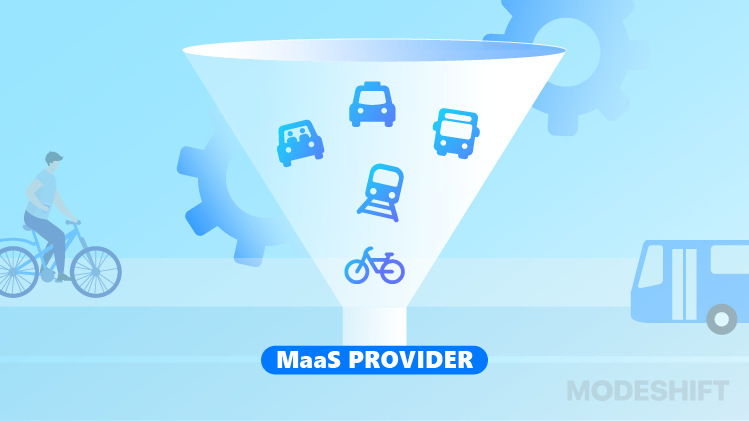
Future software in transit will also act as an enabler for collaboration between various stakeholders in organizations or team members within the same agency and operators. Many agree that data standardization will play a crucial role in improving future mobility. As transportation providers begin to accumulate large amounts of data generated by new platforms and technologies in mass transit, it will become imperative that data-sharing occurs between private and public players. This is particularly important for technological providers who could use this to create products and solutions that are tailored based on the individual needs of agencies and their customer base. Cloud-native platforms offer transport providers a comprehensive set of tools that allow them to scale based on demand, with better flexibility, and resilience while reaping the benefit of enhanced security, performance, and continuous innovation. Agencies that embrace cloud-native architecture will be able to take advantage of the many new possibilities these solutions have to offer, including streamlining operations, delivering exceptional services to customers, and staying ahead of the ever-evolving competition in the transit landscape.
Sustainability Is A Fundamental Component Of Future-proofing Public Transport Systems
Transport providers are in a unique position where they can advocate for a greener and more environmentally friendly future for transit. By incorporating eco-friendly practices and technologies, transit agencies can achieve sustainability targets by reducing their environmental footprint and contributing to the creation of greener cities. For instance, introducing new fleets of green transit vehicles allows agencies to provide residents of urban areas with an environmentally friendly alternative to traditional fossil-burning vehicles. By eliminating tailpipe emissions, riders can benefit from cleaner air as well as quieter and more pleasant journeys. The landmark Infrastructure Investment and Jobs Act (aka “Bipartisan Infrastructure Law”) is currently providing financial aid to agencies big and small for various projects aiming to decarbonize public transit. This includes transitioning to renewable energy sources along with investment in green transit vehicles. Replacing standard diesel buses with more eco-friendly, electric models can help cities achieve great results in reducing overall air pollution, lowering greenhouse gas emissions, and improving air quality for all residents.
Decarbonizing transit and reinvestment in systems will redefine the sector from 2023 onwards, which is thought to further accelerate ridership growth by improving connectivity and accessibility during trips. The widespread adoption of zero-emission transit vehicles in combination with the use of cleaner fuels such as hydrogen, reemphasizes the sector’s ability to contribute significantly to a cleaner future for everyone. Furthermore, newer transit vehicles also come equipped with the latest technologies, meaning agencies can take full advantage of the many sophisticated features and digital tools that allow them to upgrade and elevate their systems and operations. This will be of even greater significance as transit providers begin to form partnerships with public and private service providers to offer comprehensive mobility solutions. Once Mobility-as-a-Service (MaaS) platforms and Mobility Hubs have been integrated into local transport networks, they can further reinforce positive behavior change among riders by encouraging them to think multi-modally and undertake multipurpose trips. This will essentially make public transit more attractive by facilitating access to additional low-carbon mobility modes for first- and last-mile connections.

Complete Streets stands as another innovative approach to roadway policy and design, allowing us to rethink the way we structure urban environments, starting with our streets. City planners, state officials, and transportation providers have been working together to establish better pedestrian, bicycle, and transit infrastructure to facilitate safe mobility access for all road users, regardless of their preferred mode of transport, age, or experience. Transit providers must take the necessary steps to adapt to the changing needs of urban centers as these policies are expected to gain traction in the near future. This means investing in the required infrastructure as well as redesigning transit so that it becomes people-oriented, prioritizing the needs of communities and citizens over cars. Future-proofing transit fleets is essential for adapting to the changing demands of growing urban populations and making sure we meet climate goals. By optimizing fleet management, enhancing passenger experiences, and fostering data-driven decision-making, agencies can truly excel in today’s highly competitive landscape by building resilient and efficient public transport systems.
In Conclusion
Establishing high-quality transit networks is certainly not an easy task, especially when we consider the majority of difficulties agencies deal with regarding capital funding, workforce shortage, aging infrastructure, repair needs, and other operational challenges and inefficiencies. We’ve also seen numerous failed projects and attempts at modernizing networks with new tech and green vehicles, making it all that much harder to establish a fail-proof strategy. Transport providers will have to be rigorous in their efforts if they hope to succeed in moving forward with investments such as newly deployed solutions or transit fleets. This means hiring the right professionals to help them along the way, collaborating with service and tech providers, and being meticulous about analyzing the results from each step. With the right strategy, continuous effort, and perseverance, transit agencies stand a chance of contributing to a future where mobility is truly sustainable, efficient, and accessible to everyone.
AUTHOR

Ilina Chipilska is a marketing expert with more than 10 years of experience being involved in a wide range of projects. At Modeshift she manages all marketing activities and the company's online presence.


