
SaaS (Software-as-a-Service) platforms in public transit offer substantial benefits to transit agencies by enabling them to move away from rigid, legacy, on-premise systems toward flexible, cloud-native solutions that support rapid deployment, lower costs, and continuous, data-driven improvements. Transit authorities can eliminate the need for expensive in-house IT infrastructure, hardware, and ongoing maintenance by paying only for the tools they use, significantly improving cash flow and reducing overhead. By adopting a subscription-based model, transit operators can implement advanced technologies, such as on-demand microtransit, Account-Based Ticketing, and AI-driven route optimization, without the high upfront capital expenditure.
In this article, we’ll examine how SaaS solutions help agencies save money and resources by improving fare collection, increasing productivity, and maximizing revenue. We’ll also go over some common misconceptions regarding the technology, followed by challenges and how transit authorities can overcome them.
1. Reduced Capital Expenditure (CapEx) and Upfront Costs
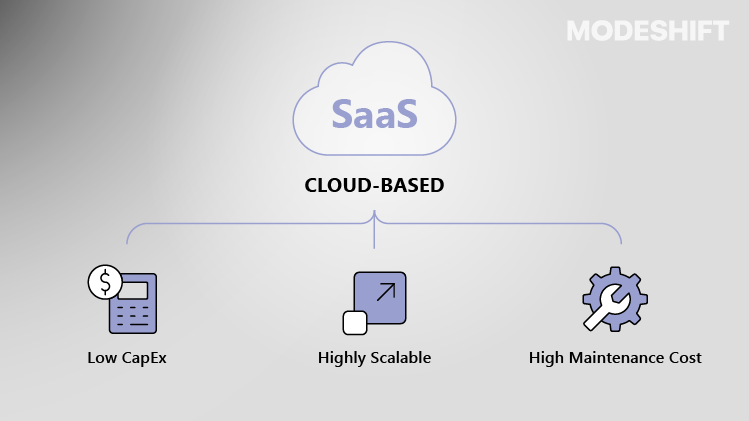
SaaS platforms help reduce Capital Expenditure (CapEx) and upfront costs in public transit by shifting technology expenses from large, one-time, upfront investments to predictable, smaller, recurring, and operational expenses (OpEx). Traditional systems require that agencies purchase and manage on-site servers, data storage, and network hardware. In contrast, SaaS solutions are hosted in the cloud, removing these initial capital outlays. As the software is managed by third-party providers and accessed via the internet, there is a decreased need for specialized on-site, high-cost computing equipment, lowering the initial barrier to entry. Instead of a large upfront licensing fee, transit agencies can pay for software usage through recurring monthly or annual subscription fees that cover access to the software, support, and continuous updates. This moves technology spending from the CapEx budget to the Operating Budget (OpEx), which is often easier to manage.
By leveraging shared platforms (multi-agency, “shared-code” models), the development and maintenance costs are spread across multiple agencies, significantly lowering the overall cost of ownership. SaaS platforms utilize open APIs (Application Programming Interfaces) to connect with other systems, such as MaaS platforms, payment providers, and on-demand transit services. This prevents vendor lock-in and allows agencies to build a modular, best-in-class technology ecosystem at an affordable price. They also enable real-time or near-real-time data synchronization across platforms, eliminating manual data entry and reducing errors that can result in additional expenses for agencies. By integrating with specialized third-party services, SaaS platforms offer a wider range of features and functionalities without having to build everything from scratch. Supporting APIs further enables third-party developers to build integrations, plugins, or complementary apps, fostering a larger ecosystem around the core SaaS product.
2. Lower Operational and Maintenance (OpEx) Costs
Software-as-a-Service platforms replace inflexible, on-premise legacy systems with cloud-native solutions that can evolve alongside technology and rider needs. These platforms enable rapid updates, scalability to meet changing demand, and integration with emerging technologies such as Mobility-as-a-Service (MaaS) and AI. Unlike legacy systems, which rely on costly manual upgrades, SaaS providers deliver regular, automatic software updates, security patches, and new features to all users simultaneously. This ensures agencies have access to cutting-edge technology without major capital expenditure. By investing in a SaaS platform, agencies remove the need for specialized in-house IT personnel by shifting maintenance, security, and infrastructure management to a third-party provider. Instead of managing on-premises servers and patching legacy software, transit agencies can deploy subscription, cloud-based solutions for operations such as route planning, scheduling, and ticketing.
Since the vendor handles all software updates, security patches, and system maintenance, transit personnel are freed from these routine tasks, allowing them to focus on more strategic initiatives such as service improvements. SaaS providers, particularly those powering Account-Based Ticketing (ABT) and Real-time Passenger Information (RTPI) Systems, are critical to ensuring that sensitive passenger data is protected. These providers implement rigorous security protocols, including encryption, regular, automated backups, and robust disaster recovery plans, helping maintain data integrity during transit and at rest. Rather than stretching resources or relying on limited IT staff, agencies benefit from having specialized, high-level security expertise at their disposal. These security measures help public transit agencies address challenges such as regulatory compliance (e.g., GDPR, PCI-DSS), prevent data breaches, and ensure the reliability of digital infrastructure.
3. Rapid Deployment and Agility
SaaS (Software-as-a-Service) solutions enable agility in public transit by allowing agencies to instantly scale technology resources up or down based on real-time ridership demand, seasonal changes, or special events. SaaS platforms provide elastic resources that adjust system capabilities in real-time. During peak travel seasons or special events, agencies can instantly scale up computing power, storage, and bandwidth. Because SaaS solutions are already built and hosted, new routes, demand-responsive transit (DRT) zones, or ticketing features can be launched in weeks or days, allowing operators to react swiftly to changing transit demand. Agencies in tourist areas or cities with large academic populations can scale their services up during high-demand months and down during quiet periods without being stuck with excess capacity. If a city expands its transport network, the software can accommodate the new data and user requirements without significant overhauls to the existing technology stack. SaaS provides the necessary agility for agencies to modernize services, such as implementing Account-Based Ticketing, in a step-wise approach that minimizes disruption to daily operations.
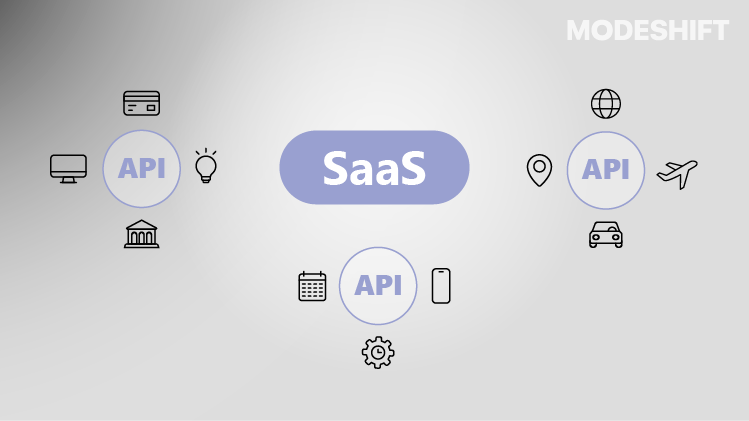
SaaS solutions rely on APIs (Application Programming Interfaces) and SDKs (Software Development Kits) to act as “digital glue,” connecting modern cloud-based software to legacy hardware (like validators and ticket machines) and third-party systems. They enable this through modular, open-architecture platforms that facilitate real-time data exchange, faster deployment, and interoperability without needing costly overhauls. By adopting modular, API-based architectures, agencies can move away from single-vendor, “monolithic” contracts, allowing them to connect specialized Software-as-a-Service (SaaS) tools, such as advanced fare collection, real-time tracking, and passenger information systems, with their existing infrastructure. APIs enable SaaS platforms to communicate with IoT-enabled hardware, including on-board vehicle validators, traffic cameras, and digital passenger information screens, ensuring data consistency across the network. This guarantees the correct feeding of live data to provide real-time updates on arrivals, delays, and routes (e.g., GTFS-RT), which are then pushed to websites, apps, and display screens.
4. Enhanced Operational Efficiency And Revenue Optimization
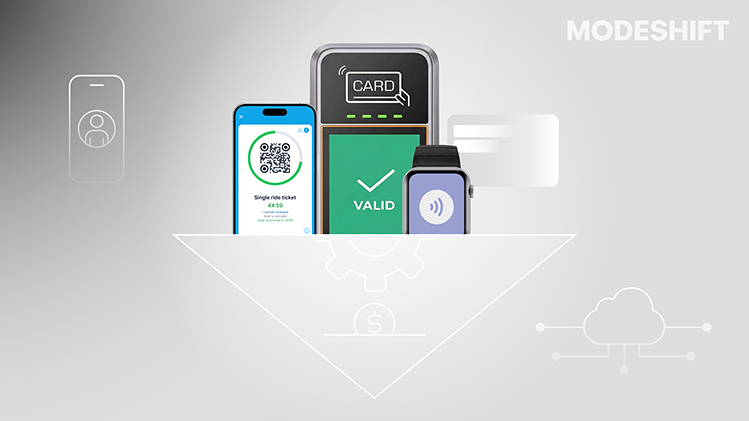
SaaS providers help optimize revenue in public transit by shifting ticketing from legacy, hardware-centric systems to Account-Based Ticketing (ABT) platforms. This is done via Fare Payments-as-a-Service (FPaaS) models, enabling transit agencies to quickly and cost-effectively implement modern “tap-and-go” payments, fare capping, and multi-modal integration. Traditional systems required fare calculations to be hard-coded into physical validators, making updates slow and expensive. SaaS ABT moves this logic to a cloud-based back office. Since the system is cloud-native, new features, security updates, and fare policy changes can be pushed out simultaneously to all customers, allowing agencies to innovate without hardware replacements. They can choose to pay a subscription fee rather than investing in expensive infrastructure, enabling smaller operators to adopt the same technology as large cities. Account-Based Ticketing (ABT) simplifies travel by shifting the storage of travel data, rights, and payments from physical cards or tickets to a secure, cloud-hosted back-office account. Passengers can use their existing contactless bank cards (cEMV), smartphones, smartwatches, or QR codes to pay for transit services, eliminating the need for physical tickets or smartcards.
With the introduction of ABT, a single account can be used across various transport modes (buses, trains, or metro). Users can access their travel history, recent trips, and check balances in real-time via mobile apps or web portals. If a card or phone is lost, the account and its value are not lost because they are not stored on the physical item. Since all data is aggregated in the back office, the system can automatically apply best-value fares (daily or weekly caps) based on the user’s travel history. This increases trust in public transport systems and encourages ridership. A single identifier (e.g., a phone or bank card) can be used across different modes of transport (buses, trains, bike-sharing), further helping to create a seamless, intermodal experience. Because all transaction data is processed in the cloud, agencies gain real-time insights into passenger demand, which informs route optimization, capacity planning, and revenue management. Reducing reliance on paper tickets and cash further lowers costs associated with handling and ticket production. Real-time processing and direct linking to accounts also make it harder to use fraudulent or invalid tickets.
5. Increased Future-Proofing
SaaS (Software-as-a-Service) platforms play a critical role in future-proofing public transit by shifting maintenance strategies from reactive “break-fix” models to proactive, AI-driven predictive maintenance. By leveraging cloud-native technology, IoT sensors, and real-time data, SaaS solutions allow transit agencies to anticipate equipment failures, reduce downtime by up to 50%, and lower operational costs. SaaS platforms integrate with IoT sensors to monitor critical assets in real-time, such as buses, subway components, and fare gates. This helps track metrics such as vibration, temperature, and engine wear. These platforms utilize Artificial Intelligence (AI) to detect anomalies and identify patterns that predict component failures before they occur, replacing inefficient, scheduled, or emergency-based repairs. By forecasting failures, maintenance teams can shift from emergency repairs to pre-planned interventions during off-peak times, reducing on-site engineering visits by up to 70%. SaaS solutions often employ “digital twin” models (virtual replicas) to simulate component wear and optimize the lifespan of assets, such as electric vehicle (EV) batteries.
SaaS platforms are particularly critical in managing EV battery health, providing insights into State of Charge (SoC) and battery degradation, which are vital for the profitable operation of electric fleets. While on-board Battery Management Systems (BMS) are essential, they are limited by memory and processing power. SaaS platforms provide high-fidelity “battery in the cloud” analytics, offering deeper insights into State of Health (SoH) and State of Charge (SoC). These platforms analyze battery telemetry (cell voltage, temperature, current) to spot early signs of degradation or cell failure, flagging potential issues before they become costly failures or safety incidents. By providing real-time visibility into battery performance, operators can identify underperforming vehicles and perform proactive maintenance, avoiding unexpected expenses and breakdowns. SaaS platforms can also optimize charging schedules, such as delaying charging to avoid peak electricity rates or enforcing a 80% charging cap to preserve battery life. SaaS also enables over-the-air (OTA) updates, improving the embedded algorithms throughout the vehicle’s lifespan.
In Conclusion
Future-proof mass transit software must be SaaS-based and cloud-native to ensure agility, scalability, and cost efficiency in a rapidly evolving digital landscape. This approach has been shown to eliminate around 15-30% of the total cost of ownership (TCO) by supporting real-time data usage, rapid updates, and superior security compared to rigid, on-premise legacy systems. Agencies can also generate additional revenue by upgrading passenger experience with frictionless, digital-first technology that improves operational efficiency and encourages repeat usage. By shifting from legacy hardware-based systems to cloud-native platforms, agencies can deploy modern ticketing, improve service reliability, and lower operational costs, which frees up funds to reinvest in services. Modern payment methods, such as contactless credit cards, debit cards, or mobile wallets (Apple Pay, Google Pay), remove the barrier of buying tickets at machines, resulting in faster boarding and a 45% shift to open payment systems in some cities. SaaS systems are also vital to supporting the transition to Mobility-as-a-Service (MaaS) and partner integrations (such as micromobility), ensuring transit networks can connect with, rather than fight, new technology.


