
Building trust in public transit through secure payments is critical for promoting the shift to modern, efficient urban mobility while maintaining user trust, protecting revenue, and safeguarding sensitive data. As public transit systems transition to contactless, digital, and Account-Based Ticketing (ABT), they are initiating a shift from localized, physical security to cloud-based, networked infrastructure. While this transformation enables various benefits such as fare capping, mobile ticketing, and reduced cash handling, it also expands the cyber-attack surface, making robust cybersecurity essential for protecting against fraud, data breaches, and operational shutdowns.
In this article, we’ll examine some key strategies for building trust in public transit systems by facilitating secure payment experiences. We’ll also go over how public transit agencies can ensure their systems are both resilient and future-ready by leveraging the latest advances in technology.
The Importance Of Creating Secure Payments In Public Transit
The digitization of public transit, which includes smart ticketing, GPS tracking, and IoT sensors, has made systems vulnerable to ransomware, operational sabotage, and data breaches. Modern transit systems that integrate apps, websites, and IoT-enabled card readers collect vast amounts of personally identifiable information (PII) and financial data, which creates security and privacy risks. If attackers gain access to a user’s device or account, they can authorize payments almost instantly. Furthermore, vulnerabilities in NFC and RFID implementations can allow for relay attacks. With increased reliance on cloud-based Software-as-a-Service (SaaS) platforms, 46% of organizations further report having experienced breaches through third-party access. Ransomware attacks on transit authorities can freeze ticketing machines, paralyze scheduling apps, shut down real-time tracking, and force manual operations, causing substantial service delays, revenue losses, and long-term reputational damage.
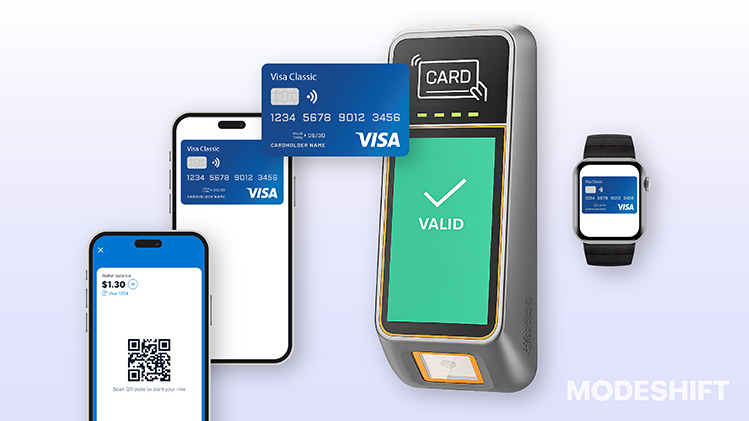
Facilitating secure payments in transit often involves implementing established banking security standards, such as EMV® contactless payments, which leverage embedded microchips, near-field communication (NFC) technology, and dynamic authentication to prevent fraud. Other strategies include adopting advanced security measures such as encryption and tokenization, which replace sensitive information with unique, one-time identifiers. With Account-Based Ticketing (ABT), agencies can create secure payment experiences by shifting the intelligence from physical, easily counterfeited tickets to a secure, cloud-based backend. Being compliant with payment standards such as PCI DSS is also essential for securing rider transactions and protecting sensitive cardholder data (CHD). These technologies, combined with transparent and user-friendly digital tools, effectively reduce the risk of fraud and physical contact, fostering a more secure and convenient rider experience.
Leveraging Built-In Security Features In Contactless, Open-Loop Systems
Open-loop systems have transformed public transit payments by shifting away from proprietary, often unencrypted, prepaid cards toward standard, encrypted contactless bank cards and mobile wallets (EMV technology). This modern approach enhances security, operational efficiency, and passenger convenience by utilizing the established, secure infrastructure of the banking industry. Open-loop systems rely on cEMV (contactless Europay, Mastercard, and Visa) standards. This ensures that transactions are encrypted and authenticated, providing a much higher level of security than traditional, often unencrypted, closed-loop cards. To protect user data, sensitive card information is replaced with a unique identifier, also referred to as a “token,” which is used during the transaction. If a breach occurs, attackers only obtain these useless tokens rather than the actual credit card number, reducing the risk of fraud. By linking payments directly to banking networks, these systems also utilize sophisticated, real-time fraud detection tools commonly used in the banking industry.
Furthermore, since sensitive cardholder data is not stored or transmitted in plain text, open-loop systems help transport operators comply with Payment Card Industry Data Security Standards (PCI DSS). To further strengthen open-loop systems, transit agencies can utilize AI-driven, real-time surveillance to detect anomalies, unauthorized access, and suspicious transactions before they impact riders or agency revenue. For instance, AI can analyze transaction patterns in real-time. If a single contactless card is used at 15 different stations in 30 minutes, or used in a pattern inconsistent with normal human commuting, the AI can flag it as potential fraud and blacklist the token immediately. Regularly updating validators, kiosks, and mobile applications is also crucial to patching vulnerabilities in open-loop public transit systems, helping to protect against cyberattacks that could expose sensitive user data. Over-the-air (OTA) updates can fix software flaws, update security certificates (such as EMVCo compliance), and prevent unauthorized access to devices.
How Account-Based Ticketing (ABT) Contributes To More Secure Transit Payments
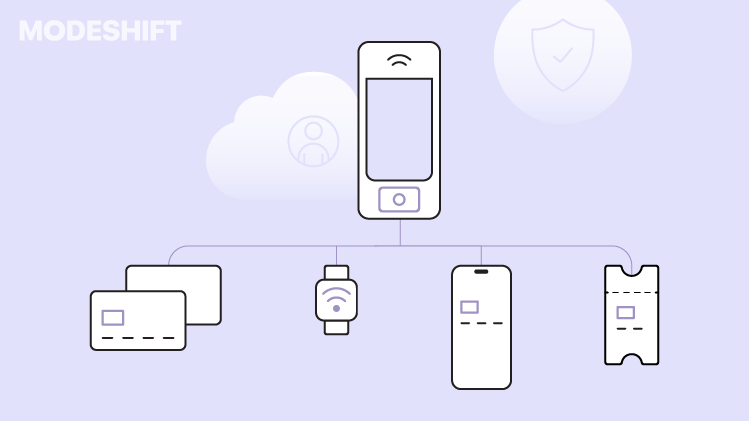
Account-Based Ticketing (ABT) enhances security and operational resilience in public transit by shifting intelligence from physical, on-card systems to a secure, cloud-hosted back office. This transition eliminates the need for passengers to manage, purchase, or top up physical cards, reducing logistical overhead and increasing protection against fraud and revenue leakage. ABT connects fare transactions directly to a secure backend user account, making it significantly harder to counterfeit tickets, bypass payment systems, or reuse tickets when compared to traditional, closed-loop systems. Because the “value” is stored in the cloud rather than on a physical card, commuters can easily block a lost card or device and transfer their balance to a new one, preventing financial loss. ABT also supports the use of EMV payments (contactless credit/debit cards) and mobile wallets (Apple Pay, Google Pay). These methods rely on the established security, encryption, and authorization protocols of the banking industry.
Limiting the use of cash on board transit vehicles enables agencies to remove many of the security risks associated with collecting, transporting, and storing physical money. This results in massive cost savings by reducing the need for ticket machines and manual cash handling, while simultaneously providing actionable insights from real-time data. The central backend provides real-time visibility into ridership patterns, allowing operators to make data-driven decisions on service frequency, route planning, and resource allocation. Because transactions are processed instantly in the backend, transit operators can easily identify and block fraudulent cards or accounts in real-time. This enables the immediate blacklisting of suspicious users, as the information is automatically pushed to all validators within the network. A single account can also be used across multiple modes of transport (bus, rail, bike-sharing), creating a flexible, interconnected system that can adapt to disruptions and diverse passenger needs.
Protecting Passenger Information With PCI Level 1 Compliance
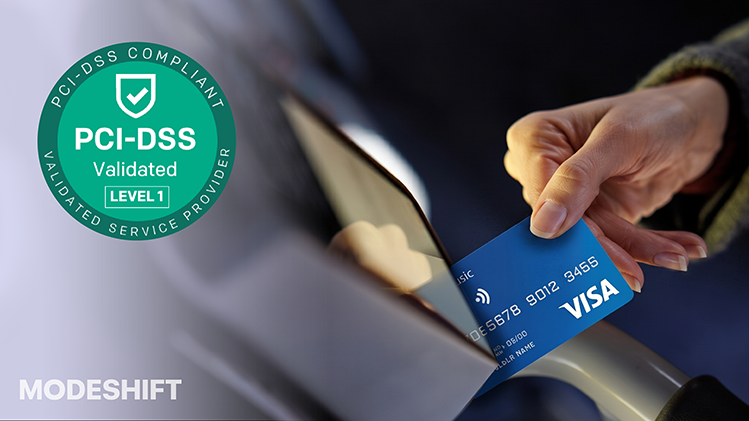
With the shift toward tap-to-pay (contactless/EMV), transit agencies, particularly larger ones, must comply with the strictest security standards to protect cardholder data during processing, transmission, and storage. PCI Level 1 compliance necessitates rigorous validation of the entire payment ecosystem, encompassing validators, backend systems, and payment gateways, to ensure that both hardware (validators) and software are secure. Following Level 1 standards minimizes the risk of card data being intercepted or compromised, which is essential when hundreds of thousands of users tap their cards daily. Non-compliance can lead to substantial penalties from payment card brands (Visa, Mastercard, etc.), ranging from $5,000 to $100,000 per month. In the event of a data breach, a Level 1 certified agency is better protected from legal liability, card reissuance costs, and forensic investigation expenses. A major breach could result in the suspension of card processing privileges, which would halt revenue collection on transit lines.
Adhering to the latest PCI standards, such as PCI PTS 6.x, further ensures that ticketing hardware remains secure and compliant with future regulations, reducing the need for constant, expensive, and disruptive hardware overhauls. PCI Level 1 compliance typically applies to large public transit systems (e.g., major subway or bus networks) that process more than 6 million Visa/Mastercard transactions per year, or those that have previously experienced a data breach. Smaller agencies prefer to partner with a Level 1-certified processor, although they are still responsible for their own environment. PCI Level 1 processors utilize advanced encryption, tokenization, and secure, off-site data storage to ensure that cardholder data is not stored on the agency’s internal systems, thereby reducing the risk of a breach. Maintaining these standards not only prevents breaches but also provides a competitive advantage by streamlining payment processes and improving relationships with payment partners. This allows for a more secure, modern, and reliable experience for commuters.
Future-Proofing Transit Technology Through Cloud-Based Modular Architecture
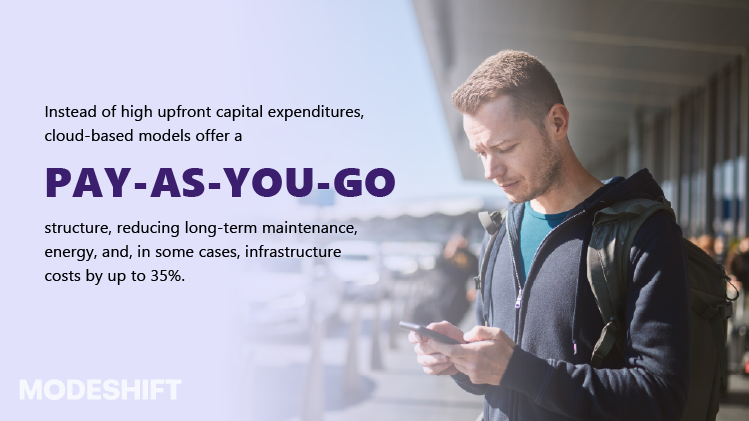
The transition from rigid, legacy systems to modular, cloud-based platforms is crucial for transit agencies looking to improve efficiency, security, and responsiveness without undertaking costly, disruptive overhauls. Modular architecture enables agencies to implement new features such as biometric authentication, AI, or advanced analytics incrementally rather than replacing the entire infrastructure. Modern platforms also facilitate faster deployment of new services, allowing agencies to adapt to changing needs in weeks or months rather than years. Instead of high upfront capital expenditures, cloud-based models offer a pay-as-you-go structure, reducing long-term maintenance, energy, and, in some cases, infrastructure costs by up to 35%. Cloud platforms also come with more enhanced and consistent security updates (e.g., FedRAMP, encryption) compared to legacy, on-premises systems, which often have outdated security, such as hard-coded passwords.
Agencies can easily scale computing power to meet, for example, spikes in demand for transit services, a key advantage over rigid, on-premises infrastructure. The shift to cloud-based systems further enables easier integration of modern payment methods, such as biometric authentication (fingerprint, facial recognition, or palm scanning), which is increasingly being used to reduce fraud and enhance the user experience. Transit agencies can also deploy modular upgrades through the use of APIs (Application Programming Interfaces), which facilitate the integration of additional payment methods without having to replace the core backend system. By enabling biometric authentication, agencies can provide a higher level of security than traditional PINs or passwords, and it can be integrated to meet regulatory requirements such as PSD2. While these benefits are substantial, migrating from a legacy system can be a complex endeavour, often requiring a phased approach, starting with pilot projects, to ensure a smooth transition.
In Conclusion: Embracing Future Trends In Transit Payment Security
Future-ready public transportation systems are increasingly integrating advanced technologies such as facial recognition and biometric authentication to enhance security, efficiency, and passenger convenience. These innovations aim to create a “touchless” experience, eliminating the need for physical tickets or cards while accelerating boarding processes. Facial recognition ticketing is already being used in cities like Beijing, where commuters can enter stations by walking through gates that scan their faces, reducing congestion. Systems in Japan (Osaka Metro) and Indonesia (KAI) use biometric walk-through gates to allow secure entry into transit systems by performing facial, fingerprint, or iris scans. Real-time facial recognition further helps identify individuals on watchlists, while biometric authentication prevents ticket fraud by ensuring only the registered user accesses the service.
AI-powered fraud detection utilizes machine learning and real-time data analysis to identify, predict, and prevent fraudulent activities, such as ticket sharing or stolen and cloned payment card usage. These systems analyze transaction patterns, user behavior, and geolocation to detect anomalies, reducing revenue loss and enhancing security. Blockchain solutions provide secure, decentralized payments by using distributed ledgers to eliminate intermediaries, prevent ticket forgery, and enhance transaction transparency. By replacing central authorities with a network of nodes, transit agencies can limit breaches and enhance trust in transaction verification. This is achieved through non-fungible tokens (NFTs) or secure cryptographic hashes for ticketing, ensuring tickets are unique and impossible to copy. By ensuring data is encrypted and transactions are secure, transit agencies can create a frictionless, reliable experience that encourages both daily commuters and new users to choose public transport, fostering higher satisfaction and long-term loyalty.


