
Legacy technology has been the standard in public transit in the past; however, the industry is undergoing a rapid transformation, underlined by efforts to modernize old and outdated systems with new technologies that enhance efficiency, safety, and the passenger experience. While legacy technology may appear financially viable initially, its true total cost of ownership (TCO) is generally much higher, with hidden costs in maintenance, security, efficiency, and lost revenue often significantly outweighing any perceived savings. This leads to missed growth opportunities due to incompatibility, ultimately draining budgets and hindering modernization efforts despite seemingly low upfront costs.
In this article, we’ll examine how legacy technology affects an agency’s ability to innovate and scale by increasing the total cost of ownership and reducing service quality. We’ll also discuss the benefits of modernization, and some practical steps agencies can take towards their digital transformation journey.
Why Modernization In Public Transport Is No Longer Optional
While seemingly cost-effective in the short term, outdated legacy systems demand frequent, expensive repairs and patches. In the past, agencies often relied on costly, specialized contractors; however, as the talent pool for aging technologies shrinks, it leads to escalating operational budgets. Legacy systems tend to lack modern cybersecurity protections, making them prime targets for data breaches and ransomware attacks. Without regular vendor support and security updates, agencies face higher risks of financial losses, legal liabilities, and compromised sensitive data. Older systems are also slow and rely on manual workarounds and paper-based processes, such as re-keying data into different systems, which wastes time and resources. The inability to share data across departments (data silos) further hinders efficiency and timely decision-making.
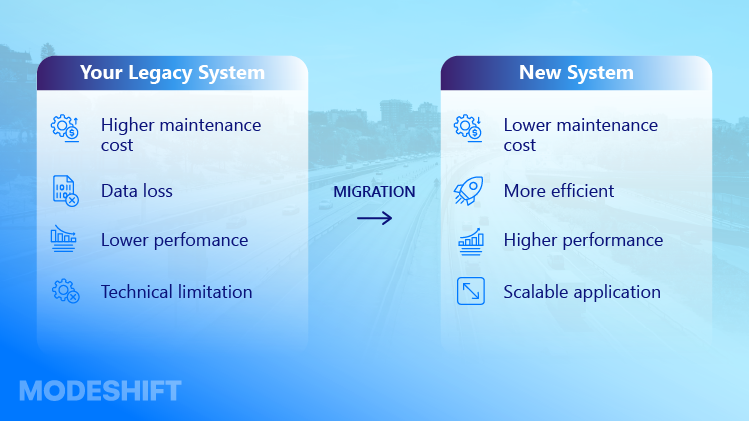
Outdated systems also fail to provide passengers with accurate real-time information, and they lack modern payment options, such as mobile ticketing and contactless payments. These limitations cause frustrations among modern passengers, contributing to lower satisfaction rates and a decline in ridership, which directly impacts fare revenue. Legacy technology is typically inflexible and incapable of easily integrating with modern tools such as AI, cloud solutions, or advanced analytics. This stifles innovation and prevents agencies from adapting to evolving regulations and public expectations, which are crucial for future growth. Many federal and state grants also prioritize agencies that adopt modern technology solutions. Agencies relying on legacy systems may miss out on critical funding that could support infrastructure improvements and new service offerings.
Unlocking Agility And Accelerating Innovation Through Modern Software Solutions
Modern transit systems replace manual processes with automated workflows, allowing staff to accomplish more with fewer resources. Real-time data access enables informed, on-the-spot decisions, resulting in faster responses and enhanced service. Modern software is also built with robust security in mind, including automatic updates, encryption, and real-time monitoring to detect and block modern threats. Keeping up with compliance with data protection standards also becomes easier, which helps automate the management of legal and regulatory risks. Tools designed for privacy can streamline processes such as data mapping, consent management, and handling of data subject access requests (DSARs), thereby reducing the manual effort and potential for errors.
Modernization further enables the implementation of features riders expect, such as real-time vehicle tracking, mobile apps for trip planning, and contactless payment options. This improved experience can increase passenger satisfaction, build trust, and ultimately boost ridership and revenue. Unlike legacy systems, modern, cloud-based solutions are designed to scale and adapt to changing needs, population growth, and new technologies such as zero-emission vehicles and smart traffic management systems. This future-proofs the agency’s operations and guarantees long-term sustainability. Modern systems collect and analyze passenger and operational data to provide valuable insights for optimizing routes, improving service reliability, and justifying future funding requests.
Implementing Zero Trust Architecture In Public Transportation Systems

The application of zero-trust security models in public transit operates on the core principle of “never trust, always verify,” which is crucial for protecting modern, interconnected transportation systems against evolving cyber threats. This approach eliminates the implicit trust traditionally granted to users and devices inside a network perimeter. Zero trust (ZT) requires strict identity verification and continuous monitoring for every user, device, and application attempting to access network resources, regardless of their location. This ensures that agency personnel can protect critical infrastructure, such as rail signaling, from cyber threats, directly enhancing public safety. By detecting and isolating threats quickly, ZT helps ensure the continuous operation of services while minimizing disruptions.
Zero-trust models are also vital in protecting sensitive passenger data by helping to safeguard personal and financial information, as well as internal operational data, through strict access controls and encryption. Furthermore, cloud providers such as AWS, Azure, and Google Cloud offer native DDoS mitigation services that automatically detect and block malicious traffic at the network edge. By consolidating data from various sources (endpoints, networks, cloud services, etc.), unified platforms allow transit personnel to quickly identify issues without switching between different systems. In automated compliance systems, integration ensures that compliance activities are a continuous, real-time, and proactive part of daily operations, rather than a periodic, manual, and reactive process.
Benefits Of Adopting Modular And Scalable Solutions In Transit
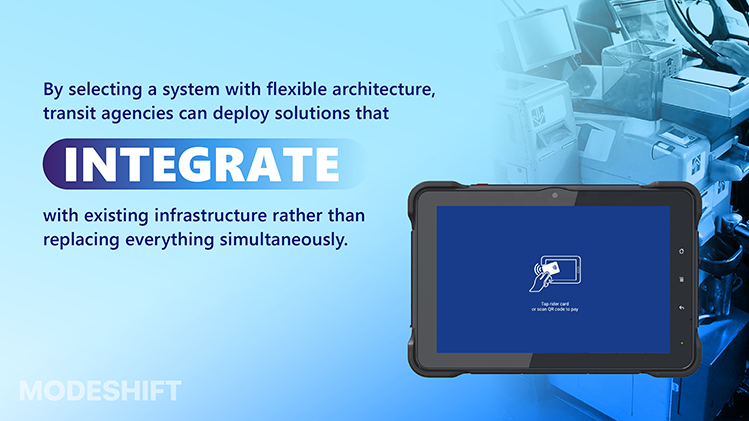
Adopting flexible, modular, cloud-based platforms in public transit enables the implementation of upgrades in strategic, manageable stages, avoiding the need for a complete system overhaul. This phased approach reduces risk, manages costs, and minimizes disruption to daily operations. By selecting a system with flexible architecture, transit agencies can deploy solutions that integrate with existing infrastructure rather than replacing everything simultaneously. This harmonizes operations between new cloud systems and legacy applications during the initial transition. A software-as-a-service (SaaS) model shifts software delivery to the cloud, eliminating the need for large upfront hardware investments, while enabling subscription-based access, which drastically lowers entry barriers for agencies.
A “pay-as-you-grow” model optimizes capital expenditure and allows for faster return on investment (ROI) by aligning infrastructure growth with actual demand. This means agencies can start small and easily scale resources up or down based on demand. It also allows authorities to test solutions through pilot programs, ensuring they meet specific needs before full deployment. Cloud-native platforms are designed to adapt to fluctuating demand, new service types (e.g., paratransit, microtransit), and expansion of geographic coverage without needing new hardware. Automation and real-time data analytics, often facilitated by modular systems, further streamline workflows such as scheduling, dispatching, and invoicing.
Prioritizing High-Impact Upgrades For Service Enhancements
Prioritizing high-impact upgrades for public transit involves focusing on technology, infrastructure, and service frequency improvements that provide immediate benefits to riders and operations. Technology enhancements offer rapid and cost-effective benefits, primarily by enhancing convenience and information flow. Implementing real-time fleet management systems (CAD/AVL) is a highly effective strategy for introducing immediate upgrades, as the collected data enables agencies to identify critical problem areas, optimize existing operations, and improve the passenger experience, leading to increased satisfaction and ridership. Mobile apps, smart cards, and contactless payment options further streamline processes such as boarding and fare collection, alongside accurate, real-time arrival information delivered via apps and digital displays, which reduces passenger uncertainty and anxiety related to delays.
Transport authorities can also utilize data to forecast traffic patterns, dynamically optimize routes, and schedule proactive maintenance that enhances reliability, reduces operational costs, and minimizes disruptions before they occur. Integrating V2X (Vehicle-to-Everything) communication and traffic signal priority further aids public transit vehicles in navigating traffic more efficiently, shortening travel times and improving punctuality. Allocating existing road space for the exclusive use of buses and other transit vehicles allows them to bypass traffic congestion, significantly improving travel times and adherence to schedules. Utilizing data-driven insights to optimize route configurations ensures adequate coverage in underserved areas while matching supply to demand, reducing route overlap and operational inefficiencies.
Avoiding Technical Debt In Transit Through Regular Updates
In public transit, technical debt refers to the accumulated implied cost of future repairs, maintenance, and modernization that results from continually delaying necessary upgrades. The accumulation of technical debt is often the result of policy and management decisions that prioritize short-term results over long-term sustainability, creating a cycle where agencies are forced to focus all resources on simply keeping systems running rather than making value-add improvements. Transport authorities can avoid future technical debt by making regular maintenance and updates a core part of their technology strategy. This involves establishing predictable hardware refresh cycles and using proactive monitoring to detect potential failures before they disrupt service.
Prioritizing regular and timely software upgrades is essential for enhancing security, operational efficiency, and the overall passenger experience. This helps patch vulnerabilities and security holes that cybercriminals could exploit, protecting sensitive data and critical infrastructure from malware, ransomware, and unauthorized access. Updates often include bug fixes and performance enhancements that prevent system crashes and downtime, ensuring optimal system performance. Regular updates also ensure that software remains compatible with new hardware, operating systems, and other emerging technologies (e.g., contactless fare collection, IoT devices, and AI systems), future-proofing the transit system’s IT environment.
In Conclusion
Addressing challenges related to modernization requires a focus on integrated, user-centric, and phased solutions that balance new technology with existing systems and social needs. Modernization should be a comprehensive, ongoing process, not just a strategy of replacing old vehicles with new ones. A modern transit system must also prioritize the updating of existing infrastructure, such as developing proper stops and terminals, improving sidewalks, and integrating various transit modes (e.g., buses, rail, micromobility) into a seamless network. Focusing solely on solutions such as electric vehicles or advanced technologies can lead to neglecting the core facilities and planning strategies needed for an efficient and equitable service.
The transition to tech-focused transport can also exacerbate socio-spatial disparities in certain parts of the world. For instance, high-tech solutions may be less accessible in rural or low-density areas with sparse networks, limiting access for residents. Additionally, a solution that works perfectly in one city may not be easily replicated or scaled to others because each urban environment has unique needs and infrastructure. The integration of new technology, such as autonomous vehicles or next-gen signal prioritization systems, involves high installation and maintenance costs for both hardware and software. Careful consideration is needed regarding how agencies can fund these projects and upgrades in the future. Many transit agencies and local governments struggle with underfunding and aging legacy infrastructure, making large-scale, costly upgrades very challenging.


