
The public transit market is experiencing notable growth due to urbanization and increasing population density. Road transport continues to face challenges related to traffic congestion and environmental impact, making mass transport an appealing alternative for commuters. This notion is driving global demand for efficient and eco-friendly public transportation services that can meet the needs of modern commuters while addressing urban mobility challenges. Government initiatives aimed at improving public transportation infrastructure and services, along with investments in modernization and expansion projects, are leading to numerous developments in the sector. The rise of smart cities and digitization is also transforming public transport, highlighted by the emergence of various mobility apps, third-party platforms, and ride-sharing services, which are also increasing in adoption.
In this article, we’ll examine some recent trends and changes in the sector while taking into account their impact on consumers and public transport authorities globally.
The Emergence Of New Paradigms In Urban Mobility
Current trends show that the global smart transportation market is projected to grow from $115.73 billion in 2023 to $340.69 billion by 2032, according to insights by Fortune Business. Advances in technologies such as the Internet of Things (IoT), data analytics, artificial intelligence, and cloud computing are creating a blend of connectivity that enables cities to introduce new solutions capable of addressing urban mobility issues, with greater precision and efficiency. The focus is to shift toward intermodal transport systems, where multiple modes, including buses, rail, metro, and trams, are integrated, resulting in better overall mobility for residents of cities. Battery electric buses and trains are being deployed globally as cities strive to meet sustainability targets by reducing greenhouse gas emissions while lowering operational costs.
Estimates by McKinsey & Company suggest that approximately $3.5 trillion will be spent annually on low-emission vehicles and infrastructure between 2021 and 2050. This expenditure is part of a larger transition to a net-zero economy, which requires substantial investment in physical assets.
Mobility as a Service (MaaS) solutions are also transforming the way riders engage with broader mobility ecosystems by facilitating trips through a single app used for planning and paying for different transport services. Depending on consumer acceptance of shared-mobility modes, regulations, technological advancements, and developments, shared mobility services could achieve a market size of around $500 billion to $1 trillion by 2030.
There Is An Increased Focus On Sustainability & The Decarbonization Of The Transport Sector
The transport sector currently accounts for about one-quarter of global energy-related CO2 emissions. Around half of those emissions come directly from passenger cars. As a result, governments and institutions worldwide are working collectively to establish robust decarbonization goals. The European Union, for example, has a plan to achieve climate neutrality by 2050, a core objective of the European Green Deal, in alignment with its commitment to the Paris Agreement. In the U.S., the government has set similar targets, aiming for net-zero emissions by 2050. As these trends unfold, cities are also growing and evolving, along with citizens’ needs and preferences. Creating cities that are livable and offer a higher quality of life is becoming increasingly important, and shifting consumer preferences are shaping the future of these cities.
Some municipalities have begun shifting their focus to increasing the number of dedicated public transport lanes, optimizing bus routes, and investing in various modernization projects that will improve mobility for everyone. Others are combining this with digital upgrades that enhance the commuter experience. As more people transition to new transport paradigms, the need for collaboration, coordination, and synchronized decision-making and visibility across ecosystems is also expected to grow. This will involve individual users, government agencies, and technology providers. There is demand for more efficient ways of managing vehicle flows, as well as the influx of pedestrians and cyclists that comprise urban life.
The Evolution Of Payment System Delivery Models
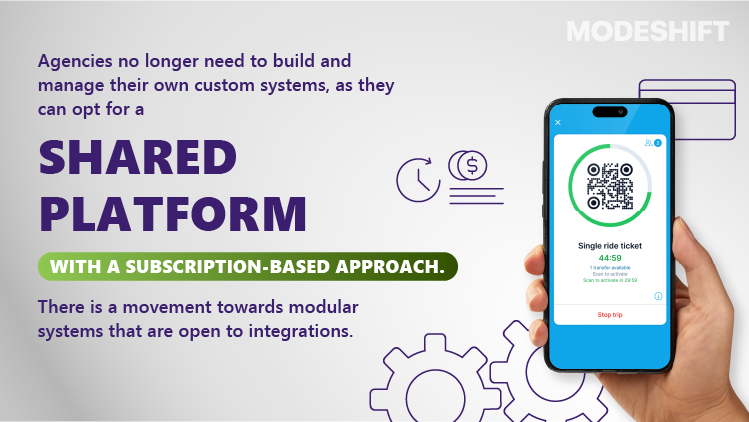
The evolution of Software as a Service (SaaS) in public transportation marks a shift from legacy systems to more flexible, scalable, and cost-effective solutions. This development has enabled public transport agencies to access cutting-edge technologies while enhancing customer experience and optimizing operations more efficiently. Agencies no longer need to build and manage their own custom systems, as they can opt for a shared platform with a subscription-based approach. There is a movement towards modular systems that are open to integrations. Different vendors can provide solutions for back, middle, and front offices, allowing for a plug-and-play approach.
Instead of completely replacing old legacy systems, which can be expensive and disruptive, agencies can choose an integrated approach by partnering with a vendor to enhance the existing infrastructure. An API-driven approach enables seamless communication between legacy fare collection systems and modern digital platforms. This acts as a middle layer, allowing legacy hardware and software to communicate with new applications. Through this, it becomes possible to incorporate real-time fare updates, trip validation, and ridership analytics without disrupting existing workflows.
Without vendor lock-in, operators and authorities can create ticketing ecosystems tailored to their individual needs. With an Account-based Ticketing System (ABT), transport agencies can offer riders a broader variety of fare media, such as bank cards, digital wallets, and mobile tickets, giving them flexible ticketing and payment options. Additionally, they can leverage the ability to configure flexible fare rules and digitally verified concessions to ensure passengers receive the best available fares automatically.
Cities Are Embracing A Forward-thinking Approach With ITS Solutions
Intelligent Transport Systems (ITS) have been an indispensable ally for many cities worldwide. These technologies typically include real-time traffic management, electronic toll collection, and vehicle-to-everything (V2X) communication. Such systems leverage advanced technologies to enhance the efficiency, safety, and sustainability of transportation. In 2022, Miami-Dade County in Florida partnered with a private operator to install almost 3,000 new traffic controllers. The initiative is part of a broader seven-year Advanced Traffic Management System (ATMS) project, which aims to upgrade and install additional detection systems at chosen intersections.
Copenhagen is another city committed to boosting green forms of transport without causing adverse effects on road traffic. A comprehensive ITS solution was introduced along with the installation of new controllers in traffic signals at the city’s intersections. The new technology not only allows the city to control traffic and optimize signals in real time, but it also reduces the energy traffic signals use by up to a third. The result is a more efficient flow of bikes and buses and a lower chance of incidents on the road. It’s widely believed that ITS will help Copenhagen achieve its goal of having over 75% of all the trips in the city be by bike, public transport, or on foot by 2025.
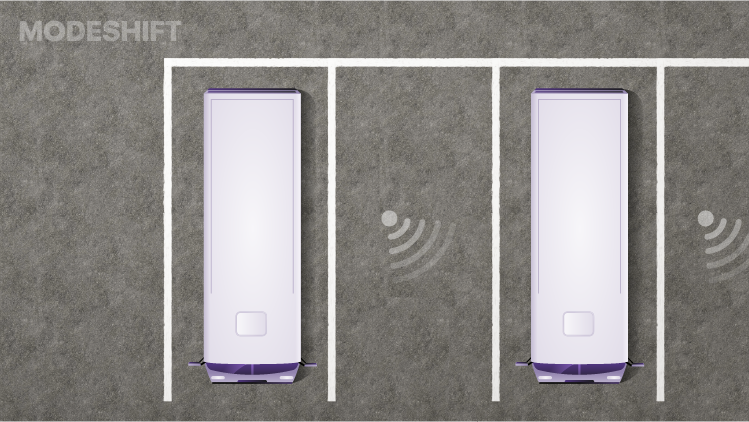
The Oregon Department of Transportation (ODOT) is currently designing a cloud-based connected vehicle ecosystem that leverages moving vehicle data and public-agency data. The extensive project features a data-sharing hub intended to provide safety and mobility applications over a unified network and via roadside units using cellular V2X technology. The Department of Transportation’s Federal Highway Administration is also attempting to roll out an Integrated Corridor Management (ICM) Program that takes into account real-time traffic conditions on adjoining or alternate roadways, as well as across all modes of transport. The combination of these could increase existing roadway capacity, improve travel times, enhance safety, and travel reliability.
How Artificial Intelligence Is Helping Agencies With Transportation Planning & Management
Another recent development in the public transport sector involves using Artificial Intelligence to enforce stricter road rules. A San Francisco-based startup is deploying bus-mounted AI cameras to capture and record vehicles obstructing bus lanes. These cameras, which incorporate AI and license plate reading technology, are designed to identify and document vehicles illegally parked in bus lanes or bus stops. So far, cities utilizing the technology include D.C., New York, Oakland, and Los Angeles. Other cities across the nation are in the process of acquiring similar technology.
The Philadelphia Parking Authority has also issued an RFP for a bus camera enforcement system. Thus far, these bus lane enforcement pilots have shown promising results in speeding up buses and increasing safety for all road users. New York’s MTA reported that its enforcement program has improved bus speeds by 5% while reducing collisions by over 20%. The initiative has produced a positive environmental impact by decreasing emissions by up to 10%.
Similarly, Seattle’s King County Metro (KCM) began testing a 60-day bus automation pilot program in 2024, using mounted AI-powered bus cameras. The initial aim was to assess the frequency of drivers occupying bus lanes, reducing bus delays and collisions on the agency’s most popular routes. This serves as a good example of measures agencies can take to determine areas for improvement within their network before making substantial investments in technology and infrastructure. Transport modeling is another interesting area where AI is set to play a role by helping cities make informed decisions about mobility and infrastructure. By simulating and validating plans, municipalities can better prepare for future challenges.
Beyond Technology: Policy & Regulatory Innovations
Innovation in public transport involves more than just new technologies. It encompasses policy, regulatory, and social implications that aim to address complex issues in transportation. Living Labs can be regarded as a policy innovation, as they facilitate the ideation and co-creation of transport solutions and policy measures with the involvement of citizens and other stakeholders. Tactical urbanism and new approaches to developing “15-minute” cities are used to reallocate space from cars and encourage more sustainable mobility choices. Paris is a notable example of this. The city is heavily invested in practices and governing guidelines that ensure neighbourhoods are livable by allowing residents easy access to essential locations and amenities, at just a short 15-minute walk or bike ride from their homes.
London’s congestion charge is another example of a policy aimed at reducing traffic in the city. According to Transport for London, the toll has reduced congestion in the city by over 30% while improving air quality. Singapore is implementing its second-generation road pricing scheme that facilitates dynamic pricing on separate road segments throughout the day. The pricing rates can be adjusted to match traffic conditions, and the system will help to smooth traffic peaks. In Germany, several states are experimenting with offering a unified nationwide ticket for local and regional public transit. The flat-rate pass was introduced in 2023 and costs just €49 a month, providing unlimited access to local and regional trains, buses, metros, and trams.
Such policy reforms have significantly impacted Europe’s mobility landscape, with several countries planning on following this example. The city of Heidelberg initiated a pilot program to establish more bicycle lanes and provide free annual public transport passes for residents who sell their cars. Potsdam is another German city that is attempting to upgrade its public street space by increasing parking fees by up to 100%. It was decided that only car-sharing and electric vehicles would be exempt from the policy. Norway’s capital, Oslo, has removed over 700 on-street parking spots from the city center to allocate more space for bike lanes, parks, and pedestrian roads.
The Future Of Public Transport Funding
Governments and cities often provide tax exemptions, subsidies, and other financial aid and incentives to advance innovation in transport and promote more environmentally friendly practices. Low-emission vehicles in transit are becoming more prominent, with hybrid electric buses and zero-emission buses taking the lead in replacing older, conventional models. These buses rely on high-capacity batteries and hydrogen fuel-cell technology capable of converting hydrogen into electricity. In the U.S, the Federal Transit Administration recently announced its Grants for Buses and Bus Facilities Program, which aims to support transit agencies in purchasing and rehabilitating zero-emission buses as well as establishing the necessary facilities for their use. FTA’s Low or No Emission Program, in particular, is set to help agencies buy or lease buses made in America.
Another recent development has been the expansion of on-demand transportation, particularly in rural America. To address the gap between demand for transit services in outer regions, microtransit schemes have emerged from small towns such as Montpelier, Vermont, and Smithfield, North Carolina, to suburbs of large cities like Phoenix, Arizona, and Austin, Texas. The USDOT has announced $273.9 million in funding for the Rural Surface Transportation Grant Program, which will support nationwide transportation projects in rural communities. The North Carolina Department of Transportation has already secured a $10.4 million grant through this program. These funds will go toward establishing microtransit services in 11 different communities.
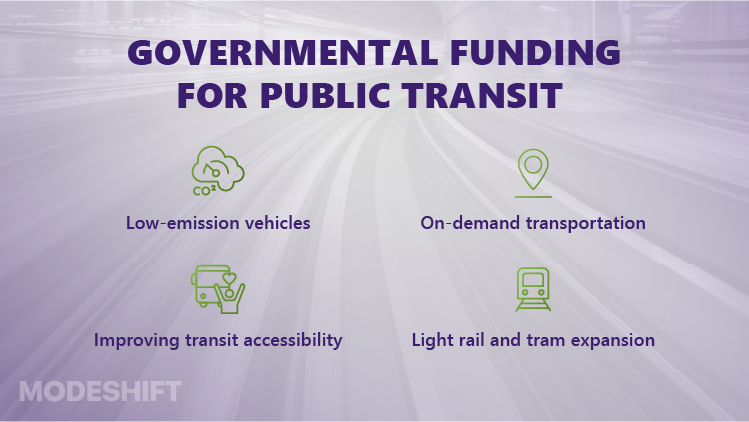
In 2024, FTA also announced an additional $20.5 billion in federal funding for the support of various transit projects throughout the U.S. These projects will assist with upgrading transit stations, extending and adding service lines, and improving accessibility. A total of $149.9 million was awarded to the Indianapolis Public Transportation Corporation (IndyGo) to help with the construction of a 24-mile BRT line in Central Indiana. In the coming years, the most substantial light rail or tram expansion projects are set to take place in several cities. In 2025, Kansas City released plans to double the length of its Main Street Streetcar Line. Los Angeles will also add new mileage to its A Line, reaching Pomona, south of LA, while Orange County plans to open a new Streetcar Line.
In Conclusion
Addressing urban mobility challenges is a complex and multifaceted endeavor that involves multiple stakeholders, including governments, municipalities, city councils, and public and private service providers. To advance public transportation, we need a comprehensive approach that considers various factors such as infrastructure, technology, and societal preferences, ensuring transport services are efficient, sustainable, and accessible to populations. Government authorities and city planners can empower municipalities through the right support and investment while introducing tailored solutions that adapt to the unique needs and requirements of each city.


