
Traditional transportation systems are primarily dependent on fossil fuels and car usage, both of which are major contributors to global greenhouse gas emissions and air pollution. Sustainable transportation is vital for reducing these negative impacts and for supporting economic stability, energy security, and urban resilience. To improve sustainability in the transport sector, we need to focus on a mix of strategies, including adopting electric and hybrid vehicles, promoting public transportation and active mobility, while leveraging technology for smarter, more efficient systems.
In this article, we’ll explore five strategies for making transportation more sustainable, along with practical advice for agencies on how to achieve this.
1. Investing In Electrification And Alternative Fuels
Investing in electrification and alternative fuels is a crucial step toward creating more sustainable transport systems. This shift involves moving away from fossil fuels toward cleaner energy sources such as electricity and green fuels. It also includes replacing older transit vehicles with newer, more efficient models such as electric buses.
Switching To Electric Buses
Battery-electric buses are gaining popularity due to their efficiency and sustainability benefits. Since electric buses produce zero tailpipe emissions, they help reduce pollutants such as nitrogen oxides and particulate matter, which improves air quality in cities. When powered by renewable energy, electric buses can achieve significant reductions in greenhouse gas emissions, aiding in mitigating the effects of climate change. Several U.S. cities, including New York City, Seattle, and Denver, are actively deploying electric buses in their public transit systems.
Increasing Reliance On Renewable Energy Sources
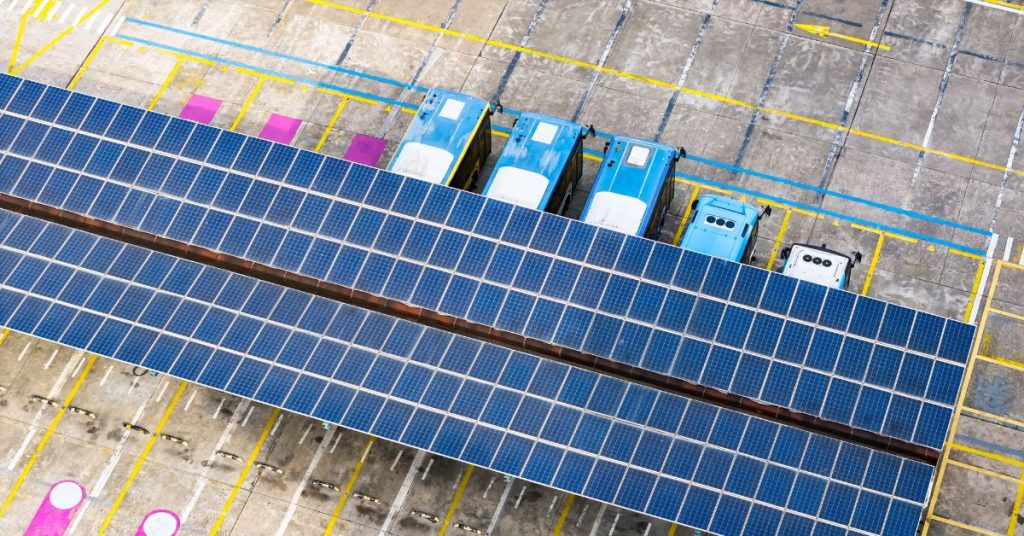
To maximize the benefits of electric buses, it’s crucial to power them with renewable energy sources such as solar or wind power. Solar panels can be installed on bus depot rooftops or integrated into canopies above parking areas to generate electricity from sunlight. This energy can be used directly to charge buses or stored in batteries for later use. Wind turbines, placed near depots or integrated into transit infrastructure, can generate wind energy to charge buses or feed electricity into the grid.
Prioritizing Alternative Fuels
The most sustainable fuels for public transit include electricity, hydrogen, and biofuels. These options provide substantial reductions in greenhouse gas emissions compared to traditional fossil fuels. Electricity powers electric vehicles, hydrogen can be used in fuel cell vehicles, and biofuels can be blended with or replace conventional fuels in the majority of vehicles. Each alternative fuel has a different emissions profile, with electric and hydrogen fuel cell vehicles generally offering the greatest reductions in emissions and air pollution.
2. Optimizing Public Transport Networks
Optimizing public transport networks involves improving various aspects such as route planning, scheduling, and infrastructure to enhance accessibility and efficiency, while reducing costs and improving the overall passenger experience.
Optimizing Routes
Transport authorities can utilize advanced technologies to collect data on passenger demand, travel times, road conditions, and potential hazards to pinpoint areas where routes can be improved. Software tools can analyze this data and produce optimal routes that reduce travel time, distance, and fuel consumption. However, route optimization is rarely a one-time task. Real-time adjustments are often necessary to respond to unexpected events such as traffic congestion or road closures. Optimized bus routes can also be integrated with other systems, such as traffic management and scheduling systems, to further enhance efficiency and sustainability.

Increasing Frequency and Reliability
Increasing the frequency and reliability of transport services could yield multiple benefits for transport authorities. By optimizing routes, implementing signal priority for buses, and utilizing real-time vehicle tracking technology, agencies can manage their day-to-day operations more effectively, delivering reliable services to passengers. This is further supported by allocating dedicated bus lanes and bus rapid transit (BRT) corridors, as well as implementing traffic signal prioritization to minimize delays at intersections. Operators can also utilize GPS and real-time tracking to optimize vehicle placement and inform passengers of arrival times.
Multimodal Integration
Multimodal integration is crucial to enhancing sustainability in transit as it promotes efficient, eco-friendly transportation options. This reduces reliance on individual vehicles and their associated environmental impacts while also helping agencies better supplement riders’ needs. By combining various modes of transport such as public transit, cycling, and walking, we can effectively reduce congestion in cities, lower emissions, and optimize resource use. Several U.S. cities stand out for their excellent multimodal transportation systems, such as New York, San Fransico, Washington D.C., and Boston.
3. Improving Transport Infrastructure And Accessibility
Improving transport infrastructure is vital to ensuring transit systems are inclusive and accessible to all members of society. This often requires a multi-faceted approach, encompassing infrastructure improvements, technological advancements, and policy changes.
Establishing Dedicated Bus Lanes
Dedicated bus lanes facilitate faster and more reliable services, while reducing traffic congestion and encouraging the use of public transport. Paris exemplifies a city with an extensive and well-developed bus network and dedicated lanes that help ease congestion and improve travel times for passengers. Madrid’s transit system is another prime example of a city focused on expanding its bus lanes. These lanes, often equipped with barriers to prevent other vehicles from entering, enable buses to bypass traffic and maintain consistent schedules. In cities like London, a comprehensive network of dedicated bus lanes, combined with congestion pricing, has significantly improved air quality in the city center.

Upgrading Bus Stops And Terminals
Upgrading bus stops with comfortable waiting areas, real-time information displays, and improved accessibility is crucial to increasing the appeal of public transport. Utrecht, Netherlands, stands out for its “bee stops,” featuring green roofs that support local wildlife and enhance the urban environment. Other unique features of bus stops include smart roofs that adjust to weather conditions or rotating timber pods for shade. Copenhagen is known for its integration of bus stops with cycling infrastructure and low kerbs, which enhances accessibility. Other cities are incorporating smart technology into bus shelters, such as digital screens for real-time information and renewable energy sources like solar panels for lighting and displays.
Enhancing Pedestrian And Cycling Infrastructure
Cycling and other active modes promote sustainable mobility by reducing greenhouse gas emissions from car use. By providing dedicated bike lanes, secure parking, and safe crossings, cities can encourage more people to choose cycling over motorised transport. Cycling infrastructure can be cost-effective to implement compared to road expansions for cars, making it an efficient way to enhance urban mobility and promote a more sustainable future for communities. Copenhagen has pioneered the concept of bicycle superhighways by establishing a comprehensive network of protected bike lanes that connect the city centre to surrounding suburbs. These networks feature innovative surfaces, advanced traffic light coordination systems, and safe crossings to promote cycling as a primary mode of transport.
4. Emphasizing Strategic Urban Planning
Effective urban planning is essential for creating resilient, livable, and sustainable cities. By strategically managing land use, transportation, and infrastructure, cities could minimize the environmental impact of transport while promoting social equity and enhancing economic prosperity.
Using Technological Advancements For Transport Planning
Technological advancements are revolutionizing transport service planning by providing tools for data analysis and real-time traffic management. The city of Vancouver leveraged collected transit data to compare commuter reliance on various modes of transportation. The aim was to determine usage patterns of existing bus ridership across the metro area. By collecting data on multiple urban corridors, planners were able to make strategic improvements and investments in bus networks throughout the region. Several other cities are also leveraging advanced technologies to optimize the planning of transport services. The city of San Fransico is focusing on integrating multiple public transit services, along with leveraging the capabilities of AI to optimize current routes within its network.
Incentives For Advancing Sustainable Transportation
Offering discounted fares, integrated ticketing, and updating fare policies is crucial for equity in public transport. Integrated ticketing systems, in particular, can be a powerful tool for cities to boost public transport ridership and enhance sustainability. By simplifying the payment process and potentially reducing fares for multi-mode journeys, these systems make public transport more convenient and attractive, promoting higher user rates. Cities like London, Hong Kong, Singapore, Vienna, and Helsinki allow passengers to use a single payment method, like a smart card or mobile app, for different transport services across their networks. London’s Ultra Low Emission Zone (ULEZ) is another incentive that promotes public transport use. Vehicles that don’t meet strict emission standards are required to pay a daily charge to enter the zone.

Policy Measures For Promoting Sustainable Transport Options
Many global cities are committed to promoting greener, active travel modes through policy changes and awareness campaigns. Helsinki is widely recognized for its strong commitment to road safety. In 2019, the city achieved zero pedestrian and cyclist fatalities, which was a significant milestone. This achievement is part of a broader, long-term vision to eliminate all road deaths, including those of drivers, which has led to multiple safety initiatives. The city also has very strict traffic fines, particularly for speeding. The fines are often based on a “day-fine” system, meaning the amount is determined by the offender’s daily income, resulting in potentially big fines for those with high incomes. This acts as an additional deterrent by discouraging road users from committing violations.
5. Following The Examples Of Global Leaders In Sustainable Transportation
Several cities around the world are leading in sustainable urban transportation, with a focus on reducing reliance on private vehicles and promoting eco-friendly alternatives.
Zurich’s Sustainable Transport System Is Among The Best In The World
Zurich, Switzerland, is renowned for having one of the world’s most sustainable transport systems. The city boasts a highly efficient and integrated public transport network with trains, trams, and buses, making it easy and convenient for residents to get around without a car. Zurich has strict measures in place to discourage car use, such as high parking fees and toll rates, and a limited number of parking spaces. The city’s transport system is so effective that car ownership has gone below 50%, and most residents rely on active modes and public transportation. Pedestrian and cycling infrastructure is heavily prioritized, with an extensive network of dedicated lanes and a high number of people walking or biking for their daily commutes.

Stockholm’s 100% Renewable Energy-powered Public Transport System
Sweden’s capital, Stockholm, is a global leader in sustainability, having achieved 100% renewable energy for its public transport system since 2017. The city utilizes electricity from renewable sources such as wind and hydropower for its bus, metro, and rail network, in combination with renewable fuels. The city is actively working towards becoming net-zero by 2030 and is exploring strategies like creating zero-emission zones and increasing the adoption of alternative transport modes. Stockholm is a pioneer in the utilization of Urban Vehicle Access Regulations (UVARs), which aim to reduce traffic congestion and improve air quality.
In Conclusion
Minimizing the environmental impact of transportation is critical for the future of urban populations and should be prioritized. Cities need to invest in viable, long-term solutions that reduce greenhouse gas emissions, air and noise pollution, while also considering the impacts on land use. By implementing these strategies, cities can establish truly sustainable and efficient public transport systems that benefit both the environment and communities.


