
Government authorities are under tremendous pressure to meet climate targets which has led many to accelerate their efforts of reducing the use of single-occupancy vehicles as well as shifting from traditional fuel sources to more sustainable options. According to the Environmental Protection Agency (EPA), transportation accounts for 28% of the total greenhouse gas emissions in the United States, making the need for sustainable transport all that more critical and a primary goal in achieving a zero-emission future. While trends such as the widespread adoption of EVs are continuing to gain momentum nationwide, some have proposed that the road to cleaner, more sustainable transport lies in improving and expanding mass transit networks along with integrating them with other mobility modes. Global statistics show that renewable energy, in combination with energy efficiency, can only address up to 55% of the world’s greenhouse gas emissions. We need to look beyond just renewables and clean energy and explore all opportunities to meet decarbonization targets. The Center for Climate and Energy Solutions reports that switching to public transportation for a 20-mile round-trip commute could lower a person’s carbon footprint by 4,800 pounds, annually. Additional data suggests that communities with strong public transportation networks can reduce the nation’s carbon footprint by more than 37 million metric tons, yearly. This year’s annual edition of World Sustainable Transport Day serves as a powerful reminder that the road to a better future depends on our collaborative efforts to create cleaner and greener transportation systems that serve people and help protect the planet. In this article, we’ll discuss how we can advance sustainable transportation in the U.S., what will it take to meet climate targets, and how cities and transport authorities can make the most out of the available solutions and resources to help them achieve these goals.
Public Transport Needs To Get Back On Track To Meet Climate Goals
Public transport remains one of the best, most cost-effective solutions available when it comes to addressing today’s climate and development challenges. According to available data, public transport contributes directly to 14 out of 17 of the United Nations’ Sustainable Development Goals (SDGs). Buses and trains are able to reduce greenhouse gas (GHG) emissions by up to two-thirds per passenger, for every kilometer when compared to private vehicles. The UN’s latest climate action report underlines that shifting more trips to public transit is crucial to diminishing the effects of climate change. Simultaneously, increasing access to reliable public transport creates other important societal benefits, such as lower traffic fatality rates, more healthy and active populations, and broader access to jobs, opportunities, education, and urban services. Robust public transportation networks serve as a key driver of equitable and sustainable development in cities around the globe. However, despite the steady growth in infrastructure and investment in recent decades, the public transport sector is still well off track from where it needs to be to meet climate and development goals. Global estimates show that public transport capacity must double by 2030 – in just six years from now – if the world is to limit global warming to 1.5 degrees C (2.7 degrees F) and prevent the worst impacts of climate change. Cities and countries will need to collectively build more infrastructure, at a much quicker pace and take steps to boost ridership onboard public transit, which has yet to recover from COVID-driven declines in many places. Unlike many of its global peers, public transportation agencies in the U.S. are struggling to reach pre-pandemic ridership levels. The ongoing decline in ridership has had a long-lasting impact on public transport systems across the nation. Low ridership often means less revenue for transit operators due to a loss of fares, which can in turn lead to reductions in staff, fewer routes, unreliable services, and a steep decline in service quality that further discourages use, creating a downward spiral.
Reducing the use of personal cars and encouraging drivers to switch to electric vehicles is essential to cutting down emissions and is particularly important for car-centric cities such as Los Angeles and Houston, which are known to rely heavily on cars. Many American cities are not on track to reach the 1.5 Celsius target for reduction in mobility emissions and it’s largely estimated that to get there, we would have to decrease emissions from the transport sector by an additional 54% through 2030. Many consider the biggest obstacle to achieving these goals to be the slow nationwide adoption of EVs as a replacement for conventional gas-powered vehicles. In 2022, it was reported that over 92% of the overall distance traveled in Los Angeles was made using cars and nearly 90% of those vehicles relied on gas or diesel fuel. The reality, however, is that electric vehicles alone can’t solve the sector’s climate problems. If we want to make a real impact in mitigating the effects of climate change, we need to stop telling people to leave their cars at home and rather equip them with real choices of how they can travel and supplement their mobility needs. This includes a shift to more sustainable modes in combination with the expansion and improvement of existing mobility networks. Cities must reinforce strategies that boost the usage of public transit modes such as buses by offering more convenient and improved services in combination with introducing integrated payment solutions that make journeys easier for passengers. Electrifying cars will not be enough on its own nor will fancy technological solutions. We need high-quality public transport networks that are robust, well-connected, and capable of facilitating multimodal journeys by integrating with other modes to boost multimodality and meet user demand. Riders want transit services that are affordable, reliable, convenient, and user-friendly. They also want more sustainable transport options and are willing to choose them over cars if they are made available.
Cities need to increase their efforts in encouraging more people to walk, bike, or take public transit by investing in mass transportation, expanding infrastructure, and limiting car traffic through better urban planning and the deployment of intelligent technologies. Many countries are still trying to build on projects that began during the pandemic. Paris, for instance, has made tremendous advancements in expanding its bike lanes to discourage the use of cars in the city center. The Parisian capital has also shifted its focus to creating a “15-minute city,” allowing residents to reach the majority of necessary amenities within a short distance walk. Even with all of these efforts, the city will still need to cut an additional 38% of its mobility emissions to meet current climate goals, likely through encouraging people to walk, bike, and increase their usage of mass transit or shared mobility modes. Munich is another leader in sustainable mobility that’s setting an example for others down this path. The European city aims to establish a mobility network that is completely carbon neutral by 2035 and already boasts an extensive network of bikeways and a robust, affordable, and multimodal public transit system. Munich plans to install up to 200 mobility hubs, where riders can pick from various modes such as shared bicycles, cars, and scooters, all conveniently located near the vicinity of transit stations. While there are numerous solutions available, the U.S. has faced many challenges and obstacles in making progress, particularly when it comes to funding such green initiatives or allocating the resources needed for public transportation improvements. It’s currently estimated that nearly $42 billion in transit spending goes directly to the private sector. Some would even argue that the state of public transit in the U.S. is declining fast and that many transit agencies across the nation are facing a continuous fiscal crisis. Philadelphia’s SEPTA has predicted a deficit of almost $269 million by 2027. Chicago’s RTA forecasts a budget gap of $730 million by 2026, while the budget gap in Los Angeles’s Bus Systems and LA Metro is expected to reach $1 billion by the end of 2026.
Sustainable Public Transportation Is Growing, But Government Funding Is Limited
CALSTART’s annual report, Zeroing In on Zero-Emission Buses (ZEBs), measures the total number of electric transit buses that are in use throughout the United States and Canada. Its February 2024 edition concluded that the adoption of ZEBs has risen by over 12% since 2022, totalling around 6,000 electric buses in the US and almost 1,000 in Canada. The state of California continues to account for the majority of this growth, however, other states such as New York, Illinois, Massachusetts, Missouri, North Carolina, Ohio, and Oregon have also increased their usage of electric public buses by more than 50%. Canada, Ontario currently accounts for around 61% of ZEB use throughout the country. These figures are expected to increase over the coming years, as Quebec plans to add around 1,300 electric buses to its transit fleets. While an uptake in electric bus usage is great news, the number of ZEBs currently in circulation altogether is a drop in the bucket compared to the nearly one million buses that currently serve the U.S. population. Demand for replacing existing inventory with sustainable transit vehicles is growing fast, but a lack of federal funding causes severe bottlenecks in accelerating efforts to improve adoption rates. According to CALSTART’s report, state and local governments in the U.S. have submitted funding requests totaling over $8 billion, however, only $1.7 billion was awarded by the Federal Transit Administration, highlighting a substantial funding gap. Similarly to personal electric vehicles, sustainable public transport must reach a tipping point where the accumulated adoption rates, infrastructural capabilities, and quality charging software all feed into each other, to a point where they can reach critical mass. For this to happen, we need significant funding that will support this transition.

While battery-electric buses (BEBs) remain the most widely-used electric bus in cities, local governments are also increasing their purchases of fuel cell electric buses (FCEBs), which was underlined by around 75% year-over-year growth since 2023. Unlike BEBs, which are heavily reliant on lithium-ion battery technology, similar to personal EVs, FCEBs depend on a hydrogen fuel cell that powers the vehicle. Hydrogen fuel cells provide a superior range when compared to lithium-ion batteries and can be charged much faster, at around ten minutes for FCEBs as opposed to the standard overnight charge for most BEBs. FCEBs are also considered to be greener as the only emissions they produce are essentially water, making them far cleaner than traditional fuel-based transit vehicles. Furthermore, the Biden administration has approved the establishment of multiple Regional Clean Hydrogen Hubs (also known as H2Hubs), which makes the fuel necessary for the expansion and maintenance of FCEB fleets far more accessible. As the infrastructure develops and hydrogen fuel cell technology continues to mature, we can expect more local governments to embrace the idea of FCEBs as a viable solution to upgrading their bus fleets. Rail transportation has also been shown to significantly reduce carbon emissions when compared to personal vehicles or airplanes. These emission reductions grow even further with electric trains, which are predominantly used for the transportation of passengers. A study by the U.S. Department of Transportation concluded that travel by electric train saw the lowest CO2 emissions when compared to all other forms of transportation presented in the study. It was also reported that by converting these trains to renewable energy sources, we could potentially achieve substantial reductions in overall carbon emissions.
Some recent projects depict just how significant these benefits can be for the transportation sector. For instance, the Delaware River Port Authority recently deployed the first solar-powered high-speed heavy rail system in the nation. By utilizing more than 50,000 high-efficiency solar panels, positioned throughout various transit parking lots, this incredible rail system can offset the carbon emissions for around 50 million passenger miles over the course of its 20-year contract. Meanwhile, the Seattle Link Light Rail System connects the metropolitan area’s multiple neighborhoods, making them easily accessible to millions of riders, every month. Since 2020, the system has been running on 100% renewable energy, which makes it the first in the country. Seattle managed to achieve this by initiating a partnership with Puget Sound Energy, who provide their system with wind energy in combination with Seattle City Light, the nation’s first carbon-neutral energy provider. Other notable examples include Hitachi Rail projects in regions across the United States which are now delivering new train control systems, with state-of-the-art rail cars, along with deploying an entirely driverless rail metro system. In one high-profile project, Hitachi managed to modernize the San Francisco Bay Area BART system by using digital train control technology, which increases capacity by over 40%, directly contributing to the creation of more accessible and affordable transportation for the residents of the Bay Area. Cities across the U.S. are also taking advantage of the many groundbreaking advances in technology such as proactive diagnostics, which leverage Machine Learning and Artificial Intelligence to enhance the predicting capabilities of transit fleets. These developments will help transportation authorities keep up with the maintenance requirements of fleets by monitoring and analyzing data to anticipate repairs and provide services for superior maintenance, with impeccable accuracy. Additionally, battery-powered trains, digital controls, and smart sensors will further aid agencies in improving efficiency throughout their systems and operations.
We Need To Stop Relying On EVs For The Reduction Of Transport Emissions
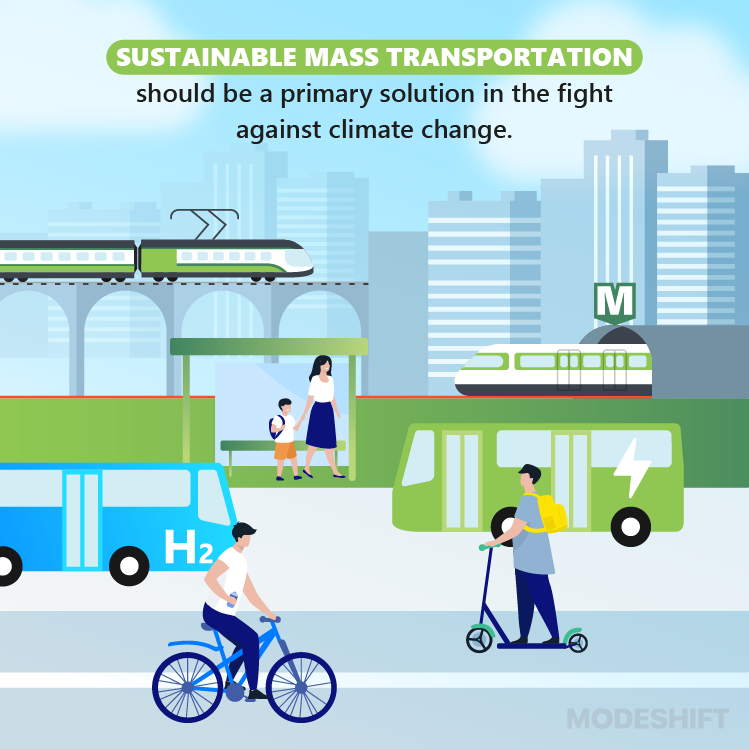
For the past few years, the Biden Administration has passed major policies to increase the adoption of electric vehicles (EVs) in the United States. The Bipartisan Infrastructure Law allocates more than $7.5 billion for the development and improvement of domestic EV charging infrastructure and the Inflation Reduction Act (IRA)updates, along with existing EV subsidies and requirements for manufacturers. While these initiatives are a step in the right direction when it comes to combating the effects of climate change, they are not a one-size-fits-all solution and will likely fall short of achieving their set targets if relied on solely. Instead, the U.S. should focus on building sustainable mass transportation and make that its primary solution in the fight against climate change. Unlike investments in EVs, funding that goes directly into sustainable transit solutions such as Light Rail and Bus Rapid Transit (BRT) can achieve better reductions in greenhouse gas emissions by providing high-capacity services, minimizing car-centrism, and improving access to public transit. Although standard EVs do not emit fossil fuels directly, the energy needed to charge them is primarily generated by fossil fuel power plants. These plants account for roughly two billion metric tons of CO2 annually, a figure that could grow exponentially if we see a rapid upsurge in the adoption of EVs. President Biden’s goal of achieving a 50% increase in eclectic car sales by 2030 would require a 15-fold increase in EV production, a notion that will require a substantial increase in the manufacturing of EVs, further exacerbating our reliance on fossil fuels. The IRA’s new sourcing requirements for critical minerals for EV batteries are also thought to contribute to the creation of bottlenecks in the EV supply chain. Even if the production of EVs becomes sustainable overnight, it will still not be the silver bullet solution we need to tackle climate change.
American citizens are hesitant to purchase EVs, which could further impede their potential to achieve sustainable targets such as limiting pollution in cities. EVs currently account for less than 1% of the total cars on U.S. roads, which includes SUVs, and light-duty trucks. While momentum is increasing, surveys report that about half of Americans are unlikely to consider buying an EV. Further data shows that EV tax subsidies and building more charging stations are thought to be ineffective methods that will fail to increase adoption. Households that invest in EVs also tend to be high-income earners, with annual salaries of more than $100,000, meaning that many low- and moderate-income American families will likely struggle to afford an EV even with IRA tax credits. The upfront cost of an EV is on average $18,000 higher than a gas car and while consumers could save money from reductions in fuel consumption and lower maintenance costs, the high upfront cost is a major barrier that will most certainly impede adoption in the U.S. Expanding existing Light Rail and BRT networks across the nation could be a more feasible solution since they can take advantage of the already existing road infrastructure. Local governments and regional transit agencies could construct new light rail systems alongside current street networks without having to build new tunnels. Additionally, these systems can be powered by electricity generated from entirely renewable energy sources. If local governments accelerate their investments in electric buses in combination with creating designated bus lanes within existing roadways they could improve services dramatically, causing an increase in ridership and even more sustainability benefits. Transport authorities can further interlink bus systems with rail systems to facilitate faster transfers for passengers, making public transit an even more viable and appealing alternative for riders. Both options are capable of transporting more riders per vehicle and are effective in reducing traffic congestion and decreasing overall emissions, while also demanding less funding.
Smaller transit agencies often face the dual challenge of limited resources and ambitious sustainability goals. Our VP of Business Development – Konstantin Spasov underlines the importance of strategic investment in technology and how that can be an indispensable ally in helping agencies excel in multiple areas. ‘’Agencies with less financial capabilities can utilize the power of software to optimize operations, making the most out of existing assets while experimenting with a range of sophisticated tools that come with modern transit tech. By implementing contemporary (cost-efficient) software solutions, agencies can streamline their operations and reduce the need for manual data collection and analysis. This allows for better resource allocation and decision-making which is based on real-time, actionable data.’’ He goes on to further emphasize that improving fleet efficiency is another crucial step in achieving significant cost savings along with additional sustainability benefits. Modern fleet management tools are capable of reducing fuel consumption, along with improving maintenance schedules and maximizing the utilization of vehicles. Real-time data and predictive algorithms can be very effective in improving transport operations while saving agencies fuel, and reducing congestion and emissions. Establishing decentralized transport networks with cutting-edge technologies such as Artificial Intelligence, IoT and Smart Routing can help address commuter needs, more sustainably while increasing revenue and ridership. Furthermore, transport authorities can develop partnerships with players from the private sector to expand the scope of their offerings by investing in multimodal transportation and improving connectivity and reliability. Financially strapped agencies also stand to benefit from cloud-based solutions by leveraging the speed and scale of cloud infrastructure to extract valuable insights that enhance services.Integrated fare payment systems facilitate faster and more convenient ways for riders to purchase fares such as with open-loop payments. Eliminating the need for paper and plastic cards by switching to cloud-based fare collection reduces waste and simplifies fare distribution. Investing in these areas can enable smaller agencies to make substantial progress toward sustainability, even with limited budgets.
Gearing Up For Green Mobility By Getting All The Elements Right
Making public transportation an attractive alternative to cars and increasing usage involves a complex mix of modernizing and extending existing bus and rail networks, alongside integration with other modes. This means providing capacity in the right places, solving the first-mile and last-mile gaps, and adjusting routes and services to meet demand and changing community needs. It also means ensuring that transit facilities such as stops are safe and accessible to everyone, including those with personal mobility concerns. Transportation authorities need to make it easier for consumers to use their services as well as provide seamless and convenient travel experiences. Consumers want to easily plan their journeys, use multiple modes of transportation to supplement their needs and have the ability to pay for everything in a way that suits them, quickly and securely. Federal and state transportation agencies can enhance accessibility, fill in gaps, and increase usage of services by adopting Mobility-as-a-Service (MaaS) models in combination with Mobility-on-demand (MOD) platforms. Private companies and tech providers can support transportation agencies in achieving these goals by developing user-friendly platforms that give riders the digital tools they need to plan their journeys better, such as real-time data on road conditions and services, integrated payment systems, and seamless access to a wide range of mobility modes. Enhancing multimodal transportation, improving connectivity and reliability, and pairing that with robust, steady investment in quality public transit could go a long way in helping cities reduce their carbon footprint. City planners and transport authorities need to work together to equip citizens with more travel choices by promoting low-carbon mobility options and providing the infrastructure to back this, along with user-friendly technology to help users navigate these ecosystems with ease and assurance.

Transit agencies stand to benefit from these developments by delivering exceptional services to passengers, increasing ridership and usage on current networks, and leveraging data analytics to help plan new upgrades. Cities can work with other players within these mobility ecosystems to integrate multimodal transportation with Intelligent Traffic Management Systems. By doing so, transportation authorities can address some of the biggest complaints of riders such as crowded transit vehicles, slow service, constant delays, and long dwell times. This can ensure a more seamless flow of passengers across the entire network, increased capacity, and bigger ROI on investments. Embracing other advancements in payment technology could exponentially speed up agencies’ goals of meeting climate targets. By introducing Account-based Ticketing, agencies could reduce their carbon footprint, along with achieving additional cost-savings. Studies suggest that contactless payment systems onboard diesel buses can reduce emissions by over 20% due to shorter dwell times and faster boarding of passengers. Digital payments and Account-based Ticketing are also key in allowing operators to collect valuable user data regarding journeys, and preferences, making it possible to pinpoint areas for improvement. Passenger information that is stored within an account provides insights into ridership trends which can be leveraged to optimize services, meet the unique requirements of passengers, and enhance rider experiences. In the United States, most state-level GHG emission strategies aim to reduce carbon emissions by 40 percent through 2030 and over 80 percent by 2050. To get there, the public and private sectors need to collaborate on establishing green energy solutions, increasing power generation from carbon-free sources, and developing robust transmission networks to deliver energy in a cost-effective and reliable manner.
Acknowledging electrification as a viable, sustainable mobility solution is often only half the battle. Initiating a successful transition to all-electric vehicles will require more than just introducing new fleets of vehicles and building the charging infrastructure. Other alternatives are also needed and should be explored to create hybrid solutions based on the needs and capabilities of each agency and city. We need sustainable public transport that uses clean energy sources, such as compressed natural gas (CNG), hydrogen, and electricity. Authorities need to adopt a holistic approach with extensive planning, including facilitating appropriate relationships with utility companies. Furthermore, large-scale EV charging for multiple new fleets could create a significant demand on local distribution grids, which might also require upgrades to grid infrastructure. Moreover, electrification alone introduces new and unfamiliar variables into the fleet maintenance equation. Many agree that it’s not just about the maintenance and keeping things running, but rather a complex set of variables that should all be taken into consideration. It’s about the source of the electricity, its impact on the grid, how much it will cost, when vehicles will be charged, how often will charging occur, and who will essentially be operating them. Onsite solar and battery storage, along with deploying fast-charging EVs, and other grid-edge technologies, will serve as critical elements in the development of electrification infrastructure. Those in charge of managing electric fleets will need specialized analytics to make the best decisions possible. For instance, nationwide commercial fleets will likely rely on carefully designed networks of charging stations that work in coordination with optimized scheduling so that charging costs can be minimized with off-peak charging — an intelligent system that will depend on advanced analytics.
Conclusion
As countries strengthen their commitments to meeting climate targets, they must also increase their support to the authorities responsible for implementing these goals such as public transport providers. Transit agencies are under tremendous pressure to continuously improve services, build more infrastructure, and electrify their vehicle fleets to meet ambitious climate goals. If we want public transportation to become a preferred mode of travel for the majority of Americans, we have to direct our efforts to upgrading and expanding mass transit networks and make that our number one priority. Governments, multilateral development banks, and other global institutions could help in searching for innovative ways to increase finance for public transport infrastructure and sustainable operations. This means devising new financing mechanisms and strategies to de-risk investment in sustainable mobility solutions and encouraging more private-sector finance. Global populations will also play a pivotal role in shaping the future of sustainable mobility, underlined by their willingness to participate in this transition. The UN has emphasized how the choices we make regarding the way we travel, whether that’s by driving, biking, scooting, or public transportation will ultimately determine the impact we have on the environment around us, including carbon emissions. Making conscious, informed lifestyle choices when it comes to transportation can be a powerful tool that will help us mitigate the effects of climate change, along with improving the air quality in cities and creating a better future for both people and the planet.
AUTHOR

Ilina Chipilska is a marketing expert with more than 10 years of experience being involved in a wide range of projects. At Modeshift she manages all marketing activities and the company's online presence.


