
Multivendor environments in public transit, where systems such as ticketing, scheduling, and telematics are sourced from different suppliers, often lead to multiple hidden risks and costs, including a higher total cost of ownership (TCO) for agencies and significant operational inefficiencies. While designed to avoid vendor lock-in, this approach introduces complex integration challenges, cybersecurity vulnerabilities, and increased maintenance overhead that can jeopardize service reliability. A shift towards integrated systems and open data standards is often seen as a more viable solution to ensuring cohesion and efficiency in public transit systems.
In this article, we’ll explore some of the hidden risks and costs associated with relying on multiple vendors, alongside common strategies transport agencies can adopt to mitigate any future issues.
Operational And Financial Risks Of Multivendor Environments
Using a multi-vendor approach in public transit introduces several hidden risks, primarily centered around increased complexity, operational inefficiencies, and heightened cybersecurity vulnerabilities. Different vendors often use disparate technologies, data formats, and communication protocols, making it difficult to integrate system components and solutions into a single, cohesive environment. This can lead to higher initial and ongoing maintenance costs for custom integrations, which can significantly delay the deployment of new features and services. In many cases, when an issue arises, it also becomes increasingly difficult to isolate the root cause, further delaying repairs and extending downtime.
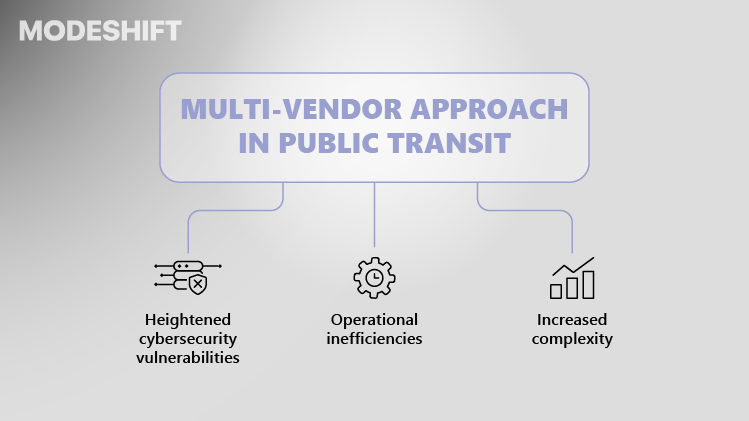
While initial procurement costs may appear lower, the long-term expenses, including hiring specialists to fix custom integrations, managing multiple contracts, and dealing with system failures, significantly exceed those of a unified, standardized system. Relying on several vendors also means paying multiple markups on hardware, software, and services. Additional overheads are incurred from managing separate billing cycles and support contracts. Unreliable systems due to poor integration can lead to severe service disruptions, lost revenue, increased passenger complaints, and potential regulatory fines. Despite using multiple vendors, agencies can also become locked into a patchwork of technologies that are hard to upgrade, necessitating expensive, full-system replacements later.
Why Multiple Vendor Contracts Cost Agencies Money
Juggling multiple contracts with different vendors creates significant resource drains for transit agencies, resulting in substantial, often hidden, financial losses. The complexity of managing different service-level agreements (SLAs), renewal dates, and performance benchmarks creates an additional administrative burden on transit personnel, diverting them from other core transit functions. This ‘’hidden cost’’ on staff usually outweighs any savings gained from trying to secure a cheap deal with a vendor. Processing invoices from different vendors with varying cycles is also very time-consuming, prone to errors, and makes it difficult to validate billing against contract terms, leading to overpayments. When service failures occur, such as delays in transit or maintenance issues, identifying the responsible party becomes very difficult, as vendors tend to blame each other. This causes agencies to lose even more money, as it can lead to prolonged periods during which a service is unavailable.
Managing fewer vendors significantly reduces the administrative workload on transit staff by limiting the resources required for contract negotiation, vendor management, and invoicing. This enables more efficient and streamlined procurement processes where communication is simplified, making it easier to hold partners accountable and solve problems. A single vendor approach also leads to better-integrated systems, reducing the need for expensive custom software solutions that enable different systems to communicate with each other. When an agency wants to update something on the system, they also have to pay only once, as opposed to paying separate fees to different suppliers. A single vendor typically provides one monthly invoice, further reducing the administrative burden of processing multiple payments and consolidating data, which leads to more effective budget tracking.
How Multiple Vendors Contribute To Increased Cybersecurity Threats In Public Transit
Multiple vendors contribute to increased cybersecurity vulnerabilities in public transit by expanding the “attack surface,” creating numerous entry points, inconsistent security standards, and complex, obscured, or “blind” spots in the digital supply chain. When data moves through a chain of third-party logistics providers, software vendors, and carriers, a single security flaw can compromise the entire system. Public transit authorities may not have full visibility into each vendor’s internal security systems and practices. This creates blind spots in the overall security posture, making it harder to detect and respond to threats effectively. If the security and data handling protocols among vendors are inconsistent, the weakest link can expose sensitive passenger data (personal info, payment details, travel history) to breaches, leading to regulatory fines and reputational damage.
Transit agencies can decrease cybersecurity threats stemming from multiple vendors by implementing a rigorous, multi-layered Third-Party Risk Management (TPRM) program. Key strategies include enforcing strict security standards in contracts, conducting regular audits and vulnerability assessments, and implementing network segmentation to prevent vendor breaches from affecting critical operations. Agencies could require vendors to provide evidence of compliance with standards such as NIST, ISO 27001, or SOC 2. They could also include specific data security clauses, including encryption standards, breach notification timelines, and strict access controls. Enforcing Multi-Factor Authentication (MFA) for all vendor access to agency systems and using Role-Based Access Control (RBAC) could further limit access to only necessary systems.
Standardization As The Bedrock Of Interoperability In Transit Operations
Standardization acts as the foundational bedrock for interoperability in transit operations, enabling diverse systems, vehicles, and agencies to exchange data seamlessly and work together efficiently. By establishing common protocols for data, infrastructure, and hardware, standardization eliminates “silos” that cause operational bottlenecks, ensuring that information flows between systems with minimal human intervention. Standardized interfaces, particularly ITxPT (Information Technology for Public Transport), enable devices from different suppliers, such as fare collection systems, passenger counters, and GPS trackers, to connect to a single, shared on-vehicle IP network. This eliminates the need for custom, proprietary integrations.
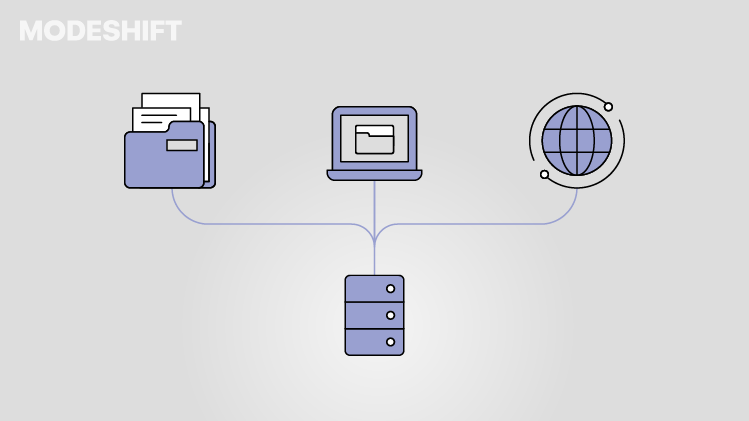
Additional formats, such as GTFS/GTFS-RT, ensure that real-time data on schedules, vehicle positions, and disruptions from multiple vendors are consistent, enhancing reliability and improving the traveler experience. Open standards enable transit agencies to select the best components from various vendors rather than being forced into a single, expensive, proprietary ecosystem. A unified approach to maintenance helps facilitate a single point of contact and a consistent, standardized protocol for servicing equipment, regardless of brand or model. By adopting standards, agencies are not locked into one vendor’s proprietary technology, making it easier to replace, upgrade, or add new technology partners without disrupting existing services.
Key Mitigation Strategies For Managing Multivendor Networks
Improving operational resilience in multi-vendor networks for public transit requires shifting from managing individual vendor components to a holistic approach focused on centralized visibility, network segmentation, and proactive monitoring. The core challenge in these environments is the interdependency of each system, such as signaling, ticketing, and passenger information, supplied by different vendors, which can cause a variety of failures. Transit agencies can use unified tools to monitor IT and Operational Technology (OT) assets, providing a single dashboard for diverse vendor devices. Deploying sensors (such as Nozomi Networks Guardian) to create live maps of network traffic allows operators to understand the role of each node and identify communication issues. Establishing an automatic inventory of all hardware and software will further help ensure no device is unaccounted for in the network.
Agencies can also divide networks into smaller, secured zones to prevent a failure or breach in one component from spreading to others. When it comes to security, applying a “never trust, always verify” approach guarantees that even known vendor devices are authenticated before accessing the network. Utilizing passive monitoring to detect failing equipment by watching for unusual behavior or traffic patterns will also help prevent downtime before it occurs. For air-gapped or legacy systems, agencies can utilize portable inspection tools to verify device health and security without needing network connectivity. Regular firmware management ensures that security updates for devices from different vendors are applied regularly to close or minimize exposure points.
Beyond Hardware: The Strategic Value Of Choosing The Right Partner
Choosing a single, strategic partner in public transit rather than managing multiple vendors offers significant strategic value by promoting operational efficiency, reducing system fragmentation, and aligning long-term goals with innovation. While different vendors may offer “best-of-breed” point solutions, a single partner can provide a holistic, integrated approach that ensures compatibility across critical systems (e.g., scheduling, ticketing, real-time data) and clear accountability for performance. A single partner simplifies communication and contract management, while removing the “finger-pointing” that often occurs between multiple vendors when technical issues arise. This streamlines accountability and speeds up problem resolution.
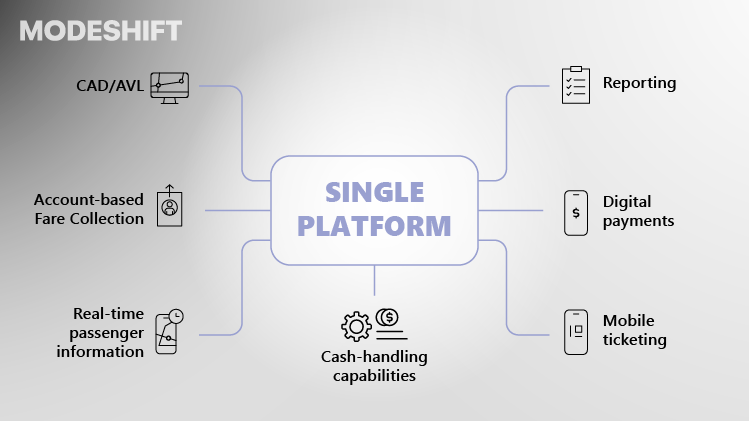
Vendors offering technology components, such as fare collection and real-time tracking, under a unified platform are designed to work together, thereby avoiding the high costs and technical hurdles associated with integrating disparate systems from various vendors. A partner that is invested in long-term success and growth is also more likely to share in the project’s risks and rewards. This often leads to a deeper understanding of the agency’s specific needs, aiding in facilitating tailored innovation, such as adopting new, sustainable technologies. While multi-vendor strategies may offer flexibility, they often lead to higher overall costs due to administrative overhead. Single-vendor products typically come with better volume pricing, lower total cost of ownership (TCO), and easier scalability.
In Conclusion
Overcoming the risks of using multiple vendors in public transit requires a shift from transactional, siloed procurement to a strategic, collaborative, and technology-driven governance model. This means investing in strategies that involve enforcing standardized procedures, using centralized management systems, and ensuring clear contractual obligations around performance and cybersecurity. Using consistent Service Level Agreements (SLAs) across all vendors can help maintain uniform performance metrics and quality control. Standardized SLAs ensure that all providers, whether they are bus operators, technology partners, or maintenance contractors, adhere to the same minimum service levels, creating a uniform user experience.
Deploying middleware or integration platforms to connect disparate systems, such as fare collection, scheduling, and real-time information, is also crucial to ensuring transit authorities can leverage the benefits of a best-of-breed approach while minimizing the inherent complexities of managing multiple suppliers. In many cases, the right solution for agencies often depends on whether the vendor maintains an open, interoperable platform. A single-vendor solution is truly flexible only if it supports open APIs and data portability, ensuring that the agency can still pivot or integrate third-party tools in the future. Without open APIs and data portability, a single-vendor solution can become a “walled garden,” where the organization is tied to the vendor’s roadmap, pricing, and limitations.


