
The “15-minute city” presents a new urban planning concept where residents can access essential daily needs such as work, groceries, schools, and parks within a 15-minute walk or bike ride from their homes. Popularized by urban planner Carlos Moreno and championed by figures like Paris Mayor Anne Hidalgo, the model aims to reduce car dependency, decrease commutes, and create more walkable, connected, and livable neighborhoods. It involves mixed-use development, prioritizing pedestrian and cycling infrastructure, and creating self-sufficient neighborhoods with essential services and amenities.
In this article, we’ll explore how 15-minute cities are currently reshaping urban areas worldwide, along with some of the latest technological advances in the field that are driving their growth. We’ll also emphasize the importance of mobility in such cities and why it’s crucial to develop strong transportation systems that can adapt and meet the needs of populations.
Key Principles Of The 15-minute City: Debunking The Myths
The 15-minute city concept is considered important since it promotes environmental, social, and economic benefits by creating neighborhoods where essential services are readily accessible within a 15-minute walk or bike ride. Key advantages revolve around reduced traffic congestion and carbon emissions, improved public health through active transportation, stronger community bonds, and support for local businesses. 15-minute cities offer a sustainable and equitable model for urban living that prioritizes human well-being over car dependency. An argument against the concept is that it infringes on personal freedom and the right to use a car, with some critics calling it a form of “climate confinement”. Other backlash is linked to the confusion between 15-minute city goals and unrelated, controversial measures such as low-traffic neighborhoods (LTNs), which critics falsely claim are a core part of the 15-minute city plan.

Contrary to some controversial opinions, the 15-minute city model is not about restricting travel, but rather establishing neighborhoods where car travel is not the only option. Many point out that the 15-minute city concept is simply a modern version of traditional, walkable neighborhoods that were once the norm before car-centric planning became dominant. The concept is by no means universal, yet it’s considered flexible in the sense that it can be adapted to different city sizes and types, from dense cities to sprawling suburbs. Implementation can involve various strategies, such as rezoning high-traffic areas for mixed-use development or expanding public services. Successful adoption often emphasizes community-led planning to ensure the model meets local needs, not a one-size-fits-all top-down approach.
How Paris’ Vision For A ’15-Minute City’ Sparked A Global Movement
Paris’ vision for a “15-minute city” sparked a global movement by providing an attractive model for urban reform that prioritizes walkability and local access to services. Mayor Anne Hidalgo adopted the concept, which was popularized by Professor Carlos Moreno, in her 2020 re-election campaign. This vision of creating neighborhoods where essentials like work, shopping, and culture are reachable within a 15-minute walk or bike ride gained international attention as a potential solution for post-pandemic recovery and to address issues like car dominance and climate change. Since then, many cities have adopted similar goals, and the concept has been used globally as a framework for urban planning and analysis. Paris is actively implementing the vision through tangible projects, including creating more bike lanes, reducing car access in certain areas, and investing in public spaces.
Paris’s most successful 15-minute city initiatives include the building of extensive new bike lanes, the transformation of schoolyards into weekend community spaces, creating pedestrianized “school streets,” and developing new urban forests and green spaces. The city has also focused on making commercial spaces more affordable and converting single-use buildings into mixed-use facilities, as well as improving participatory budgeting. In total, Paris has built over 1,000 km of new bike lanes and converted bus lanes to be accessible to cyclists, making cycling a safer and more viable option. The city has created 12 new pedestrian squares and implemented “school streets” to make areas around schools safer for non-motorized travel. Significant green infrastructure has also been introduced, including seven new urban forests and one urban park, with plans to create many more green corridors.

Overcoming Traditional Transportation Challenges Through 15-minute Cities
The 15-minute city concept can be effective in overcoming traditional transportation challenges by redesigning neighborhoods to place essential services within a 15-minute walk or bike ride from home. This helps mitigate issues such as traffic congestion, long commutes, and pollution by shifting the focus from long-distance mobility to local access, reducing our reliance on cars. Mobility in a 15-minute city emphasizes active, human-powered transportation such as walking and cycling for daily needs, supplemented by efficient public transportation and micromobility options. To prioritize walking and cycling, streets must be designed to be safe and convenient for pedestrians and cyclists, with features such as more green spaces, bike lanes, and wider sidewalks. Walking and cycling must also be integrated with local public transport hubs (like bus stops and metro stations) to provide seamless connections for longer trips.
Public transport integration is crucial for 15-minute cities because it expands access beyond walking and cycling, connecting neighborhoods to the rest of the city for longer commutes, social trips, and other cross-city travel. Adding new routes, optimizing current ones, and increasing the frequency and speed of existing services, especially to underserved neighborhoods, can make public transit a more reliable and convenient option. Furthermore, designing or adapting stops and services to ensure they are fully accessible to everyone, including people with disabilities, is vital to providing adequate mobility. Using integrated digital systems could also make it easier and more affordable for people to plan and pay for multi-modal journeys across different public transport options. Lightweight vehicles such as e-scooters and bikes can be used to fill gaps in first-last-mile connectivity, extending the range of active mobility modes by connecting residents to their homes, services, and public transport.
Implementing Policy Changes For Better Cities: Why It Matters
Implementing broad policy changes for better cities can be more impactful than solely focusing on close-proximity neighborhoods, as policies can address city-wide issues such as housing affordability, infrastructure, and access to opportunities, while neighborhood-level initiatives may not solve systemic problems. Effective city-wide policies create inclusive environments where all residents can benefit from access to jobs, education, and healthcare, while promoting scalable solutions that aid an entire urban region, not just a single neighborhood. Policies can help resolve fundamental issues such as housing affordability through measures like offering incentives for building new affordable units or implementing rent control programs. Another example is improving public transportation or digital infrastructure through city-wide policy, which can have a massive impact on the entire population, making it more efficient than trying to solve problems on a neighborhood-by-neighborhood basis.

Policies can also help ensure resources and opportunities are distributed more equitably across a city, rather than being concentrated in specific areas. For instance, a policy can focus on bringing priority services and amenities to underserved areas across the city, instead of relying on neighborhood-level efforts, which may be inconsistent. In Australia, Melbourne’s “20-minute neighbourhood” policy is a great example of a concept that evolved from the idea of the 15-minute city. The initiative emphasizes creating walkable neighborhoods with safe and connected streets, high-quality public spaces, and a mix of land uses, including housing, to support the local economy. To guide future implementation, the government developed resources such as the 20-Minute Neighbourhood Checklist Tool, which helps urban developers and councils assess and plan for the “hallmarks” of a 20-minute neighbourhood.
How Vienna Perfected The 15-Minute City Model
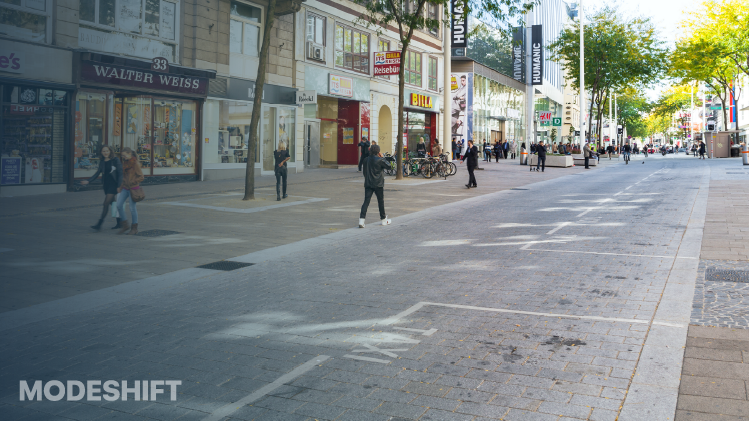
Austria’s capital, Vienna, has perfected the 15-minute city model by prioritizing pedestrian-friendly streets, high-quality public transportation, affordable and inclusive housing, and a mix of residential, commercial, and green spaces in neighborhoods. Long-term urban planning, including plans to reduce car use and CO2 emissions, has created a city where most daily needs are within a short walking or biking distance. The city is grounded in equity, accessibility, and sustainability, having expanded sidewalks and created large pedestrian zones, such as Mariahilferstraße, to prioritize walking and cycling. Extensive and well-connected public transport networks make it easy to get around without a car, with the city aiming to have 85% of all trips made via walking, biking, or public transport by 2030.
New developments further integrate affordable housing, schools, green spaces, and cultural centers, ensuring that essential services are accessible to all residents from the outset. Urban planning encourages mixed-use buildings and the inclusion of local shops, parks, and community spaces within neighborhoods, which fosters a sense of local community and reduces the need for long commutes. Vienna has set ambitious goals, such as reducing transport-related CO2 emissions by 50% through 2030 and sourcing 100% of its energy from renewables by 2040, which reinforces the principles of the 15-minute city. The city’s polycentric structure guarantees that multiple vibrant neighborhood centers exist throughout the city, rather than a single, overcrowded downtown core.
Can The 15-minute City Model Work Everywhere?
How we design future cities directly impacts residents’ quality of life, the environment, and long-term economic and social sustainability. Thoughtful planning creates healthy, inclusive communities with better access to services, improved public health, and greater resilience to challenges like climate change, while poor design can exacerbate pollution and social inequality. With that said, the 15-minute concept works best in dense urban environments where many services already exist, or in suburban areas specifically designed for mixed-use development. In low-density, car-dependent suburbs, the model is not feasible without significant changes to infrastructure and land use. Implementing a 15-minute city requires extensive and accessible walking, biking, and public transit infrastructure, which is not a common feature of many cities or regions.
In North America, the majority of cities are built around cars, leading to a car-dependent culture with long travel times. Studies have shown that very few households can meet all their daily needs within a 15-minute walk or bike ride, even when public transit is included. Advocates of 15-minute cities argue that it is possible to build such cities, with fundamental reforms and a shift in urban planning mindset to prioritize proximity. Others maintain the argument that it’s simply not possible due to varying geographical and social differences. Furthermore, many specialized jobs, such as those in higher education, healthcare, or certain technology sectors, are not concentrated in every neighborhood and require travel beyond a 15-minute radius. Individuals often prioritize better job opportunities over proximity, which can lead them to accept a longer commute or seek employment in areas outside of their 15-minute neighborhood.
Building The Cities Of Tomorrow
Concepts like the “15-minute city” aim to have all daily needs accessible within a short walk or bike ride, but that alone will not be enough to tackle the many issues of modern society. Future cities must be designed to withstand and adapt to the effects of climate change. This involves strategies such as managing sea-level rise, using renewable energy, and incorporating features like rainwater harvesting and green infrastructure. Urban areas will become more integrated with nature, incorporating more green spaces such as parks, and buildings designed to conserve resources. The shift from cars to people is another important element in creating cities that are livable, healthy, and convenient. This includes promoting walkability, shared mobility modes, and public transit, as well as building vibrant, mixed-use neighborhoods where people can live, work, and play in the same vicinity.

In the future, cities will use data and technology to operate more efficiently and sustainably. Some prominent examples include leveraging AI for city operations, smart grids for energy management, and sensors to enhance infrastructure and safety. A city’s digital infrastructure will be as important as its physical infrastructure, with a focus on creating a “digital innovation ecosystem”. New construction methods will emphasize sustainability and efficiency, utilizing AI and the Internet of Things (IoT) to improve building design, management, and lifecycle. Designing cities for the future will further require involving the community in the planning and development process to ensure new developments are inclusive and meet the needs of all residents.
Conclusion: Considering The Impact Of 15-minute Cities
While 15-minute cities offer significant benefits to communities, there are potential limitations that need to be addressed, including ensuring there is access to specialized services, preventing social segregation and gentrification, while effectively integrating existing transit systems for longer-distance travel. 15-minute cities can face significant challenges in providing access to specialized institutions such as universities or hospitals, which are often centralized and require travel beyond the 15-minute radius. Without careful planning, the improved amenities and infrastructure could also lead to rising housing costs, potentially displacing lower-income residents.
The concept of 15-minute cities must prioritize vulnerable users and underserved areas to guarantee it’s equitable and that it doesn’t create new forms of social segregation. Implementing the model effectively further requires integrating it with existing public transit systems that can accommodate longer-distance travel, rather than focusing exclusively on just the 15-minute radius. Many cities are built on car-centric infrastructure and zoning laws, making it difficult and expensive to retrofit for a 15-minute model. When implemented correctly, the 15-minute city model has the potential to solve many urban problems by reducing car dependency, lowering pollution and traffic, while promoting healthier lifestyles for populations.


