
Efficient public transportation systems are vital for society because they boost economic activity in a region by providing access to jobs and services. They also promote social equity by ensuring affordable mobility for all members of society, including those without access to private vehicles. Cities with strong transit systems tend to have less traffic congestion, lower commuting costs, safer roads, and more livable, walkable urban areas. Public transportation is also crucial for improving environmental sustainability by reducing pollution and carbon emissions. Well-designed transportation networks incorporate different modes, such as public transit, cycling, and demand-responsive transportation, creating an integrated and convenient passenger experience. This is supported by advanced technologies and data analysis, which help cities optimize traffic flow, improve routing, and plan for future transportation needs.
In this article, we’ll explore some of the best worldwide examples of cities with efficient transit systems and what lessons we can learn from them. We’ll also examine the latest technological innovations in the sector, along with strategies, policies, and regulations that contribute to improving global public transportation.
The article in a nutshell:
- Zurich, Switzerland
- Hong Kong, China
- Singapore, Asia
- Tokyo, Japan
- Curitiba, Brazil
- Helsinki, Finland
- Copenhagen, Denmark
1. Zurich, Switzerland: One Of The World’s Most Efficient And Comprehensive Public Transportation Systems
Switzerland boasts one of the most punctual, reliable, and extensive transport networks, covering almost the entire country, including even remote regions, making it an exemplary model of integrated, user-friendly public transit. Switzerland relies on a “clock-face schedule” with a nationwide, integrated timetable that coordinates different transport modes, creating reliable connections with short transfer times between trains, buses, trams, and even ferries and mountain railways. A single, nationwide ticketing system covers all public transportation within the country, making it easy to travel across different modes with just one ticket. For tourists, passes such as the Swiss Travel Pass provide comprehensive access to all cities and regions. Trains and buses run precisely on schedule, ensuring high reliability and minimal waiting times, which reduces stress for travelers.

Cities in Switzerland are often designed with public transit in mind, with buses being given priority at traffic signals alongside other traffic management measures as a proactive step to help reduce delays and ensure efficient travel. Public transportation is widely used in the nation and is an accepted mode of travel for people of all backgrounds, not just those who can’t afford a car. High ridership across all modes helps generate the necessary funding to maintain high standards and quality within the system. Rather than prioritizing extremely high speeds for all lines, Switzerland’s system focuses on efficient connections between stations, ensuring reliable service even to smaller towns and rural areas. Zurich is renowned for having one of the most efficient public transport systems in the nation, known for its exceptionally vast, reliable, and integrated network of trams, buses, commuter trains, and boats, which provide excellent coverage and seamless multimodal travel throughout the city and its surroundings.
2. Hong Kong, China: A World-Class Model For Quality Transportation
Hong Kong’s transport system is another sterling example of a highly efficient and comprehensive multimodal network. With a wide range of services, including subways (MTR), buses, trams, taxis, and ferries, the city provides diverse options for different passenger needs and distances. The Octopus Card, the city’s electronic payment system, helps speed up transactions while reducing delays and facilitating seamless payments across all modes of public transport. Trains and buses run at a very high frequency, even during peak hours, helping to minimize wait times and manage large crowds more effectively. The city’s dense network of MTR stations and extensions ensures that most residents are always within a short walk of a station, providing excellent last-mile connectivity. The MTR’s self-sustaining model finances infrastructure through property development at stations, increasing land use efficiency and profitability.
High passenger volume, dense station networks, frequent service, and policies that moderate private car use are what make Hong Kong’s transport network so successful. With public transport accounting for over 90% of motorized trips, high usage is sustained by affordable and reliable services, encouraging residents to leave their cars at home. Hong Kong currently operates the only fleet of double-decker trams in the world, and for an incredibly low price. The nation is also highly committed to reinforcing high taxes on car ownership, along with keeping parking costs expensive and investing in initiatives such as Electronic Road Pricing, which help reduce car dependency and promote public transit. In recent years, China has accelerated its investment in electric buses, hydrogen fuel sources, and regenerative braking in trains, all of which contribute to a more sustainable and efficient future.
3. Singapore, Asia: A Global Leader In Mobility Innovation

Singapore’s impressive transport system is driven by integrated, long-term planning and extensive public investment in the MRT and bus networks. The nation emphasizes strong government policies that prioritize public transit over private car ownership through incentives and Electronic Road Pricing. Singapore strategically plans its urban development to be concentrated around public transit hubs. This approach increases the number of people living and working near transit stations, making public transport the most convenient option for daily commutes. The government invests heavily in transport infrastructure, particularly the MRT and bus systems, ensuring high capacity and coverage across the island. Their vision is that 8 out of 10 households will be within a 10-minute walk of an MRT station by 2030. Buses and the MRT system are planned and managed as a single, cohesive system. Integrated transport hubs at the intersection of residential and commercial districts facilitate seamless transfers between modes, enhancing convenience.
Singapore is also known for utilizing advanced Intelligent Transport Systems (ITS) that employ sensors, cameras, and data analytics to monitor traffic flow in real-time. This data is used to predict trends, manage congestion, optimize public transit schedules, and make informed decisions to enhance network capacity and safety. The introduction of an Electronic Road Pricing (ERP) scheme further aids in managing congestion by requiring motorists to pay a fee to use certain roads during peak hours. The aim is to influence driver behaviour by encouraging off-peak travel or the use of alternative transport modes. The country relies on a single contactless payment system, such as SimplyGo, allowing users to pay for public transport using their phone, smartwatch, or bank card. The system is built on strong regulatory oversight from the Monetary Authority of Singapore (MAS) and advanced payment infrastructure, such as PayNow and FAST (Fast and Secure Transfers), which facilitate real-time transactions and refunds.
4. Tokyo, Japan: A Highly Efficient Transport System Praised For Its Excellence
Tokyo’s public transportation system exemplifies an efficient network of trains and subways that enable seamless cross-city travel. The country’s focus on punctuality, combined with careful planning and advanced technology, ensures trains are consistently on time. Unlike many cities, Tokyo’s intercity and suburban trains connect directly to subway lines, eliminating the need for passengers to transfer at the outskirts, saving time and easing congestion. The network comprises a wide array of private and public rail lines, ensuring comprehensive coverage across the metro area and linking the city to other regions. Private rail companies pay to access the subway network, generating steady revenue to support upgrades and expansions.
The efficiency of Tokyo’s transport system is deeply rooted in its Shinkansen (bullet train) system, which features innovations such as Automatic Train Control (ATC), dedicated tracks to avoid disruptions, and Earthquake Early Warning (EEW) systems that automatically halt trains before tremors arrive. The system uses automated controls and signaling to manage train movements with impeccable precision, enabling tight schedules and safe high-speed operations. The Shinkansen is renowned for its speed and reliability, facilitating effective intercity travel. Japan is also developing SCMAGLEV, a technology that uses superconducting magnets to levitate trains at incredible speeds, representing a revolutionary leap in train technology. Additionally, cities like Tokyo are actively adopting fuel cell electric vehicles (FCEVs), such as hydrogen-powered buses, to promote a cleaner and more sustainable public transportation system.
5. Curitiba, Brazil: An Innovative Model For BRT Systems Worldwide
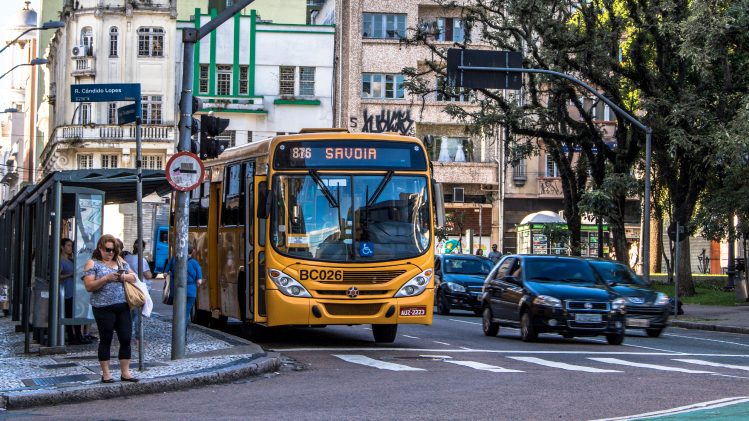
Curitiba’s Bus Rapid Transit (BRT) system is a groundbreaking model that integrates dedicated lanes, express bus routes, and iconic “tube” stations for quick, pre-paid boarding. The country initially introduced this innovative approach to facilitate efficient and affordable public transportation for its residents, while also reducing car dependency and emissions. The system’s success lies in its effective integration of public transit with urban planning, creating a sustainable and accessible transport network that continues to evolve, setting a gold standard worldwide. Curitiba was the first to implement dedicated bus-only lanes, allowing buses to bypass traffic and maintain high speeds. The city also introduced iconic glass tube stations for pre-payment and level boarding, significantly speeding up passenger entry and exit, making the system more efficient and accessible.
Curitiba’s BRT system offers a highly scalable model that is a cost-effective alternative to expensive subways, serving as an exemplary reference for hundreds of cities worldwide. A network of express routes connects major hubs, while smaller feeder lines bring passengers from neighborhoods into the express system, creating a seamless and integrated network. Over the last years, Curitiba has continued to invest in its BRT, upgrading infrastructure, incorporating technologies like hybrid and electric buses, and redesigning lanes to further enhance capacity. By shifting millions of car trips to public transit, Curitiba’s BRT has effectively managed to reduce congestion and air pollution in the city while decreasing overall emissions. The system has also improved access to jobs and economic opportunities, contributing to higher per capita income in the city.
6. Helsinki, Finland: A Pioneer In Urban Mobility
Helsinki is considered a pioneer in urban mobility due to a strong commitment to sustainable transport, which is evident through its extensive cycling infrastructure, advanced electric vehicle charging network, and comprehensive public transit system, including a national rail link. The city is also a global leader in integrated solutions such as Mobility as a Service (MaaS) and autonomous vehicle technology, fostering innovation through open data, public-private partnerships, and city-wide pilot projects that aim to make sustainable transport the norm. The city is heavily invested in promoting alternatives to private vehicles by establishing car-free zones and car-sharing options. Helsinki’s “cycle superhighways” serve as a prominent example of how cities can reinforce effective strategies that make cycling a convenient and safe choice for everyone.
Helsinki is considered the birthplace of Mobility as a Service (MaaS), which offers integrated subscription services (such as the Whim app) for various modes, including public transit, taxis, and car-sharing, simplifying travel for users. The city’s commitment to open data and open APIs further promotes transparency for the development of new mobility services, preventing monopolization by a single MaaS provider. When it comes to EVs, the city is making significant investments in electric vehicle charging infrastructure, including street-level points, which supports Helsinki’s goal of having electric cars account for 30% of all vehicles by 2030. The city also serves as a global testbed for connected and autonomous vehicle technology, regularly conducting pilot programs with autonomous buses and exploring the challenges of harsh winter conditions.
7. Copenhagen, Denmark: A City With An Unwavering Commitment To Sustainable Commuting
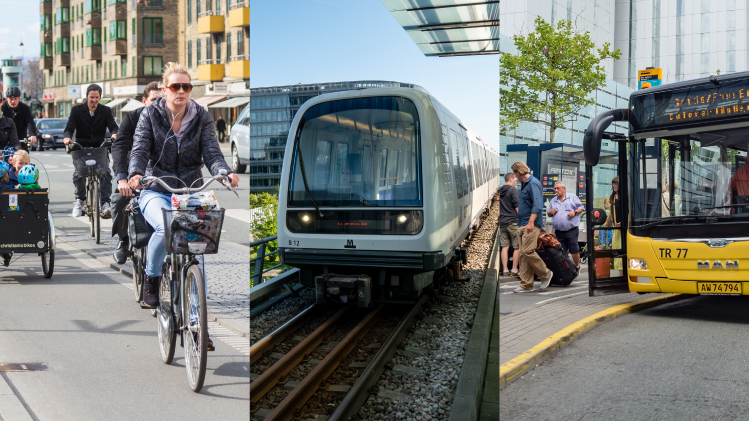
Copenhagen is yet another pioneer in urban mobility due to its comprehensive cycling infrastructure, including extensive, separated bike lanes and intelligent cycle technologies, which make cycling a fast, safe, and convenient option for residents. The city boasts one of the world’s most effective public transit systems, with extensive operating hours that run 24/7 to accommodate residents’ needs. The system includes electric harbor buses, extensive metro and light rail networks, and seamless connections between different modes of transport, ensuring efficient alternatives are readily available for a variety of distances and travel needs. Copenhagen has prioritized bicycles as a primary mode of transport for decades, transforming streets into pedestrian and cycling promenades, creating a city where cyclists outnumber cars. By investing in high-quality cycling infrastructure, including separated bike lanes and bridges, the city has successfully created a coherent and safe network that has inspired many of its European peers.
The city employs several advanced systems, including dedicated bike-only traffic lights with lower wait times and sensors on cycle tracks, to enhance safety and the cycling experience. Smart technologies for cycling, such as messaging boards and coordinated traffic signals (“Green Wave”), are also dramatically improving the safety and efficiency of cycling. Denmark was among the first countries to successfully develop cycling highways, also referred to as Cycle Superhighways or Supercykelstier. This network of highways comprises routes connecting urban areas and workplaces across municipal borders, linking more than 20 municipalities in the Capital Region. These routes feature dedicated and well-designed cycle tracks, often separated from car traffic by curbs, providing a safer environment for cyclists. Copenhagen is expanding its metro network, with new lines and extensions providing broader access to public transit for residents. An additional light-rail system is set to open by the end of 2025, with high-frequency services that will further enhance the metro area’s connectivity and efficiency.
Final Thoughts
Cities can enhance transport efficiency by prioritizing public transit, which includes expanding networks, increasing service frequency, and creating multimodal hubs for seamless transfers. By investing in new routes and upgrading existing infrastructure, such as sidewalks, bike lanes, dedicated bus lanes, and rail lines, cities can effectively enhance service accessibility and reliability. Additionally, cities can leverage smart traffic management through real-time data and technology to optimize signal timing and reduce congestion. Urban planning is equally important, as transit-oriented development (TOD) can encourage reduced car dependency by placing residential and commercial areas near transit hubs. By strategically positioning transit hubs near busy residential districts and business areas, municipalities can link walking and cycling infrastructure to public transit stops, solving the “first-mile/last-mile” problem.


