
Regional transport systems are vital for economic growth, social inclusion, and quality of life. They enhance mobility, connect communities, and provide access to essential services, while also contributing to a more sustainable and equitable future. Several countries stand out for their exceptional regional transit networks, with Japan, Germany, and Switzerland leading the way in both innovation and effectiveness. These nations are recognized for their extensive rail networks, high-frequency service, and seamless integration with other modes of transport. In this article, we’ll look at some of the best examples of regional transport systems and what we can learn from them.
The Importance Of Providing Seamless Regional Transit Trips
The purpose of regional transit systems is to provide accessible, efficient, and sustainable transportation options that connect communities, reduce traffic congestion, and enhance residents’ quality of life. A unified regional agency could help integrate services, enabling seamless transfers between different modes of transport (bus, rail, etc.) and optimizing routes and schedules. Streamlining operations and removing redundancies can lead to significant cost savings and better resource use over time.
Consolidation plays a key role in simplifying complex fare systems, improving information sharing, and offering more integrated, user-friendly experiences for riders. By improving service quality and convenience, agencies could attract more riders and support a more sustainable transportation system. In countries such as Germany, Austria, and Switzerland, public transportation is coordinated through regional entities called Verkehrsverbünde. Created over the past few decades to unify regional transit schedules and fare policies, these transit districts enable seamless trips that once required multiple tickets and transfers.
In the United States, public transportation in larger regions is often fragmented. The San Francisco Bay Area, for example, includes more than 27 separate transit agencies. For passengers, navigating trips that cross jurisdictional boundaries adds a layer of complexity, which can be very time-consuming and inconvenient. As a result, some riders may choose to drive, contributing to regional traffic congestion and emissions. Larger transit districts with more multimodal options could improve the state of American transit and attract new riders.
Global Pioneers In Regional Transport Networks
A good regional transport system is based on excellent multimodal links, integrating various forms of transportation for seamless travel. China is a notable example of this, with its highly efficient and extensive Mass Transit Railway (MTR) networks. In Hong Kong, the MTR is the backbone of the region, merging the city and linking with buses and ferries in and beyond the region’s borders. Additionally, the Octopus card makes travel even more convenient for riders, enabling seamless payments. The system efficiently handles a variety of closed-loop processes and accepts contactless EMV cards.

Japan’s transportation system boasts one of the most well-established, reliable, and connected networks in the world. The Shinkansen, or bullet train, is the pinnacle of modern transportation, achieving impressive speeds of over 300 km/h (186 mph) with exceptional punctuality. This ensures passengers can travel great distances in a short time. The train also serves the majority of suburban areas. Shinkansen lines utilize sections that act as commuter rail lines within major metropolitan regions. This facilitates fast and efficient travel for suburban residents to and from city centers.
Much like Hong Kong, Singapore is also known for its extensive MRT (Mass Rapid Transit) network, which has served as a pioneer in automated rail systems. The network operates six lines, spanning approximately 200km. It covers the entire island, including residential areas, commercial districts, and tourist attractions. The system is complemented by a comprehensive bus network as well as Light Rail Transit (LRT), which serves residential zones and other regions. Singapore has an impeccable record in integrating multiple modes of transport, including public buses, trains, and ride-sharing services.
Multimodal Links Are Key To Well-established Regional Transport Systems
Switzerland is another strong contender due to its impeccable multimodal network that spans the entire country. Trains, buses, boats, and even funiculars run on perfectly harmonised timetables, facilitating seamless connections throughout urban and suburban regions. A single ticket covers all modes, making traveling easy and convenient for passengers regardless of whether it’s in or between cities. In Zurich, riders use high-frequency services with easy connections between different modes. The city has a high emphasis on bicycle infrastructure, making it even more convenient to get around and connect to public transport via a bicycle.
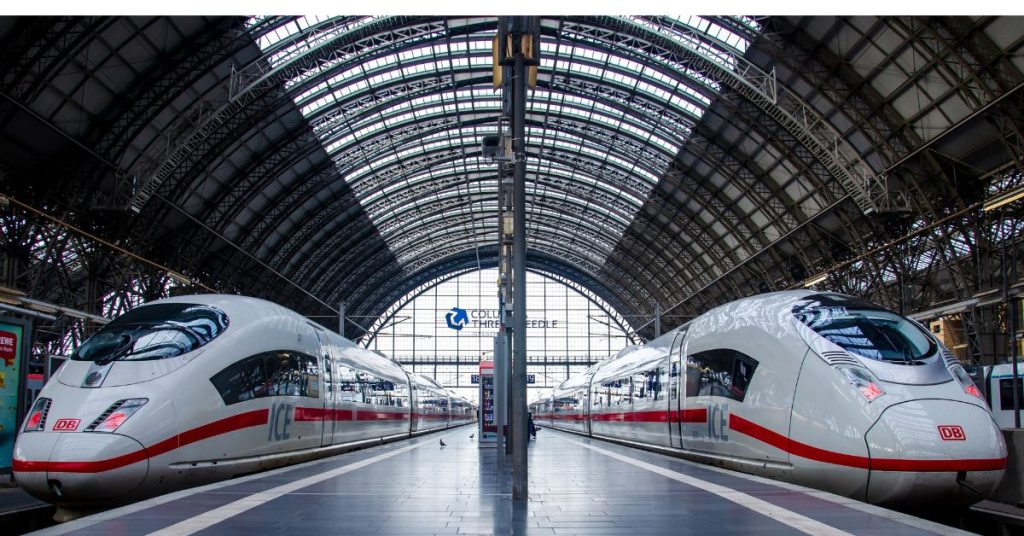
In Germany, the Deutsche Bahn network connects cities and towns across the country. The system is supported by a web of S-Bahn (suburban trains), U-Bahn (underground), trams, and buses in major cities such as Berlin, Munich, and Hamburg. The network is incredibly punctual, very well-connected, and easy to navigate. Several states in the nation are also introducing a unified nationwide ticket for local and regional public transit systems. The flat-rate pass costs just €49 a month, offering unlimited access to local and regional trains, buses, metros, and trams.
Helsinki is at the forefront of the Mobility-as-a-Service (MaaS) movement, offering its residents access to various transportation options, including buses, trains, taxis, bikes, and car rentals, with a single subscription. In addition to this, Finland’s capital prides itself on an excellent public transit network that services every neighborhood in the region and beyond, making it easy to get around without a car. The multimodal network consists of bus, tram, metro, commuter train, and ferry services, which is fairly typical for a Nordic country. The city also has a robust national rail system that connects to all surrounding regions. A comprehensive journey planner app integrates all modes of transportation.
Global Uptake Of Fare Integration Is Slowly Increasing
Most regions in Europe maintain some form of distance-based fare, often using integrated fare systems that apply to zones. Cities such as London and Paris feature concentric zones, while in parts of Germany and Switzerland, where local transportation authorities serve larger areas, a more complex zone system is in place. Switzerland boasts one of the best fully integrated national transit systems under a “One Journey, One Ticket” policy. This plan extends beyond regional zone systems, allowing passengers to buy a distance-based fare, with revenue shared among local operators. As a result, fare integration is crucial to the country’s high public transport usage.
Membership in the Alliance SwissPass, which manages the national fare structure, is mandatory for agencies seeking public funding. Although common across Europe, intermodal fare integration has only recently appeared in North America, in three of Canada’s larger cities. In 2022, Montreal’s regional transit authority (ARTM) introduced a four-zone system with flat fares across each zone. Passengers could use any mode of transit—whether metro, bus, or commuter rail. The same applied to the city’s new automated light metro line, launched in 2023.
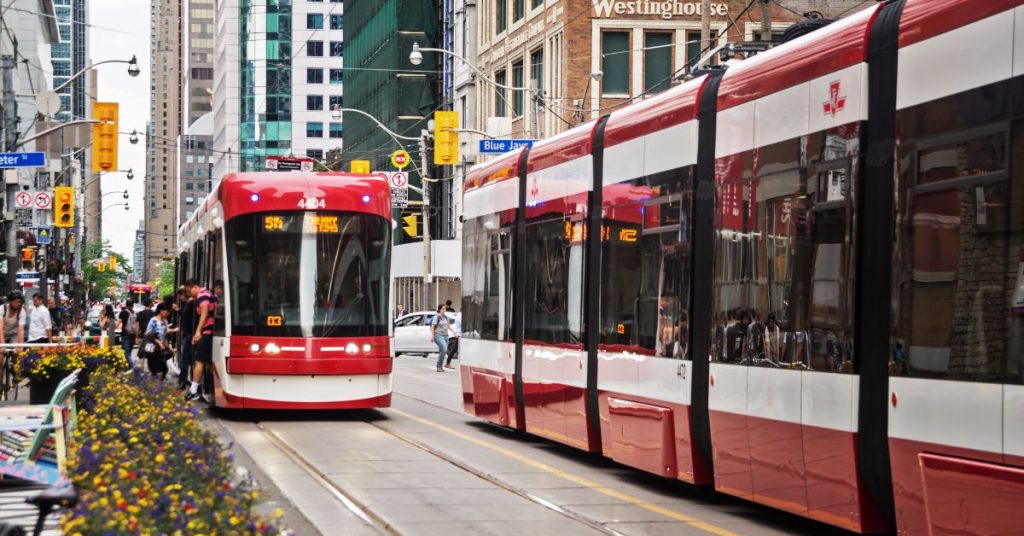
Ontario and Toronto implemented the OneFare program in 2024, combining the Toronto Transit Commission (TTC)’s buses, streetcars, and subways. Passengers could pay a single fare when transferring between TTC services and GO Transit, along with suburban transit agencies. Vancouver’s well-known automated metro, SkyTrain, also features a three-zone system, sharing fares with TransLink’s buses and the SeaBus ferry to North Vancouver. In this case, a one-zone fare is valid across the network during evenings and weekends.
How A Lack Of Integration Is Costing Agencies In Both Riders & Numbers
There are several drawbacks to having too many transit providers in a region, most of which revolve around a lack of coordination and regional planning. Different agencies might offer redundant services along the same routes while also competing for funding with the same elected officials. A lack of integration across transport modes also creates obstacles for passengers. Riders have to pay separate fares for different services, often navigating multiple maps and trip-planning apps, to complete a single trip across their region. The integration of services could help better manage riders’ transfers, such as holding back a bus at the depot whenever a train full of passengers is running a few minutes late. Agencies could also invest in developing frameworks based on open standards that are not heavy and cover the common usage cases.


