
Machine learning systems are rapidly transforming the public transport sector due to their ability to analyze large volumes of data in real-time, as well as detect and predict various outcomes and irregularities. These technological advancements have enabled public transit authorities to tailor services to individual user preferences and real-time demands, helping to solve complex problems while establishing highly dynamic and responsive transport systems. In this article, we’ll explore how public transport agencies can leverage machine learning tools to increase customer satisfaction by offering personalized recommendations while also enhancing service delivery through strategies such as predictive maintenance and route optimization.
The article in a nutshell:
- Creating personalized travel recommendations with Machine Learning (ML)
- Optimized routes with ML
- How ML enables dynamic pricing
- Enhancing safety in public transit through ML
- ML tools help enhance customer support
- Achieving efficient passenger flow with ML
- How ML assists transport agencies in predictive maintenance
- Final thoughts
Creating Personalized Travel Recommendations With ML
Creating customized services in public transport is vital for enhancing the user experience. Machine learning tools can help transport agencies provide personalized travel recommendations by analyzing user data, including past travel patterns, current location, and preferences. By understanding user needs, ML can deliver highly tailored suggestions about any public transport service. For instance, a transit app utilizing machine learning could recommend the fastest route to a rider’s destination, taking into account real-time traffic and public transport data. Passengers receive instant notifications about service disruptions or delays, along with information regarding alternative routes or other modes of transport.
Machine learning technology is also capable of improving accessibility for disabled individuals by enabling more accurate and personalized assistive technologies. ML powers tools for speech recognition, text-to-speech, image recognition, and adaptive interfaces, making digital content and environments more inclusive. Additionally, machine learning offers consistent, real-time information about the accessibility of facilities and infrastructure. This could be crucial for riders with impaired mobility. By using AI-powered tools to analyze transport systems, these models can deliver personalized recommendations on routes for specific groups of passengers. Machine learning is set to enable more intuitive and user-friendly interfaces for public transport apps and systems, making it easier for passengers to access and interact with transit technology.

Optimized Routes With Machine Learning
Machine learning systems are changing how transport agencies plan services by enabling more efficient and dynamic route planning. Advanced algorithms analyze vast amounts of data, including real-time traffic, historical patterns, and potential hazards, to identify the most optimal routes. When utilized correctly, this can lead to reduced travel times, lower fuel consumption, and improved delivery times, which enhances the user experience and overall system performance. ML models are capable of facilitating real-time adjustments by continuously monitoring traffic conditions and making adjustments to routes in real-time to avoid congestion and delays.
It’s important to remember that machine learning systems rely on high-quality, accurate, and reliable data. Transport authorities need to be diligent about the data sets they use to train these systems, along with providing adequate training for staff, if they want to achieve optimal results. ML models are trained on historical data to correctly predict the most suitable routes based on various input factors. Algorithms learn to optimize routes through trial and error, receiving feedback on their performance and adjusting their strategies accordingly. London and Singapore are notable examples of how AI can be applied to adjust bus and train routes based on passenger flow, peak hours, and real-time congestion.
How Machine Learning Enables Dynamic Pricing
Machine learning models enable dynamic pricing by analyzing real-time transit data to predict demand fluctuations and adjust fares accordingly. By better understanding and managing demand, transport operators can optimize the allocation of resources such as bus routes, train schedules, and staffing. Dynamic pricing allows public transport operators to incentivize off-peak travel, as well as manage demand accordingly during busy hours. They could also offer personalized fares based on user behavior. A public transport system could utilize machine learning to examine historical data on passenger numbers, traffic patterns, and weather conditions to predict high-demand periods for a specific route.
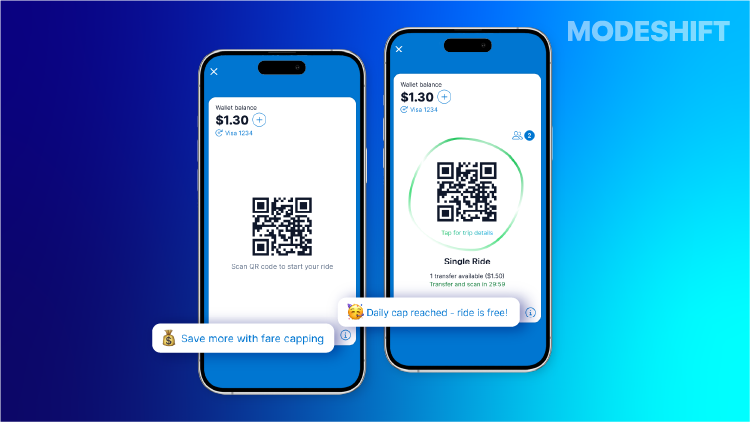
During these periods, the system could automatically increase fares while offering discounts on the same route during off-peak hours. This could encourage some passengers to shift their travel times, helping alleviate congestion and overcrowding while improving the overall user experience. By leveraging machine learning, public transport systems can move beyond static pricing models and implement dynamic pricing strategies that are more responsive to real-time conditions. The result is more predictable and efficient travel journeys for users, with potentially shorter wait times and reduced crowding.
Enhancing Safety In Public Transit Through Machine Learning
Smart traffic management systems optimize urban traffic flow using real-time data analysis, computer vision, and machine learning to adjust traffic signals. These AI-powered systems are capable of predicting congestion and improving the overall efficiency of traffic. By looking at data collected from various sources like video surveillance, sensor networks, and historical incident reports, AI technologies can determine potential hazards as well as improve emergency response times, leading to a safer environment for both passengers and operators. Machine learning algorithms analyze video footage from cameras on buses, trains, and at stations to detect unusual behavior or potentially dangerous situations, such as fights, unattended objects, or unauthorized access.
Upon detecting an incident, the system automatically triggers alerts to security personnel or emergency services, enabling a faster and more coordinated response. Machine learning tools could also be utilized to optimize traffic signals so that transit vehicles have priority, reducing delays and improving on-time performance. This notion reduces the chances of collisions while enhancing traffic flow, benefiting all road users. Transport authorities can examine historical data on accidents and various crimes to help identify areas or times when there’s a higher risk. This allows for proactive measures, such as increased security presence or targeted monitoring, to prevent incidents and ensure the safety of riders.
Machine Learning Tools Help Enhance Customer Support
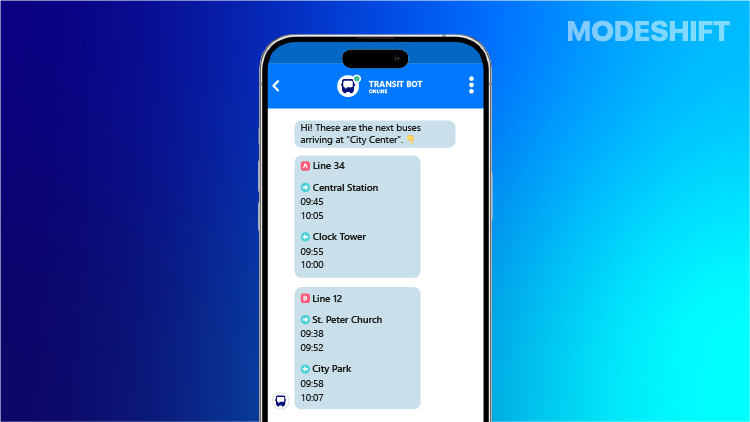
AI Chatbots are powered by Large Language Models (LLMs) capable of understanding and generating human-like text. These programs utilize machine learning techniques and are trained on massive datasets. AI chatbots can assist agencies in routine inquiries and support tasks, decreasing operational costs while allowing transit staff to focus on more demanding and complex issues. Since customer service AI chatbots offer round-the-clock assistance, passengers can have consistent access to information and support. AI-enabled customer support processes vast amounts of data in real time, allowing for quick response times to multiple inquiries simultaneously, making it highly scalable.
These systems gather information from various sources, including knowledge bases, live data feeds, and historical data, to deliver reliable and up-to-date information. This kind of proactive communication and real-time updates regarding schedule changes, delays, or alternative routes allow passengers to stay informed about their journeys and adjust their plans accordingly. AI chatbots can also assist with customer support tickets, managing inquiries such as ticket cancellations, refunds, and service complaints. Furthermore, the data collected from chatbots regarding user preferences and feedback can be analyzed to enhance services and operations.
Achieving Efficient Passenger Flow With Machine Learning
Data collected by AI-based systems in transit allows authorities to allocate additional resources, adjust schedules, or redirect passengers to less crowded routes, ensuring safe and comfortable journeys. Machine learning algorithms have recently been aiding agencies in passenger counting, which is a notoriously difficult task. UK’s second-largest train operator – Northern has deployed an Automatic Passenger Counting (APC) algorithm, which has produced a 98% accuracy rate, with more than 88 cameras installed across its network. The internal and externally mounted cameras on each train record video footage in high definition, even in low-light and high-contrast environments, while AI technology analyzes the collected footage.

This algorithm’s accuracy and speed of processing enable agencies to manage fleets and staff capacity more effectively. The ability to determine the precise number of occupancy levels onboard transit vehicles helps deploy the right number of vehicles, reducing the chance of overcrowding, which leads to more seamless and pleasant journeys for passengers. An AI-based video network is also a more cost-effective option for agencies than conventional sensor-based systems, as it decreases the effort and costs associated with installing and maintaining separate pieces of hardware and disparate backend systems.
How Machine Learning Assists Transport Agencies In Predictive Maintenance
Machine learning systems allow transport authorities to take on a proactive approach when it comes to predictive maintenance by analyzing vast amounts of data to anticipate potential failures before they occur. This enhances transport agencies’ ability to deliver better passenger experiences as well as reduce maintenance costs over time. ML algorithms analyze historical and real-time data from various sources like sensors, maintenance records, and operational data to identify patterns and predict potential failures. For instance, machine learning systems could analyze engine temperature, vibration levels, and oil pressure levels in buses to predict when a specific engine component is likely to fail.
By looking at sensor data from trains and tracks, machine learning could help predict the maintenance needs of transit vehicles, allowing for proactive repairs with minimal disruptions to services. Agencies can perform maintenance during planned downtime or when it’s most cost-effective, as well as optimize resource allocation by pinpointing the most critical areas and prioritizing them accordingly. Singapore is a notable example of a country utilizing machine learning for fleet-wide predictive maintenance. Bus operators recently introduced an early warning system that enables transit technicians to detect failures before they can escalate into serious problems. The solution was deployed in over 3000 buses, with great results so far, allowing maintenance teams real-time visibility over critical systems and components.
Final Thoughts
Machine learning tools can assist transport authorities in solving a variety of issues by automating and streamlining multiple tasks, such as data collection and resource allocation. With that said, it’s important to consider some of the implications and challenges that come from the technology’s adoption. There are some concerns regarding data privacy, which stem from the need to collect and process vast amounts of user data for the issuing of personalized recommendations. Transport agencies will need to have robust policies in place, as well as technological safeguards to protect user information.
Furthermore, machine learning models rely on high-quality and readily available data. Ensuring data accuracy and accessibility is crucial for the technology’s success. Implementing ML solutions in public transport could require a substantial upfront investment as well as the training of personnel, so agencies need to factor this into their budgets. Lastly, integrating ML solutions with existing public transport infrastructure and systems could be a lengthy and complex process. When utilized correctly, machine learning has the potential to dramatically improve transport systems, helping deliver enhanced user experiences that meet the needs and expectations of modern passengers.


