
The future of micromobility will extend beyond just the use of e-scooters and bikes to encompass a broader range of electric and accessible vehicles, along with seamless integration with public transport, and enhanced urban infrastructure, including dedicated lanes for these vehicles. Advancements in technology will bring more connectivity, data-driven operations, and sustainable practices, with various innovations in battery technology and wireless charging. Artificial Intelligence (AI) is also expected to increase efficiency in micromobility, making them more durable, user-friendly, and integrated into Smart City ecosystems. In many parts of the world, the focus is shifting towards creating comprehensive and equitable urban mobility networks that serve all users.
In this article, we’ll examine some of the newest emerging vehicles in micromobility and how advances in design, battery technology, and connectivity are currently fueling their growth. We’ll also look at how cities are utilizing these solutions to achieve broader mobility goals and what we can learn from them.
Emerging Trends In Micromobility
Emerging trends in micromobility include the growth of subscription models, the integration of autonomous vehicle technology, and a greater emphasis on sustainability and dedicated infrastructure. Companies are focusing on creating more durable, lower-cost vehicles, while cities are investing in infrastructure such as dedicated lanes and mobility hubs to support micromobility adoption. Electric bikes (e-bikes) and electric scooters (e-scooters) are two of the most popular types of micromobility vehicles, primarily because they offer a cost-effective, convenient, and often greener way to navigate cities for short to medium distances. These battery-powered, lightweight vehicles are increasingly preferred due to advances in battery technology and the emergence of both private ownership and shared rental systems. Innovations in motor power (up to 750-watt motors), various safety features, and versions including both standing and seated positions make them ideal for dense urban environments.

The development of autonomous driving technology is another key trend in micromobility, which could lead to new solutions for charging and maintenance. The industry is gradually shifting from a focus on shared vehicles to owned and subscription-based models for consumers. A high priority for many cities has been to offer more inclusive options beyond standard bikes and scooters, such as adaptive scooters and hand cycles, to serve people of all abilities. There is also a growing emphasis on building more robust vehicles, utilizing refurbished and second-hand parts, and implementing efficient recycling programs to reduce waste and operational costs. Increased connectivity in micromobility vehicles enables seamless navigation, real-time data for operators, and integration with other mobility services. This helps deliver more personalized experiences for users through features such as tailored options and dynamic route planning.
New Types Of Micromobility Vehicles
Newer micromobility vehicles include variations of e-bikes and e-scooters, electric unicycles, and small electric vehicles such as cargo bikes, mopeds, and even microcars. Innovations focus on improving performance, safety, and usability, with a trend towards larger networks and integrated systems. Electric unicycles and hoverboards refer to single-wheeled or two-wheeled personal vehicles that have become more common in urban environments. Riders seeking portability and ease of learning typically choose a hoverboard, while those looking for speed, range, and all-terrain capability tend to opt for an electric unicycle. An electric unicycle (EUC) generally requires more practice but offers higher performance, while a hoverboard is easier to learn and more widely recognized. E-mopeds and small motorcycles are classed as lighter, electric alternatives to traditional mopeds and motorcycles for short-distance travel. E-mopeds offer a cheap, easy, and eco-friendly option, while small motorcycles provide higher performance and versatility for longer distances and more diverse road conditions.
Other emerging and specialized vehicles include cargo bikes, which are e-bikes with larger cargo areas designed for carrying goods, used for both personal use and commercial delivery services. Microcars, which refer to small electric vehicles with two seats, are also considered micromobility vehicles due to their compact size and urban focus. In Spain, the city of Milan has launched the world’s first free-floating and integrated ride-sharing system, allowing residents and visitors to rent electric minicars, e-bikes, and e-scooters. These minicars are incredibly easy to park, and they rely solely on electric power, making them a zero-emission and eco-friendly alternative to traditional cars. Autonomous delivery robots are also being explored in various parts of the world for last-mile delivery services. These devices are specifically designed for “last-mile” delivery, often navigating sidewalks and roads in urban areas, and can be monitored and controlled remotely by human operators in challenging situations.
The Role Of Foldable and Portable Vehicles In Urban Transport
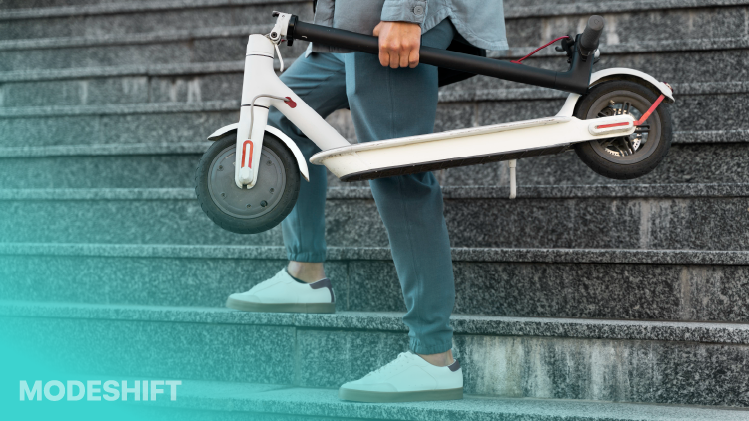
Foldable and portable micromobility vehicles have significantly impacted urban transportation by enhancing convenience, improving accessibility, and making short trips more flexible for users. They are particularly effective in solving the “first and last mile” problem by allowing users to combine personal mobility with public transit. Another benefit of these vehicles is that they can be easily carried onto public transport, put in a car’s trunk, or taken into buildings, making them incredibly adaptable for multi-modal journeys. Furthermore, foldable and portable vehicles don’t require dedicated parking spaces, which is a major advantage in densely populated urban areas. Riders can use them whenever and wherever needed, without relying on large, fixed infrastructure systems. This has boosted micromobility’s role in reducing traffic congestion and emissions while providing more personalized and inclusive transportation options.
Electric skateboards are another popular form of micromobility, offering an eco-friendly and efficient solution for short-distance travel. They serve as a niche but growing alternative to traditional transportation, though they do face challenges related to infrastructure and safety when sharing roads with cars and pedestrians. Recent innovations in electric skateboards have focused on enhancing performance, safety, and user experience, driven by numerous advances in battery technology. The introduction of more powerful and precise motors has also accelerated their adoption alongside features such as intuitive, remote-free controls that mimic traditional skateboarding. Modern boards come with integrated safety systems, smartphone connectivity for tracking data, and a growing market for accessories that allows customization based on users’ preferences. Some new designs, such as the Liquid skateboard, utilize intuitive, foot-based controls that eliminate the need for a remote, allowing users to push forward to accelerate and use a sensor to maintain their speed.
Integration Of Autonomous Micromobility Solutions
The integration of autonomous micromobility solutions involves leveraging Artificial Intelligence and automation to create on-demand, shared transportation services, which are designed to integrate with existing public transit systems. This combination promises to enhance urban mobility by improving efficiency and convenience through autonomous vehicles, which can handle tasks like rebalancing and user-to-vehicle navigation. Self-driving technology will enable vehicles such as e-scooters and small shuttles to operate autonomously, providing on-demand services and self-relocation to solve fleet distribution issues. Integrated GPS and mobile applications further offer real-time data for route optimization, user ride-hailing, and vehicle tracking. This connectivity helps operators to manage fleets more safely and efficiently.

In the future, autonomous micromobility could provide first-mile/last-mile connectivity to public transit hubs, creating a more holistic and seamless travel experience for commuters. However, this integration requires Smart City infrastructure, such as Intelligent Traffic Management Systems and dedicated lanes, to enhance efficiency and safety. Unified payment systems are crucial for the future of micromobility since they enhance user convenience, encourage greater multimodal travel, and reduce operational costs for providers.
By consolidating payments for multiple mobility services into a single system, these platforms make it easier for users to access and pay for trips, promoting the integration of micromobility with public transport while supporting a more sustainable, cohesive, and efficient urban mobility ecosystem. A unified payment system is a key component of a larger Mobility-as-a-Service (MaaS) vision, which aims to create a single platform for planning, booking, and paying for all types of transport.
Leveraging AI And IoT For Enhanced Micromobility Operations
Artificial Intelligence and IoT work together to make micromobility solutions smarter and more efficient by using IoT sensors to collect real-time data and AI to analyze it for tasks like route optimization, demand forecasting, and predictive maintenance. This synergy enables better fleet management, improved user experience, and enhanced safety through features such as real-time vehicle tracking and predictive traffic analysis. IoT devices, sensors, and GPS trackers provide a continuous stream of real-time data from vehicles, infrastructure, and the environment. Real-time tracking enables precise location tracking of shared vehicles such as e-bikes and scooters, which helps with management and user access. Fleet management supports remote monitoring of vehicle status, battery levels, and performance, resulting in efficient deployment and maintenance. Features such as remote disabling of vehicles in case of theft or malfunction can also be executed via connected devices.
AI algorithms can further analyze usage patterns and real-time data to predict where demand will be high, enabling providers to strategically reposition vehicles to ensure optimal availability. AI optimizes routes for both users and fleet managers, resulting in reduced travel times, lower energy consumption, and lower operational costs. Artificial Intelligence can also be effective in traffic analysis by examining data from multiple sources to forecast congestion and suggest faster alternatives. By analyzing sensor data, AI can assist mobility providers with predictive maintenance by anticipating when a vehicle may need maintenance before a breakdown occurs, reducing downtime. This combination allows for a highly dynamic and responsive micromobility service that can adapt to changing conditions in real-time.
Designing Future Micromobility Vehicles

Designing future micromobility vehicles involves focusing on customer-centric design, integrating advanced technologies such as autonomy and swappable batteries, and ensuring sustainability through modularity and lower-maintenance designs. Key principles revolve around using designs that emphasize a holistic customer experience by understanding rider needs and creating intuitive user interfaces. Creating vehicles with modular parts, such as swappable batteries, is another prevalent strategy to extend the life of components and reduce operating costs. Lithium Iron Phosphate (LFP) batteries are a more sustainable option for e-micromobility since they don’t use cobalt or nickel, which are critical and environmentally burdensome materials. Focusing on sustainable energy sources and low-maintenance vehicles has also been a major goal for many manufacturers as a way of reducing environmental impact.
Companies are using recycled fishing nets and other materials to create parts for scooters and skates. Manufacturers are further developing high-performance TPEs with high recycled content for parts such as e-bike grips that are also durable and UV-resistant. Materials like cork are being explored for components such as helmets, offering a sustainable alternative with good thermal properties. Safety improvements include leveraging geofencing and telematics to enforce speed limits, alongside features such as improved lighting and stability systems. Building physically separated bike lanes, conducting mandatory rider education, and providing feedback on riding habits are also becoming common. GPS is used to automatically adjust speed limits or prevent use in restricted areas, while permanent running lights and wireless-controlled lighting enhance visibility, indicating a reduction in collision risk by over 19%. Incorporating features like large-diameter wheels and pneumatic tires can also improve stability and the ability to navigate uneven surfaces, which are a major cause of crashes.
The Importance Of Urban Infrastructure For Advancing Micromobility
Urban infrastructure is crucial for advancing micromobility since it provides the necessary physical and digital framework to ensure safety, efficiency, and accessibility. This includes dedicated lanes, parking solutions, and multimodal hubs with charging stations. A strong infrastructure system integrates micromobility with public transit, reduces reliance on cars, improves air quality, and contributes to more livable, sustainable, and equitable cities. Dedicated and protected infrastructure, such as bike lanes and multimodal hubs, helps to keep micromobility users safe and allows for efficient movement through cities. Strategically placed infrastructure also connects micromobility services with public transportation, creating a seamless and efficient “first-mile, last-mile” feeder system that makes public transit more practical for the majority of people.

Well-planned infrastructure can also improve accessibility for diverse socio-economic groups, offering low-cost and accessible transportation solutions to underserved communities. Cities can further incorporate Smart technologies such as IoT sensors and AI to optimize traffic flow, monitor demand, and manage services more effectively. Copenhagen is widely regarded as one of the most bike-friendly cities, boasting a vast network of dedicated bike paths and a culture that prioritizes cycling over vehicles. Similar to Copenhagen, Amsterdam has a high density of cycling infrastructure, making it easy and safe to use bikes and other micromobility devices. Paris is actively redesigning streets for walking and biking and has implemented policies that support both shared and private micromobility options. Barcelona has popularized the “superblock” model, which reclaims urban space for pedestrians and other modes of transport, creating safer and more accessible environments for micromobility.
In Conclusion: Weighting The Prospects And Challenges Of Micromobility
The future of micromobility involves deeper integration with public transit, advancements in vehicle technology, and flexible regulation. Micromobility is likely to become more integrated with other urban mobility options, mainly through the use of unified payment apps, discounted transfers, and dedicated infrastructure. Advances in battery technology for longer range and more durable vehicles, along with AI for improved fleet management and optimization, are expected to boost adoption rates. Governments are moving towards more dynamic and flexible regulatory frameworks that adapt to user demand and performance metrics, rather than rigid, static rules. A rise in subscription-based models and a greater emphasis on “access over ownership,” particularly among younger demographics, is also set to impact the industry. Ensuring micromobility services are accessible to all users, including those in outer urban and rural areas, is a key challenge that needs to be addressed, as current services are often best suited for short, inner-city trips.


