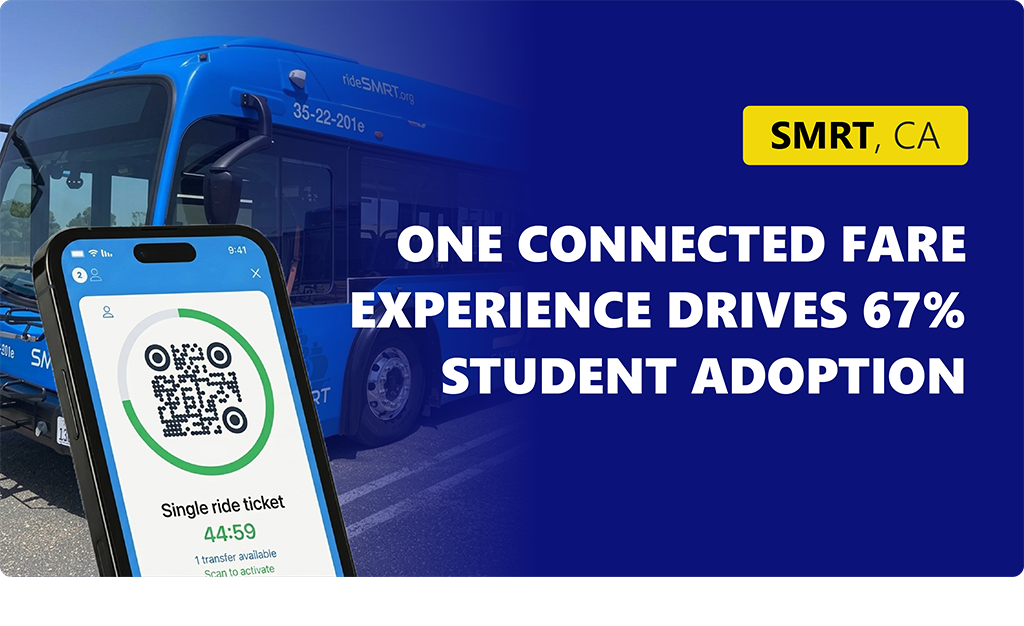
For Santa Maria Regional Transit (SMRT), modernizing fare collection was never only about replacing cash or paper with digital payments. The bigger opportunity was to make transit easier to access and use, especially for riders who depend on public transportation every day.
That vision became particularly clear through Bulldog Go, a program created with Allan Hancock College that provides eligible students with free transit access. Today, the program offers a strong example of what can happen when fare access, digital payments, validation, and rider information are connected through one technology ecosystem.
As of May 2026, 67% of active students enrolled in Bulldog Go were using the SMRTpay app. During the same month, students took 6,206 rides through the program.
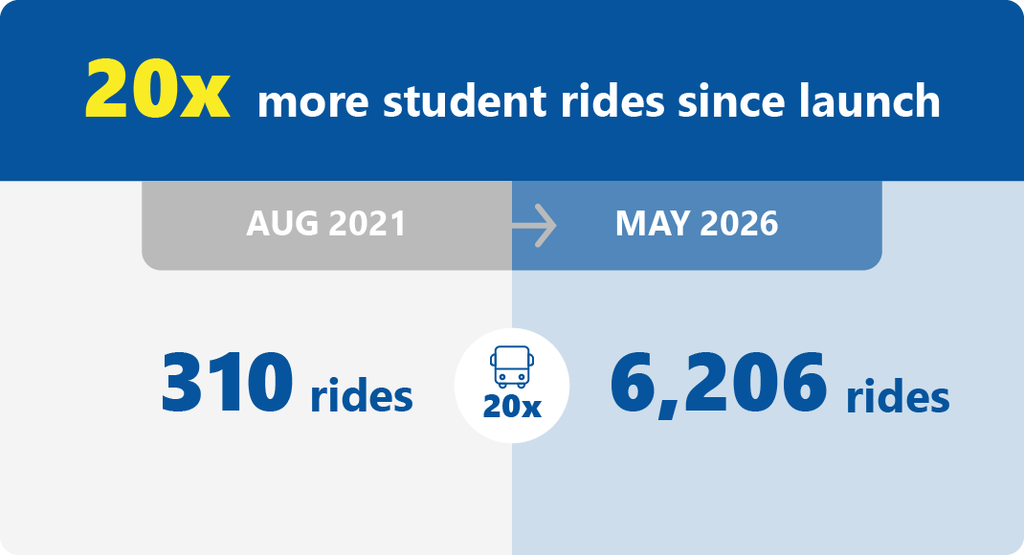
And the growth has been significant. When Bulldog Go launched through Modeshift in August 2021, the program recorded 310 monthly rides. By May 2026, that number had grown to 6,206 – roughly 20 times the launch volume.
The challenge: Make transit access simple
For many Allan Hancock College students, public transit is not simply an alternative to driving. It is an essential connection to education, work, and everyday life. Fewer than half of the college’s students own a car.
Bulldog Go was designed to remove one barrier by providing eligible students with free transit access.
The next challenge was making that benefit simple to use.
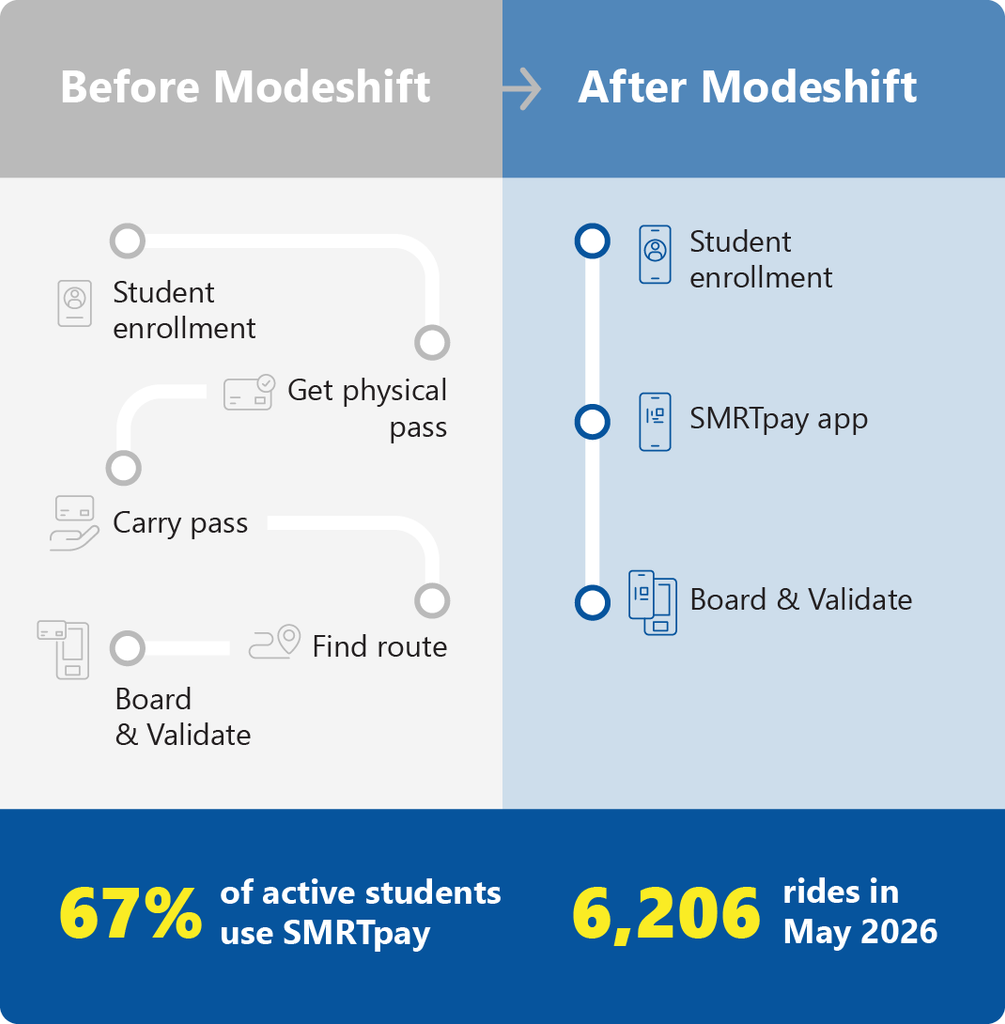
Instead of requiring students to obtain and manage a separate physical transit pass, SMRT and Modeshift connected the program directly to the digital experience.
Students could access their transit pass through SMRTpay, plan their journey and validate their fare when boarding, bringing several steps of the transit experience together in one place.
One connected experience
Modeshift worked with SMRT to create a connected fare ecosystem that brought together the technology behind the rider experience.
The solution included:
- Digital fare access through SMRTpay
- Student fare programs and eligibility
- Digital payments and a mobile wallet
- Electronic fare validation onboard buses
- Trip planning
- Real-time transit information
- Integration with vehicle location and dispatch systems
The result was more than a digital ticket.
A student could access their fare, find their bus, and validate their ride through the same connected ecosystem.
Behind the scenes, SMRT had the infrastructure to manage these functions through a single platform rather than relying on disconnected rider-facing systems.
From 310 rides to 6,206
The strongest measure of the system is what riders actually do with it.
We’re excited to partner with Modeshift to offer a free option for students so that affordable, accessible transit is one less thing to worry about when getting their education. Our students are largely dependent on public transit to get to their classes, extracurricular activities, and jobs, so this initiative is very important.
Cindy Morrison, Transit Grants & Project Manager of the City of Santa Maria
Why did SMRT choose Modeshift?
Modeshift was the winning offer during the tender process due to its flexibility and its ability to provide all necessary user-facing features (POS terminals, smart cards and paper tickets) and the underlying infrastructure at a price that was unmatched by other participants. Modeshift also provided all the necessary deployment support and staff training to ensure the smooth and timely launch of the system.
When Bulldog Go launched through Modeshift in August 2021, students took 310 rides during the month. By May 2026 – 6,206 student rides. That represents approximately 20× growth in monthly rides since launch.
At the same time, 67% of active Bulldog Go students were using the SMRTpay app, showing that the digital experience had become a meaningful part of how students accessed public transportation.
More than a fare collection system
Santa Maria’s experience illustrates how the role of fare technology has changed.
A modern fare system does not have to stop at the moment a rider pays. It can connect the entire experience around the fare – from eligibility and access to payment, validation, trip planning and real-time information.
For SMRT, that meant the same underlying Modeshift platform could support a specific student mobility program while also serving the agency’s broader fare ecosystem.
SMRTpay enables riders to purchase fare products, make secure digital payments, and manage a digital wallet. Modeshift’s electronic validation technology connects those digital fares to the onboard experience, while trip planning and real-time information help riders make decisions before they even reach the bus.
The pieces work together because they are part of the same technology foundation.
With the SMRTpay app, all local college students are automatically sent a bus pass upon enrollment. The mobility aspect is being taken care of with just one click so that students can focus on their education.
Gamaliel Anguiano, general manager for Santa Maria Regional Transit

What Santa Maria shows
The success of Bulldog Go is not simply a story about students adopting an app.
- It is a story about removing friction.
- Free fares removed a financial barrier.
- Connecting eligibility to enrollment made access easier.
- Mobile passes removed the need for a separate physical product.
- Electronic validation made using the pass simple onboard.
- Trip planning and real-time information helped students get where they needed to go.
And because these capabilities are connected, the technology can become almost invisible to the rider.
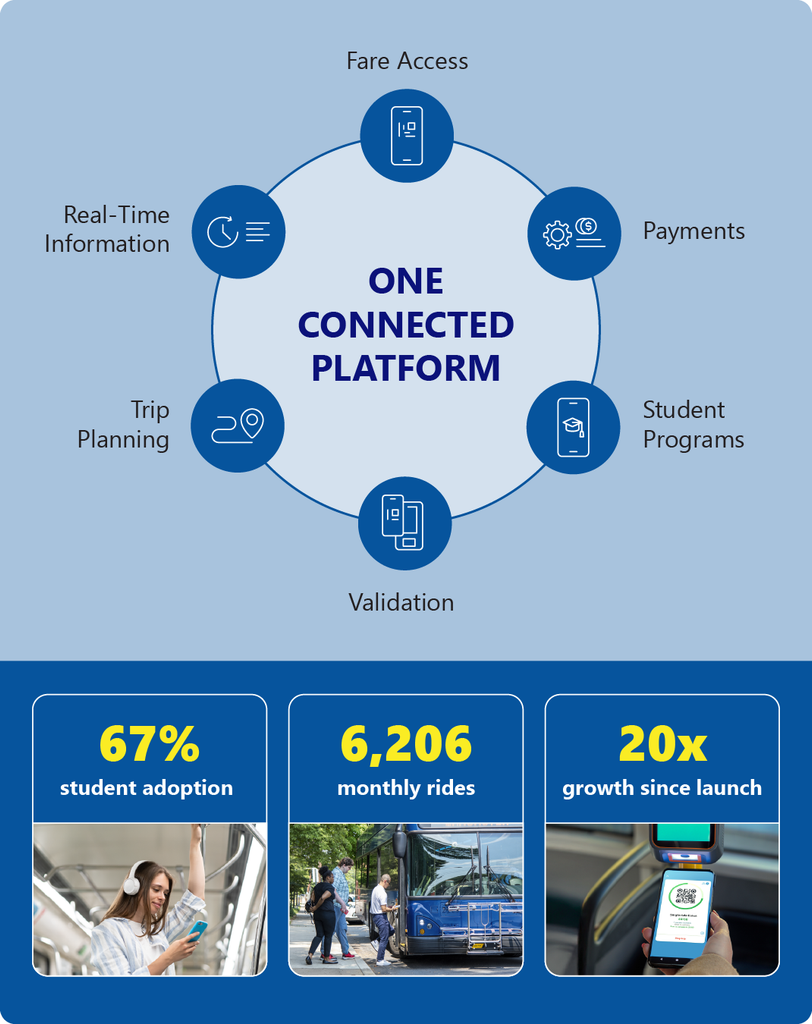
That’s the opportunity of a 360-degree transit platform: one connected technology foundation supporting the fare experience, while giving the agency the flexibility to serve different riders, programs and needs.
For SMRT, the result is visible in the numbers – 67% student adoption and 6,206 rides in a single month.
The bigger result is even simpler: When transit is easier to access, easier to understand and easier to use, riders are more likely to make it part of their everyday journey.